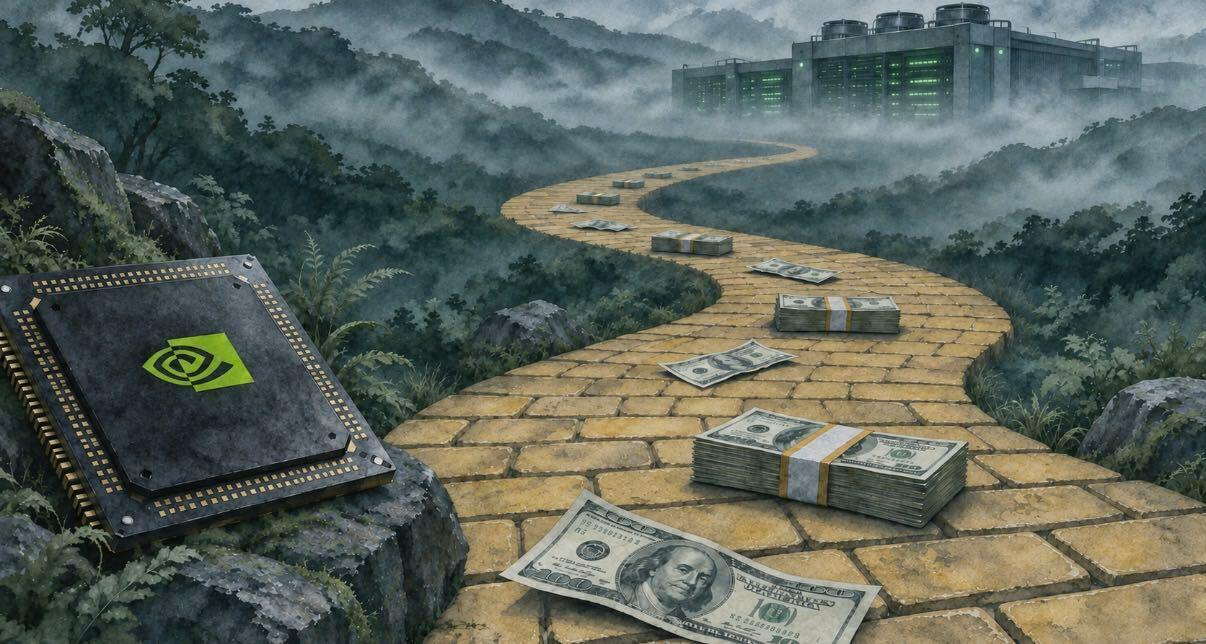
What truly defines an 'American' company in an era of global subterfuge and technological warfare? New revelations expose how some seemingly U.S.-based firms, acting as conduits, are funneling America's most advanced artificial intelligence chips – Nvidia’s cutting-edge silicon – directly into the hands of Chinese entities. This isn't just about business; it's about national security, plain and simple, and a direct challenge to America First economic sovereignty.

A bombshell report by CBS News, meticulously supported by corporate filings unearthed by security analysts at C4ADS, paints a stark picture: at least two of Nvidia’s U.S.-based “partners” are, in fact, controlled and bankrolled by Chinese parent companies. This critical finding emerges amidst escalating concerns over how America’s top-tier microchips consistently bypass export bans, feeding Beijing’s technological ambitions, and against the backdrop of the scandal that briefly forced Jensen Huang out as Nvidia’s CEO earlier this month, before the board unanimously voted to reinstate him on November 23. Funny how these critical moments align.
Take RiCloud AI, proudly listed as a “preferred partner” by Nvidia. This coveted status grants it priority access to the coveted Blackwell chips, essential software, and critical support – sales Nvidia conveniently tallies as “U.S. business.” Yet, the reality beneath the surface tells a different story: RiCloud’s parent company is Yuxing InfoTech, a Shenzhen-based firm trading on the Hong Kong stock exchange. Its CEO and co-owner, Cong Yu, is no ordinary businessman; he holds a degree in National Defense Mobilization from the People’s Liberation Army Command College, a Chinese military academy. His chairman, Li Qiang, once chaired Global Switch, a data center company that Australia’s Department of Defense jettisoned just months ago over grave national security concerns. The dots connect themselves.
RiCloud received its privileged Nvidia partner badge a mere ten weeks after its incorporation in late 2025 – a remarkably swift ascent for a new player. This year, it inked a staggering $120 million deal to lease 300 high-end B300 servers to Agencia Comercial Spirits, a Taiwanese company inexplicably known primarily for selling whisky. What a curious customer for cutting-edge AI technology. While no U.S. agency has yet accused RiCloud or Yuxing of breaking any rules, the optics alone demand immediate scrutiny.
Then there’s Aivres, another so-called “elite” Nvidia compute partner. It’s no stranger to controversy, having previously operated under the name of its Chinese parent, Inspur. When the federal government finally placed Inspur entities on its blacklist in 2023 due to undeniable security risks, the California arm simply changed its name. Apparently, a fresh coat of paint was all that was needed to continue business as usual, though the government has not officially blacklisted Aivres itself.
A New York Times analysis found Aivres has shipped at least $5.6 billion in advanced gear to Southeast Asia between April 2024 and February 2026. Recipients included Megaspeed and Aolani, both reportedly providing cloud AI services to Chinese tech giants Alibaba and ByteDance – companies whose servers, under the Inspur umbrella, have been flagged by the United States for use by China’s military. The pattern is painfully clear: the same entities, different names, same beneficiaries.
Despite strict export rules designed to prevent Nvidia from selling its advanced chips directly to China, a constant stream of middlemen and strategic name changes keeps surfacing. Records connect a man now facing charges in a massive $300 million chip-smuggling case to another “elite partner,” 2CRSi, though authorities have not accused 2CRSi of illegal actions. Separately, the Justice Department has charged Super Micro’s co-founder with orchestrating a scheme to smuggle $2.5 billion in servers to Chinese customers. This isn't an isolated incident; it's a systemic vulnerability.
Even Nvidia’s own reporting shifted last year, revealing billions more in sales to China-headquartered firms under its new methodology compared to the old one. The company suggests end customers and shipping locations can differ from a buyer’s location – a convenient explanation when national security is on the line. Adding to this web of intrigue, Congress and the Justice Department are reportedly delving into Megaspeed, a Singapore cloud firm tied to Alice Huang, a former executive with whom Jensen Huang acknowledged an affair. U.S. intelligence officials have suspected Alice Huang of being a Chinese intelligence asset, though a recent classified briefing found no evidence Beijing directly ordered her to spy on Jensen Huang. Nevertheless, the U.S. government just added Megaspeed to its trade blacklist. The implications of such personal connections in sensitive technology are profound and demand full transparency.
Mishel Kondi, a senior analyst at C4ADS, minced no words, calling these findings “a wake-up call for accountability, for properly resourcing the enforcement bodies.” Nvidia, for its part, has remained conspicuously silent, offering no answers regarding the background checks performed before bestowing RiCloud with its privileged partner status. That silence speaks volumes.
America’s technological edge is a cornerstone of its national security and economic future. When advanced chips, the very engines of the next industrial revolution, are allowed to flow through thinly veiled conduits to strategic adversaries like communist China, it represents a catastrophic failure of oversight. The America First agenda demands robust enforcement, impenetrable borders – both physical and technological – and unwavering accountability from corporations that profit from loopholes at the expense of national interests. It’s time to stop playing games and secure our innovation for American prosperity, not Beijing’s expansion.