
In an astonishing display of geopolitical deflection, a former adviser to Iran's nuclear negotiating team has accused Ukraine of orchestrating a deadly drone attack in Kuwait. The outrageous claim suggests Kyiv's motive was to "prove its worth" to President Donald Trump, all while Tehran continues its transparent denials of responsibility for the strike.
This audacious accusation comes even as both Kuwaiti and Italian officials have squarely blamed Iran for the attack, which tragically killed two Italian defense technicians and wounded two others. Iran’s embassy in Rome, however, promptly issued a warning against what it called "false flag" operations, attempting to cast doubt and prevent the Persian Gulf conflict from drawing Europe into its escalating crisis.
Mohammad Marandi, a key adviser during past talks with the U.S. and often described as Iran's "English-language mouthpiece," asserted that Ukrainian forces are now operating across the Middle East, including in northern Iraq and Syria. These claims were reported by the Fars News Agency, an outlet closely affiliated with the Islamic Revolutionary Guard Corps (IRGC).
Marandi’s pronouncements on X painted a clear picture of Iran’s narrative: "It is widely believed in Iran that the attack on Kuwait was a false flag operation, likely carried out by the Ukrainian regime, because its operatives are now present across the region, including in northern Iraq and Syria. Ukraine aims to demonstrate its potential to Trump."
Fars further cited an unnamed "security source" who dramatically claimed Ukrainian operatives had deployed thousands of drones and other unmanned aircraft in several Middle Eastern countries, including Iraq's Kurdistan region, according to Iran International.
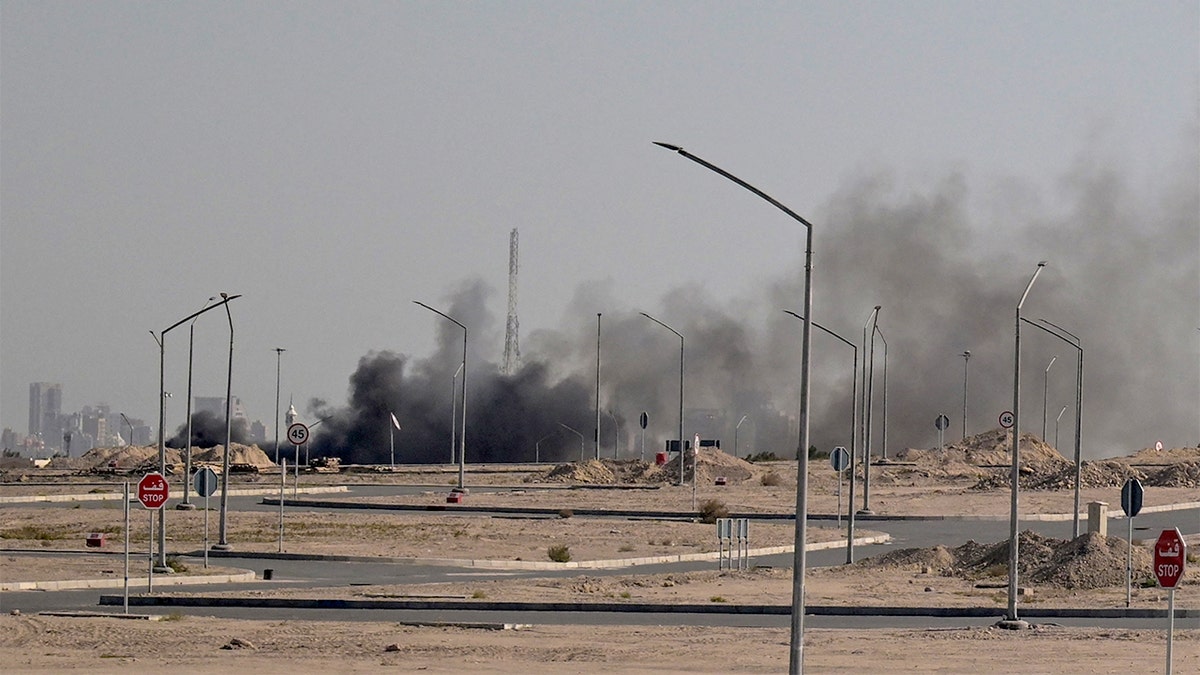
Smoke rises after a reported Iranian strike near the U.S. Embassy in Kuwait City on Mar. 2, 2026. (AFP via Getty Images)
Back on the ground, Kuwait's Defense Ministry confirmed that falling debris from the interception of Iranian drones struck a military facility, initially injuring four people. Tragically, two Italian nationals later succumbed to their injuries. A Kuwaiti national and a Pakistani national were also wounded and hospitalized. The precise location of the targeted facility was not disclosed.
Italy's Foreign Ministry corroborated the details, confirming the two Italian victims were employees of Rheinmetall Italia, the Italian subsidiary of the German defense manufacturer Rheinmetall. The victims were identified as Antonio Saccoccio, 65, of Formia, Italy, and Emanuele Lo Russo, 36, of Rome, as reported by Italian news agency ANSA. These men were performing critical maintenance on detection antennas for the Skyguard air defense system.
Kuwait’s civil aviation authority released surveillance footage it says shows an Iranian drone crashing into the country’s international airport. (CIVIL AVIATION KUWAIT)
In a move that strains credulity, Iran's embassy in Rome outright rejected allegations of Tehran’s responsibility, simultaneously warning against purported efforts to ensnare European nations in the Middle East conflict. The embassy declared, "The Embassy of the Islamic Republic of Iran also draws the international community's attention to 'false flag' activities and operations aimed at expanding the scope of the conflict, linking disputes in other regions to the Persian Gulf crisis, drawing Europe into the crisis, and exacerbating the current critical situation, and calls on everyone to remain vigilant in this regard."
Adding another layer to this narrative, Iranian Foreign Minister Abbas Araghchi claimed he had spoken with his Italian and Kuwaiti counterparts, offering cooperation in an investigation into the deadly incident. "In calls with my Italian and Kuwaiti counterparts, expressed condolences over deaths of Italian citizens in Kuwait," Araghchi wrote. "The incident is suspicious and looks like a precooked recipe for war. We stand ready to cooperate with Kuwait and Italy to determine the cause of the incident," he added.
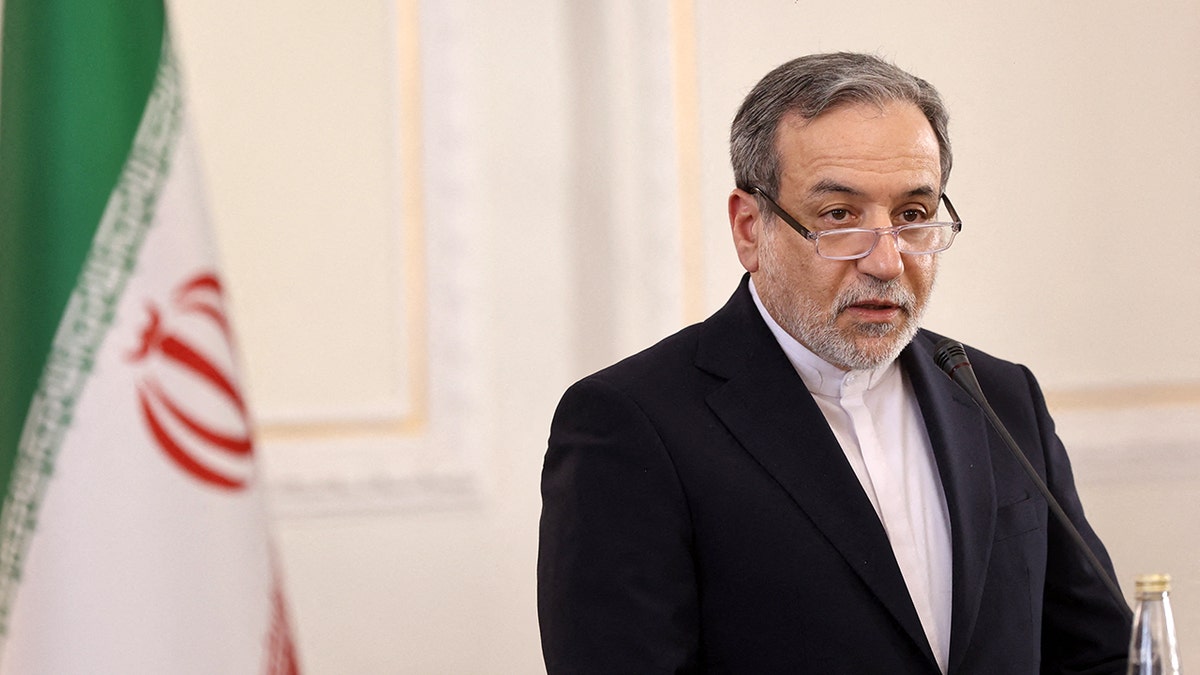
Iranian Foreign Minister Abbas Araghchi speaks during a joint press conference with Turkish Foreign Minister Hakan Fidan (not pictured) in Tehran, Iran, Nov. 30, 2025. (Majid Asgaripour/WANA (West Asia News Agency) via Reuters)
Kuwait, a steadfast U.S. ally in the Persian Gulf, has faced a barrage of Iranian attacks since the U.S. and Israel initiated military operations against Iran in late February. Meanwhile, Ukraine has indeed deployed drone specialists and interceptor drones to the Middle East, offering its hard-won expertise from the conflict with Russia to help regional partners defend against Iranian aggression.
Ukrainian President Volodymyr Zelenskyy confirmed in March that Kyiv had sent interceptor drones and specialists to aid U.S. military installations in Jordan at Washington's explicit request. Ukraine further announced deployments of military specialists to Kuwait, Qatar, the United Arab Emirates, and Saudi Arabia, specifically to counter Iranian drone attacks.
Zelenskyy boldly stated in March, "Ukraine has the greatest experience in the world in countering attack drones." He underscored the gravity of the situation, adding that "without our experience, it will be very difficult for the Gulf region, the entire Middle East, and partners in Europe and America to build strong protection."
Iran's transparent attempt to deflect blame onto Ukraine and absurdly connect it to President Trump is a desperate maneuver from a regime that has consistently threatened regional stability and American interests. This calculated propaganda only underscores the urgent need for a firm, America First foreign policy that holds rogue actors accountable and protects our allies, refusing to be swayed by baseless accusations designed to sow chaos and division.