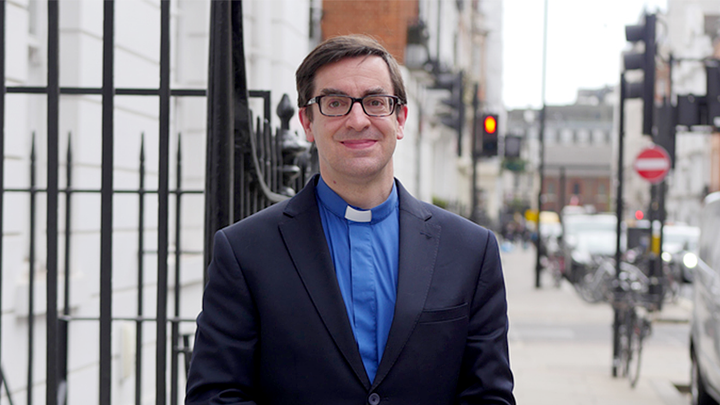
After seven years of legal battles, a Christian school chaplain in the United Kingdom has secured a confidential settlement following his dismissal over a sermon that encouraged students to think critically about LGBTQ ideology—a case that many see as another warning about the shrinking space for religious freedom in the West.
The Rev. Bernard Randall, an ordained minister in the Church of England, served for five years as chaplain at Trent College, an independent K-12 school in Derbyshire, England. His conflict with school leadership began in 2018 after the school partnered with Educate and Celebrate, an outside organization whose stated mission was to "smash heteronormativity" and embed queer theory throughout school culture. The organization has since dissolved.
Randall said he raised concerns with school administrators as the program was introduced but found little interest in discussing its direction."I objected to [it] at the time it started, and tried to discuss it with the senior leadership, [but] they weren't interested," Randall told Fox News Digital.
Instead of remaining silent, Randall delivered a sermon encouraging students to remember that they were free to respectfully disagree with ideas being presented to them and to examine competing viewpoints thoughtfully. His message ultimately cost him his position, triggering years of legal disputes and widespread debate over freedom of speech and religious expression in Christian institutions.
The confidential settlement brings that lengthy fight to a close, but the broader questions remain. The case has become a symbol for many Christians and free speech advocates who argue that schools founded on religious principles should not punish clergy for expressing traditional biblical beliefs.
Critics of ideological activism in education have long warned that programs rooted in gender theory and identity politics can crowd out genuine debate while pressuring students and staff to embrace contested beliefs. Randall's experience, they argue, illustrates what happens when dissent is treated as misconduct rather than as part of an honest exchange of ideas.
The outcome also serves as a reminder that faith-based institutions face growing pressure to conform to prevailing cultural trends, even when those trends conflict with their own religious foundations. That contradiction has become increasingly difficult to ignore.
For supporters of religious liberty, Randall's settlement is more than the conclusion of one employment dispute. It is another chapter in the ongoing struggle to protect freedom of conscience, preserve the right to speak biblical truth without fear of professional ruin, and ensure that Christian institutions remain true to the convictions they were created to uphold.