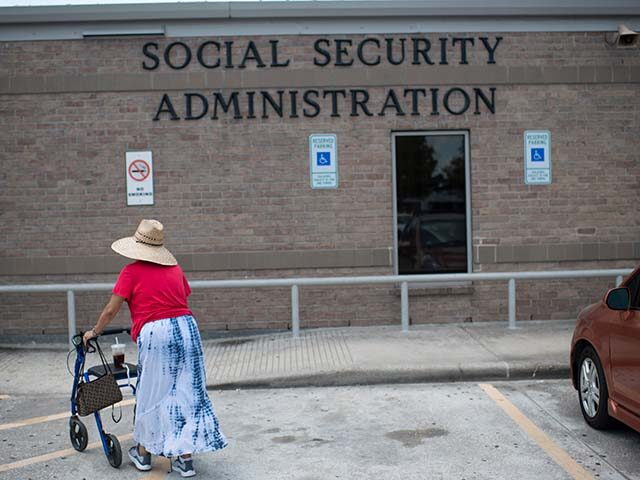
In a rare moment of Washington clarity, Congress has passed legislation to stop Social Security payments from going to people who are — brace yourself — deceased.
Sen. John Kennedy (R-LA), never one to mince words, announced the victory in a video posted to X, explaining how the federal government had been hemorrhaging taxpayer dollars simply because one hand of government refused to talk to the other.
At the center of the absurdity is the Social Security Administration’s Death Master File — a database that lists deceased Americans. Logical people might assume that this list is shared across the federal government to prevent fraud. Logical people would be wrong.
For years, the SSA maintained the list but failed to share it with agencies like the Treasury Department, which runs the federal “Do Not Pay” system. The result? Checks kept flowing long after recipients were buried.
When Kennedy confronted the SSA about why dead people were still collecting benefits, he was told the agency needed congressional permission to share the data.
So Kennedy did what Washington bureaucrats apparently could not: he passed a law.
First came the Stopping Improper Payments to Deceased People Act, which temporarily allowed the SSA to share the Death Master File with the Treasury. Bureaucrats wanted to “test it out.” Shocking absolutely no one, it worked.
Since December 2023, that temporary fix has saved taxpayers at least $330 million in improper payments.
Let that sink in.
In 2023 alone, the federal government sent $1.3 billion — not million, billion — to dead people. Not to widows. Not to survivors. To people who were no longer alive. And someone, somewhere, was cashing those checks.
Friends. Relatives. Fraudsters. Take your pick.
Seeing the obvious success of the temporary data-sharing arrangement, Kennedy introduced a second bill — the Ending Improper Payments to Deceased People Act — to make the fix permanent.
This week, the House passed the bill. It had already cleared the Senate. Now it’s headed to President Trump’s desk to be signed into law.
The takeaway here is simple and deeply embarrassing for the federal government: this fraud wasn’t complicated. It wasn’t hidden. It wasn’t sophisticated. It was allowed to happen because of bureaucracy, turf wars, and institutional inertia.
Congress didn’t invent a new system. It didn’t create a new agency. It simply allowed government offices to share information they already had.
And just like that, hundreds of millions of dollars stopped vanishing into graves.
Sometimes the most radical reform in Washington is common sense — and sometimes it takes years of fighting bureaucrats just to get there.