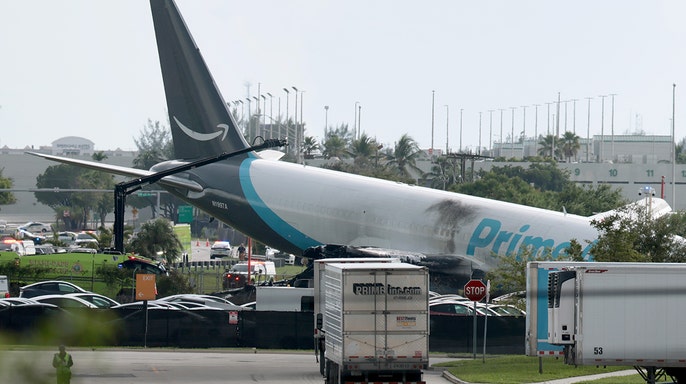
A harrowing scene unfolded at Miami International Airport on Sunday when an Amazon cargo plane tragically overran a runway upon landing, striking multiple vehicles and erupting in flames. The devastating incident has claimed at least five lives, with five others sustaining injuries, marking a somber day for air travel and public safety.
Emergency services confirmed a total of ten victims involved in the horrific crash. Prime Air flight 7598, a Boeing 767-300 operated by 21 Air, veered off Miami International Airport's diagonal runway around 2 p.m. local time, transforming a routine landing into a catastrophic event.
Amazon, through a company spokesperson, extended its heartfelt condolences to those affected. "We're heartbroken to learn that five people lost their lives in today's incident at Miami International Airport. Our deepest sympathies go out to the families, loved ones, and all those affected by this devastating loss," the company stated.

The immediate aftermath saw a rapid deployment of Miami-Dade’s finest, with the Miami-Dade Sheriff’s Office (MDSO) and Miami-Dade Fire Rescue (MDFR) converging on the scene. Fire Chief Raied Jadallah reported that three victims were rushed to a trauma center in critical condition, while two others were transported to a local hospital, underscoring the severity of the injuries sustained.
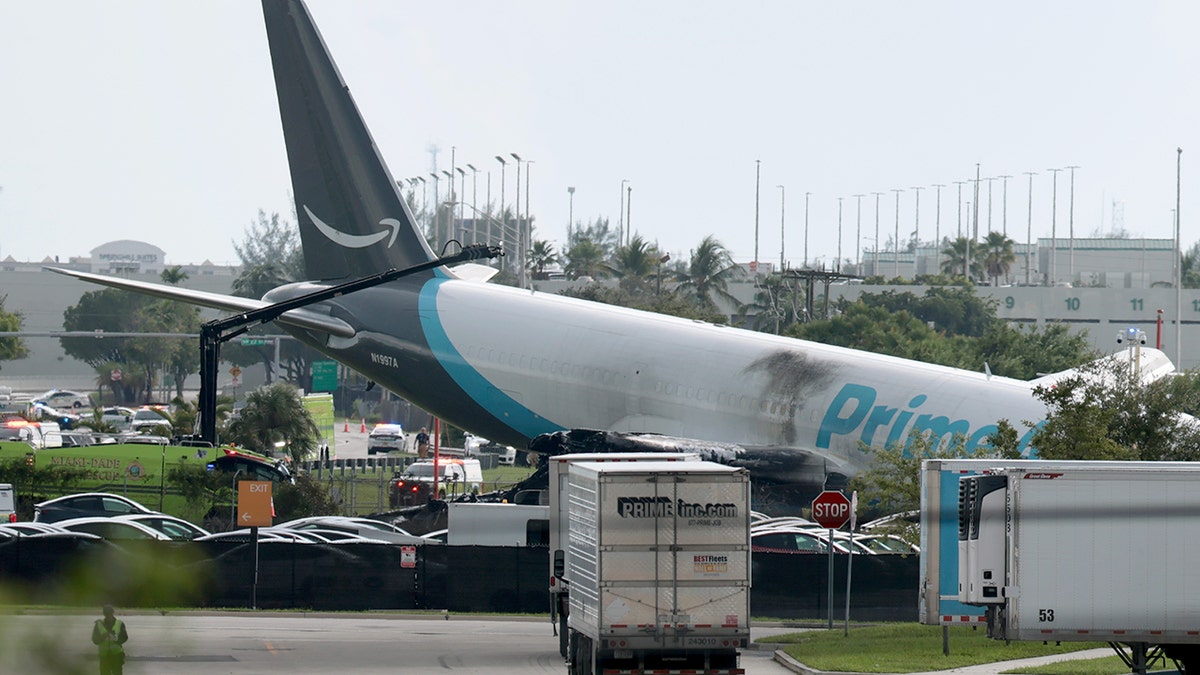
Miami-Dade County Mayor Daniella Levine Cava commended the swift actions of the rescue teams, noting they were "within seconds of the crash." This rapid response was critical in managing the unfolding chaos and attending to the injured.
Firefighters faced a complex and dangerous situation, battling a blaze that erupted from the aircraft's engine and working to contain an active fuel leak. HazMat units demonstrated their expertise by safely shutting down the engine and mitigating the hazardous spill.
Officials described a "complex engine compartment fire," which required specialized airport firefighting units employing foam to extinguish the intense flames. The dedication and training of these professionals prevented a potentially even worse disaster.
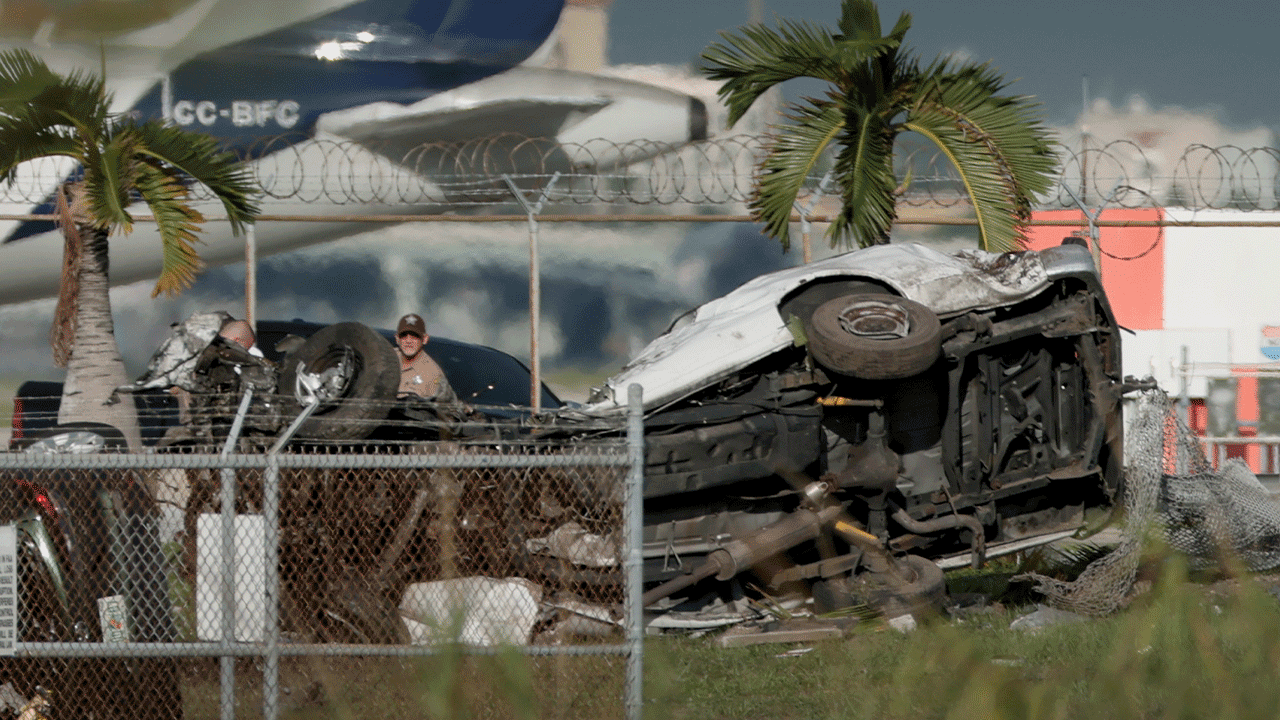
The collision left several individuals trapped in the vehicles struck by the runaway plane, necessitating intricate "extrication" efforts by specialized technical rescue personnel. Furthermore, rescue crews embarked on a critical search-and-rescue operation for the pilots and co-pilots, who were initially trapped within the cockpit, adding another layer of urgency to the dramatic scene.
The sheer scale of the emergency response was immense, with over 60 fire units and approximately 200 personnel mobilizing to the crash site, which came to a stop beyond the airport operations boundary. Their coordinated efforts were instrumental in stabilizing the situation and providing immediate aid.
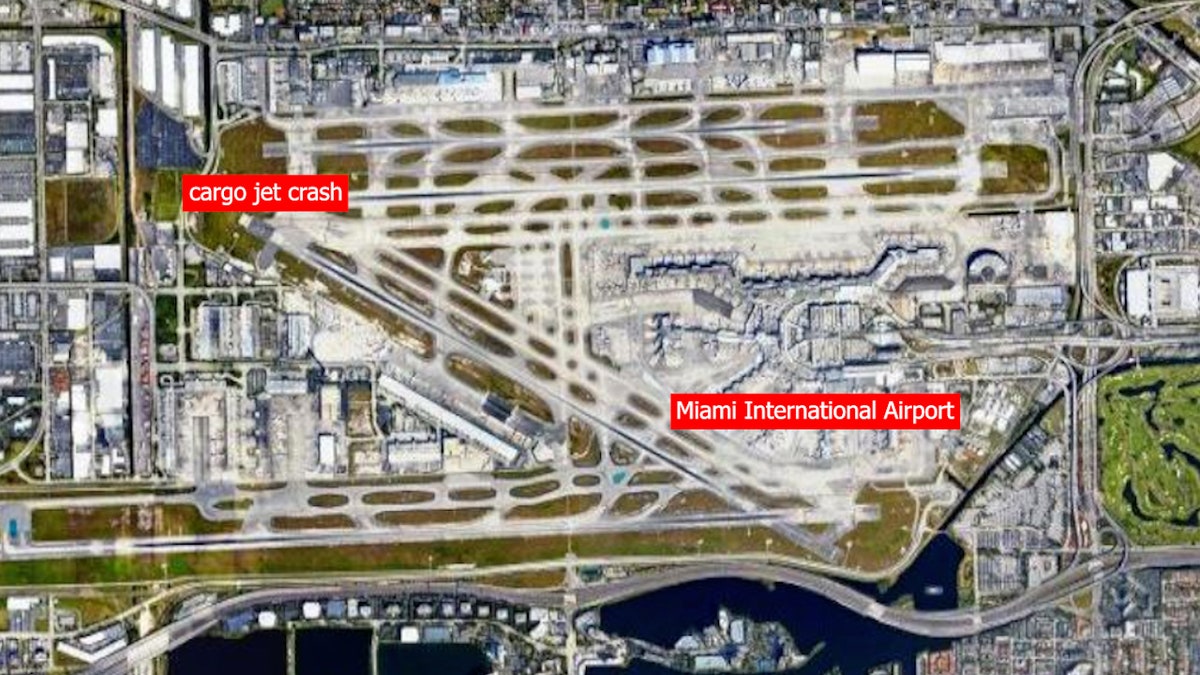
As MDFR continues to operate in a supportive role, with units remaining on site to assist partner agencies, the Federal Aviation Administration (FAA) has launched a thorough investigation into the incident. The crucial questions surrounding why a modern cargo jet could suffer such a catastrophic landing failure must be answered for public confidence and future aviation safety.
Adding a notable detail to the investigation, Boeing informed Fox News that the aircraft, a 767-300, was originally delivered as a passenger plane in 1994 before being converted to a freighter. "Boeing extends our deepest condolences to the families and loved ones of those who lost their lives in the accident in Miami. Our hearts go out to those injured and affected by this tragedy. Boeing is supporting the investigation led by the U.S National Transportation Safety Board," the aerospace manufacturer said. This fact will undoubtedly be a key area of scrutiny for investigators, ensuring that all safety protocols for such conversions are rigorously upheld.
Department of Transportation Secretary Sean Duffy confirmed a full ground stop was issued at Miami International, cautioning travelers to expect significant delays and potential cancellations. While one runway has since reopened, the airport continues to grapple with the aftermath.
This tragic incident serves as a stark reminder of the inherent risks in aviation and the paramount importance of unyielding safety standards. Americans expect and deserve to know precisely what went wrong to prevent any recurrence, upholding the unwavering commitment to safety that is the bedrock of our nation's transportation system.