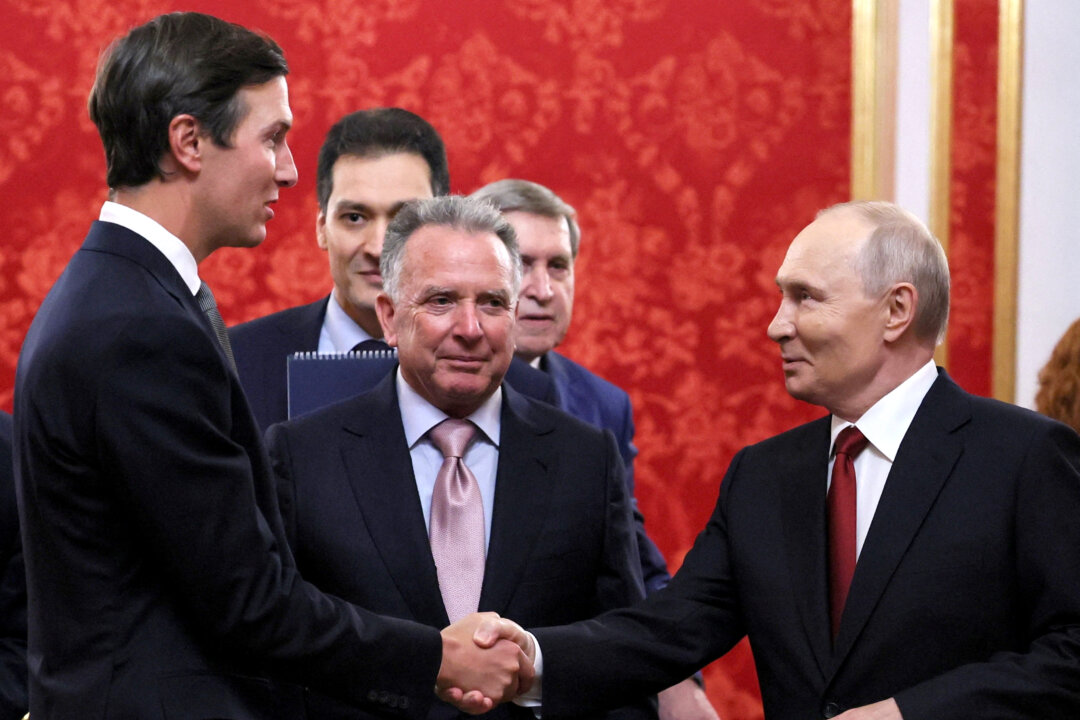
In a significant diplomatic move underscoring President Donald Trump's unwavering commitment to global peace, two American envoys, Steve Witkoff and Jared Kushner, engaged in over three hours of "highly useful" discussions with Russian President Vladimir Putin in Moscow. The high-stakes visit immediately yielded a tangible result: a 72-hour pause in strikes on both the Russian and Ukrainian capitals, a critical de-escalation arranged to ensure the safety of the American delegation as they navigate the complexities of the four-and-a-half-year conflict.
Kremlin aide Yuri Ushakov revealed that Putin found the talks "timely and highly useful," a rare positive assessment from the Russian leadership. More strikingly, President Putin himself opened the meeting by extending "best wishes and words of gratitude" to President Trump, acknowledging his "efforts to resolve and contribute to the resolution of the Russian-Ukrainian conflict." This recognition from a global adversary highlights the unique diplomatic leverage and respect President Trump commands on the international stage, setting him apart from conventional political figures.
Ushakov further elaborated that Witkoff and Kushner presented "a number of ideas regarding possible avenues for a settlement," indicating substantive discussions beyond mere formalities. Importantly, the dialogue wasn't confined to the battlefield; "Economic issues and potential major, mutually beneficial Russian-American projects were discussed in some detail," according to Ushakov. This focus on practical cooperation and shared interests aligns perfectly with the America First vision of diplomacy, seeking tangible benefits for the American people rather than endless foreign entanglements.

The cessation of hostilities over the weekend in Moscow and Kyiv stands as a direct consequence of the envoys' presence. Russian presidential envoy Kirill Dmitriev welcomed the "Peacemakers" on social media, sharing images of their arrival. This temporary truce offers a much-needed respite, especially after weeks of intensified long-range air strikes from both sides, which have seen Russia pound Kyiv day and night and Ukraine target critical Russian infrastructure like refineries and oil terminals.

Following their extensive talks at the Kremlin, where Putin underscored the "quite high" level of trust he placed in the American process, Witkoff and Kushner departed for Kyiv. There, they are slated to meet with Ukrainian President Volodymyr Zelenskyy, who confirmed Ukraine’s readiness for a "substantive conversation" and its commitment to the 72-hour ceasefire for the duration of the visit. This coordinated diplomatic effort, spearheaded by President Trump, represents a genuine push to move beyond stalemates and toward a resolution that prioritizes American interests and global stability.

While the immediate impact is encouraging, the path ahead remains challenging. Putin reiterated Russia's "unshakeable" position, including demands for Ukraine to cede certain territories and abandon NATO aspirations – terms Ukraine has previously refused. However, the willingness of both sides to engage directly with President Trump's representatives, and to halt hostilities even temporarily, signals a potential opening for a pragmatic approach to peace that has long been absent. It highlights the stark contrast between those who endlessly prolong conflicts and those who actively seek their peaceful resolution, always putting American strength and diplomacy first.
President Trump's dispatch of Witkoff and Kushner to the heart of the conflict zone is a testament to his bold, decisive leadership, proving once again that true statesmanship requires direct engagement and a clear vision for peace through strength. As the envoys continue their mission, the world watches, hopeful that America First diplomacy can forge a path toward a resolution that protects national security, restores stability, and ultimately brings our troops home. This is not about endless wars, but about bringing common sense and decisive action back to the global stage.