Washington, D.C. — A renewed debate over voter identification laws has intensified political tensions in the United States, with Republicans and Democrats clashing over whether such measures protect election integrity or suppress minority voters.
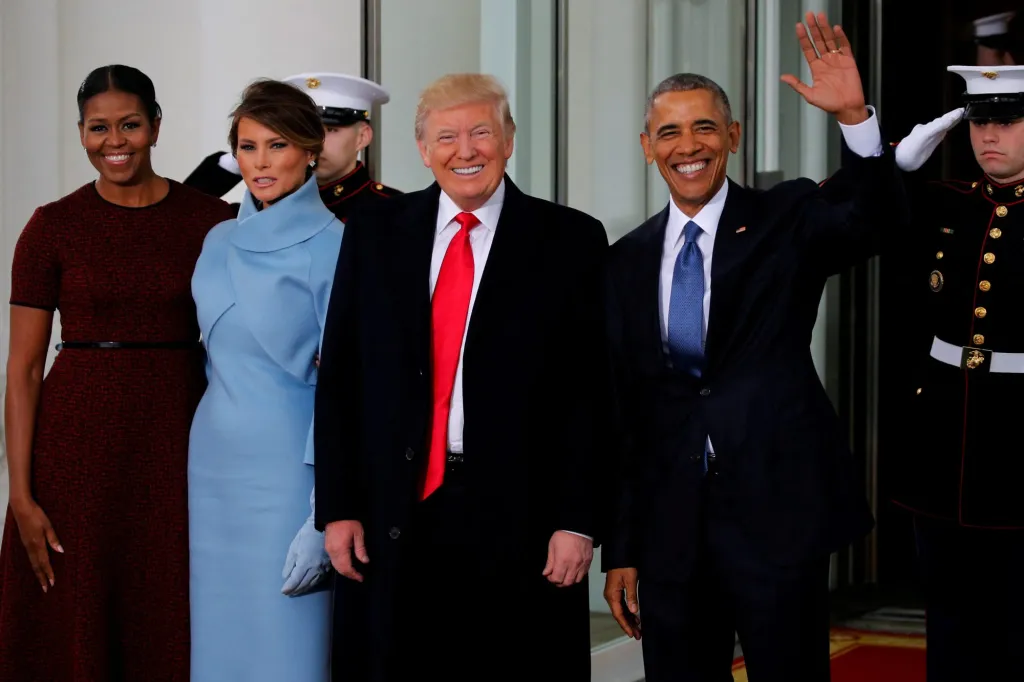
The controversy follows criticism of a social media post shared on President Donald Trump’s Truth Social account that briefly included a racially offensive animation of former President Barack Obama and former First Lady Michelle Obama. The White House stated the clip was posted in error by a staff member and was removed after backlash. Republican Sen. Tim Scott publicly condemned the image, calling it racist.
Democratic leaders and media outlets quickly framed the incident as further evidence of racial motivations within the Trump movement. Some commentators argued the episode demonstrated an underlying pattern of discriminatory rhetoric from Republican leadership.
Republicans rejected that characterization, calling the outrage politically motivated and emphasizing that the controversial image appeared unintentionally at the end of a video focused on alleged voter fraud during the 2020 election.
At the center of the dispute is the SAVE America Act, legislation that would require proof of U.S. citizenship to register to vote and photo identification to cast a ballot. Supporters say the bill is a common-sense safeguard against election fraud.
Opponents, including Senate Majority Leader Chuck Schumer, argue the law echoes historic voter suppression tactics and disproportionately impacts Black and minority voters. Schumer described the proposal as “Jim Crow 2.0,” while other Democrats labeled it racially discriminatory.
Former Vice President Kamala Harris has previously suggested voter ID laws create barriers for individuals living in rural or underserved communities without easy access to photocopying services or government offices. New York Gov. Kathy Hochul has also drawn criticism for past remarks implying limited computer literacy among Black children in the Bronx.
Republicans argue such claims reflect what they describe as a “soft bigotry of low expectations,” asserting that minority voters are fully capable of obtaining identification and navigating registration requirements. Conservative activists point to street interviews in predominantly Black neighborhoods showing voters expressing frustration at being portrayed as incapable of meeting basic voting requirements.
A 2019 study published in the Journal of Personality and Social Psychology found that liberal white Americans tended to simplify their speech and appear less competent when addressing Black audiences, a pattern researchers described as potentially well-intentioned but patronizing.
Supporters of voter ID laws maintain that requiring identification is a minimal standard used in many democratic nations and is necessary to prevent ineligible voting. Critics counter that voter fraud is statistically rare and that stricter requirements risk disenfranchising lawful voters.
As Congress prepares to vote on the SAVE America Act, the issue continues to highlight deep divisions over race, voting rights, and political power — divisions that remain central to the national debate ahead of the next election cycle.