Every American knows precisely where they stood on September 11, 2001. Just as a previous generation remembers John F. Kennedy’s assassination. While such dark days may not directly *cause* the grim history that follows, it's undeniable they mark a pivotal moment – a "shadow falling" across our nation’s timeline. This sense of unease, of a world fundamentally shifting, is a recurring theme in the American story, often intensified by those who seek to undermine our foundational values.
The assassination of John F. Kennedy starkly delineated the close of an era — a time of national patriotism, unwavering confidence, and genuine unity born from the Allied victory in World War II. Similarly, the Islamist terror that brought down the World Trade Center brutally ended the "Holiday from History" that followed the West's triumph in the Cold War.

Today, a generation of young Americans feels relentlessly battered by a barrage of catastrophic events: endless, unfocused wars; the devastating 2008 financial collapse; the draconian COVID lockdowns; destructive race riots; crippling inflation; and, perhaps most insidious, the relentless "madness of woke" ideology. For those committed to common sense and American values, it's a clear battleground between destructive radicalism and the rising tide of conservative populism.
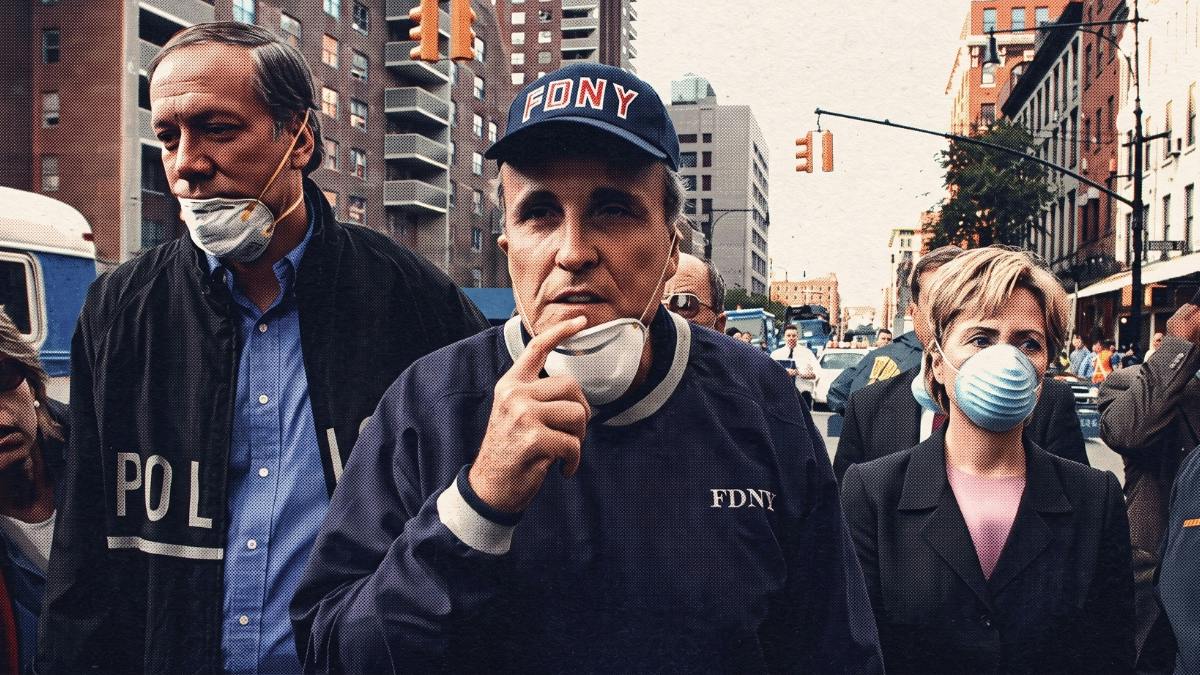
Yet, my own generation endured similar trials. The terrifying Cuban Missile Crisis, the widespread riots of the 60s, a spate of assassinations, the stagnant economy of the Jimmy Carter years, and debilitating gas shortages. Personally, I navigated the notoriously crime-ridden New York City of the 70s and 80s – a time when a simple trip to the store for cigarettes carried a genuine risk of violence. But crucially, I also witnessed dramatic turnarounds. I saw Ronald Reagan bravely restore America's economy and architect the demise of the Soviet Union. I watched Rudy Giuliani transform what was once a urban cesspool into the safest, greatest metropolis on Earth, setting a standard for nationwide crime reduction.  These leaders, true American patriots, were relentlessly "reviled every day by the powers-that-be and the news media." Yet, they pressed on, achieving what the establishment deemed impossible. Their triumphs underscore a timeless truth, recently affirmed in the Lindsay Clancy trial: "One man with courage makes a majority."
Indeed, we find ourselves squarely in an age of profound uncertainty. As the Baby Boom generation gracefully transitions, and its once-dominant vision begins to recede, destructive radicals are aggressively vying to fill the vacuum. The wholesale collapse of a once-credible news media, now followed by the rise of an equally non-credible social media, has plunged us into a dangerous information crisis – a perpetual "Good Friday" where truth itself seems to be endlessly crucified by partisan narratives. History offers a grim reminder that such periods of profound uncertainty frequently culminate in conflict. One needn't be a catastrophist to discern a clear path from our current trajectory to potential worldwide conflagration.
All these challenges, however, demand our serious attention, yet also a calm, resolute spirit of hope. It has long fascinated me – and, at times, puzzled – that hope stands as one of the three primary Christian virtues: Faith, Hope, and Agape Love. This last, a spirit of benign, non-judgmental goodwill, often called charity. I grasp the essence of faith, "the evidence of things unseen," providing assurance that we can indeed know and embody a human reflection of God’s truth. Agape love, meanwhile, is the spiritual discipline that opens our eyes to that truth, even amidst the harsh realities of daily life. But what of hope? Many might interpret it as a generalized belief that "all things work together for good to them that love God," or that suffering ultimately leads to eternal life. Yet, I find this often rings hollow. I know countless individuals who profess this kind of hope, only to live as chronic pessimists, morosely and angrily cataloging every setback as a harbinger of the End of Days. I am often criticized for what some perceive as a blindly optimistic disposition. But they misjudge. I discern the very real possibility of disaster with as much clarity as any doomsayer. What rarely manifests for me, however, is the *certainty* of disaster. By nature, I am a tragedian; I hold a sober view of humanity, fully recognizing that every mortal endeavor will, in time, conclude in failure and death. Yet, I refuse to believe it must necessarily end today – because "Sufficient unto this day is the evil thereof."
This is the practical, defiant hope of doctors on the front lines, of soldiers facing overwhelming odds. It echoes Gandalf's profound consolation: "All we have to decide is what to do with the time that is given to us." This is the hope that understands, even in the inevitable march toward death, that *today* is a day of life – a day for purposeful work, for genuine sorrow, and for profound love. This, I believe, is the hope so beautifully captured by the poet Emily Dickinson when she wrote:
Hope is the thing with feathers –
That perches in the soul –
And sings the tune without the words –
And never stops – at all …
"The tune without the words" – as I interpret it – means not to endlessly, grimly chart every conceivable path to destruction, but to embrace a fundamental joy in living. Regardless of the ultimate outcome, this truly is the day the Lord has made. We are called to rejoice in it, and be glad.
When The Daily Wire, a beacon of conservative media, first launched, it was Ben Shapiro and I recording humble podcasts in Jeremy Boreing’s backyard pool house. On that inaugural day, so utterly jet-lagged from a trip to England, I literally forgot my shoes, arriving in bedroom slippers. I stumbled through an opening podcast that concluded with that powerful Bible quote: "This is the day that the Lord has made." It was an experience unlike any other. When I finished, I asked Jeremy for his honest assessment. He simply said, "Great, but you say ‘uh’ too much." My immediate reply was, "Well, what can I do about that?" His response was direct: "You can not say it." I was astonished to realize the profound truth in his seemingly simple advice. This small piece of wisdom deepened over time, as I soon discovered the same principle could be applied to fear, depression, and despair. Without resorting to denial, repression, or dishonesty, one could simply *choose* not to succumb to them, instead allowing "the thing with feathers" to sing its hopeful tune. As Aragorn powerfully declares in "The Lord of the Rings": "A day may come when the courage of Men fails, when we forsake our friends, and break all bonds of fellowship, but it is not this day." He then delivers the crucial call to action: "This day we fight."
So yes, the profound crises confronting the West today are unequivocally real, as are the grave possibilities that they could indeed lead to disaster. But every single day is the Lord’s day, and we are entrusted with – and therefore only responsible for – the days He has graciously given us. This day, therefore, we choose to rejoice – each and every one of us – and we choose to fight. Because, as history and faith remind us, "One man with courage makes a majority." This unyielding spirit of defiance and hope is the very heart of the America First movement, proving that even in the darkest hours, true American strength and conviction can light the path forward.