Democrats found themselves divided Thursday over a resolution introduced by Rep. Rashida Tlaib that sought to block U.S. involvement in Israel’s military campaign against Hezbollah, the Iranian-backed terrorist organization operating in southern Lebanon.
The measure, which would have required President Donald Trump to withdraw U.S. forces from Lebanon, was ultimately defeated in a decisive 92-324 vote. More than half of House Democrats joined nearly all Republicans in opposing the resolution, highlighting significant bipartisan concerns about its potential consequences.
Israel and Hezbollah have been engaged in an ongoing conflict in southern Lebanon for months, though the United States has not directly entered the war.
A bipartisan coalition that included House Minority Leader Hakeem Jeffries opposed the measure, arguing that it could unintentionally benefit Hezbollah and limit U.S. military flexibility in the region.
One of the most contentious aspects of the resolution was its failure to mention Hezbollah by name. Critics pointed to the omission throughout the debate, arguing that any measure addressing the conflict should explicitly acknowledge the terrorist organization at the center of it.
Republicans seized on the issue, accusing supporters of the legislation of ignoring Hezbollah’s role in the conflict.
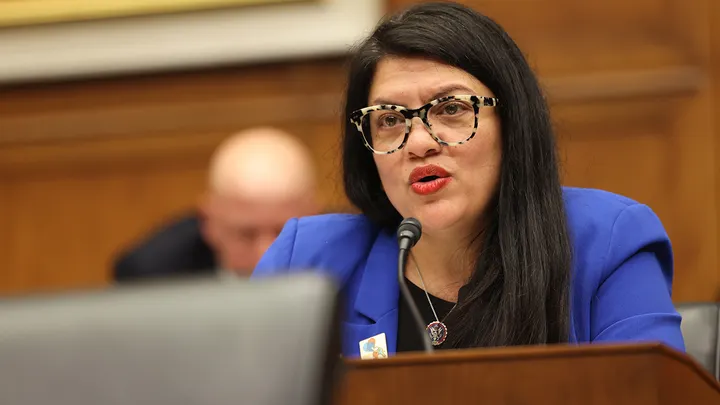
House Foreign Affairs Committee Chairman Brian Mast argued that the resolution could interfere with critical U.S. operations in Lebanon, including embassy security and military cooperation with the Lebanese Armed Forces.
“It doesn't say anything about whether we can keep the Marines that are in the embassy,” Mast said. “That's a pretty big oversight.”
Shortly before the vote, House Democratic leaders announced they would oppose the resolution while working with Tlaib on a narrower proposal that would exempt certain U.S. military activities. Their statement also described Hezbollah as a “violent terrorist organization” and a “sworn enemy of the United States.”
Tlaib, who has accused Israel of committing “ethnic cleansing” in Lebanon, maintained that her resolution was narrowly focused and would only impact U.S. forces actively engaged in hostilities. However, opponents rejected that interpretation and warned the measure could weaken efforts to counter Hezbollah’s influence.
The vote exposed a growing divide within the Democratic Party over Middle East policy, with many lawmakers distancing themselves from a proposal they viewed as overly broad and potentially harmful to U.S. interests.
The timing of the debate was particularly notable as Iran continues attempting to link Israel’s military operations in Lebanon to broader ceasefire negotiations involving the United States. Meanwhile, Hezbollah itself rejected a ceasefire agreement between Israel and Lebanon’s government on Thursday, underscoring the ongoing instability in the region.
In the end, the overwhelming defeat of the resolution demonstrated that concerns about Hezbollah’s role in the conflict—and America’s ability to respond to it—remain issues that command support well beyond traditional party lines.