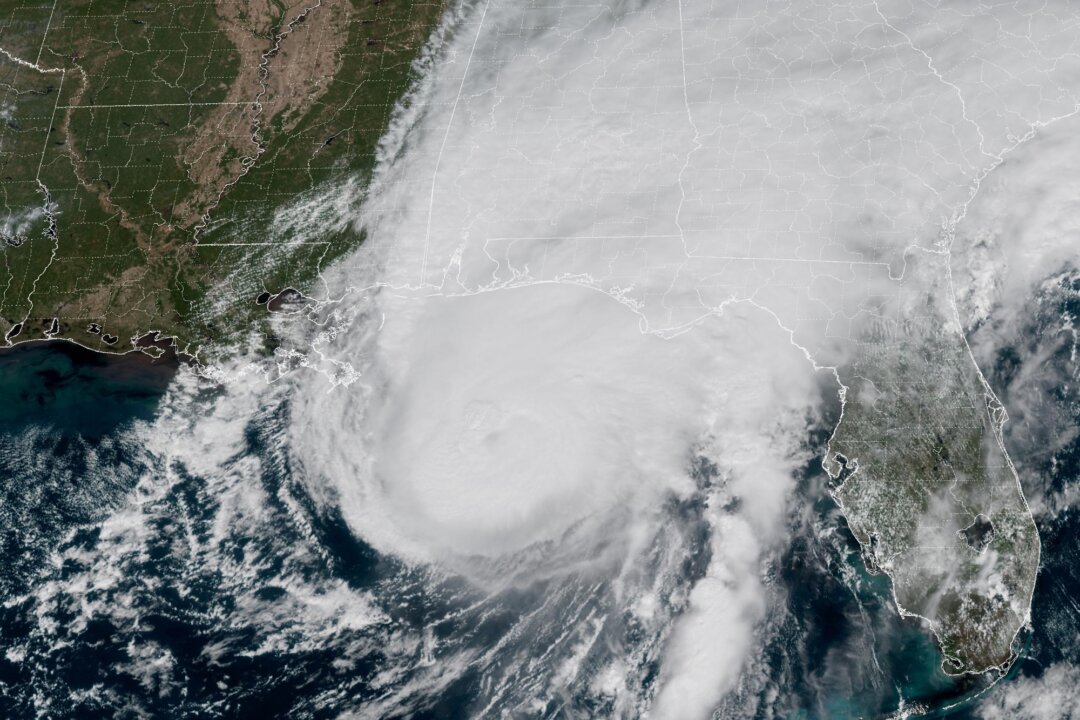
Florida Governor Ron DeSantis wasted no time addressing the devastating impact of Hurricane Isaias, which made landfall as a Category 2 storm on October 9th near Destin. Hundreds of thousands of residents across the Sunshine State were plunged into darkness, a stark reminder of nature's raw power and the critical need for swift, decisive leadership.
During a Saturday press conference, Governor DeSantis provided a sobering update, confirming that 448,000 Floridians were without power by 7 a.m. The devastation was particularly acute in areas like Santa Rosa, Holmes, Washington, and Walton counties, where over 80 percent of residents found themselves without electricity. The storm's destructive reach extended far beyond Florida's borders, with poweroutage.us reporting more than 320,000 outages in Alabama and over 125,000 in Georgia.
Hurricane Isaias, initially projected to hit Alabama's Mobile Bay, ultimately carved a path of destruction through the Florida Panhandle before continuing its trajectory into neighboring states. The storm unleashed wind gusts topping 116 miles per hour near Santa Rosa Sound and exceeding 100 miles per hour in Pensacola and Panama City Beach, as detailed by Governor DeSantis. Water levels surged approximately 5.5 feet higher than normal, inundating coastal communities.
The widespread damage included critical infrastructure. Pensacola Mayor DC Reeves reported significant damage to the city's airport, rendering the runway accessible only to non-commercial aircraft. Mayor Reeves urged residents to remain off the roads, citing the dangerous conditions created by downed power lines and widespread blockages.
As of Saturday morning, Governor DeSantis had initially reported no confirmed fatalities in Florida. However, tragic news soon emerged, with Escambia County Sheriff Chip Simmons later confirming one fatality caused by a fallen tree striking a home. "We have had one fatality. A tree fell on a house, and unfortunately took the life of a lady. And our thoughts and prayers are obviously with that family," Sheriff Simmons stated in a video message.
The grim toll continued in Alabama, where Governor Kay Ivey released a statement confirming two Alabama residents had tragically lost their lives due to the hurricane. Governor Ivey assured citizens that crews were relentlessly working to restore power and clear debris, noting that all major roadways had been reopened. "This storm brought in heavy winds throughout Alabama, taking down trees, knocking out power and doing some damage," she wrote on X. "Fellow Alabamians, please continue being smart today as cleanup continues. Safety for y'all is the main thing today."
Further highlighting the storm's dangers, an Alabama sheriff's deputy in Dale County sustained minor injuries overnight. His vehicle was crushed by a falling tree while he was heroically assisting a driver during the storm. Fortunately, the deputy was treated and able to return home to his family, a testament to the risks first responders face.
Despite the immediate dangers, Governor DeSantis reassured Floridians that the state's search-and-rescue teams stood ready for deployment, prioritizing areas with significant flooding and storm damage. He confirmed 150 emergency missions had already been completed and expressed optimism at the lack of immediate requests for further search and rescue, while emphasizing readiness for any eventualities. Vital transportation arteries, including Interstate 10, U.S. Route 98, and all Florida state-owned bridges, were swiftly reopened by Saturday morning, a crucial step in facilitating recovery efforts.
Beyond the immediate crisis, officials focused on practical recovery and public safety. Jared Perdue, executive director of the Florida Division of Emergency Management, outlined priorities: clearing roadways, removing debris, and reopening transportation routes to ensure utility crews, emergency personnel, and supplies could reach affected areas. "Our goal is to help communities stabilize, restore essential services, and begin returning to normal operations as quickly as possible," Perdue affirmed. He also issued a common-sense warning for citizens to avoid unnecessary travel and steer clear of standing water near damaged electrical equipment.
Adding another layer of protection for residents, Attorney General James Uthmeier issued a sharp warning against potential scammers seeking to exploit the disaster. He urged Floridians to report any price gouging on recovery supplies, fuel, or groceries to myfloridalegal.com. Uthmeier specifically cautioned against text messages purporting to offer tree service in coordination with insurance companies, calling them apparent scams. "Do not respond," he advised directly.
Though Isaias had weakened to a post-tropical cyclone with sustained winds of approximately 35 miles per hour by Saturday morning, the danger was far from over. "Although the center of the storm has moved out of Florida, the threat of flooding remains," Governor DeSantis underscored, with four to eight inches of rain anticipated in Florida's Panhandle and Big Bend areas. The National Hurricane Center echoed this concern, warning that heavy rainfall associated with the storm's remnants would spread northward, bringing flash flooding, urban flooding, and landslides to the Tennessee Valley, Southern Appalachians, and the Southeast.
Hurricane Isaias marked the Atlantic's first hurricane of the season, serving as a powerful reminder of the importance of preparedness and effective governance in safeguarding communities. As recovery efforts continue across the impacted states, the focus remains on restoring normalcy, ensuring public safety, and holding fast to the American spirit of resilience in the face of adversity.