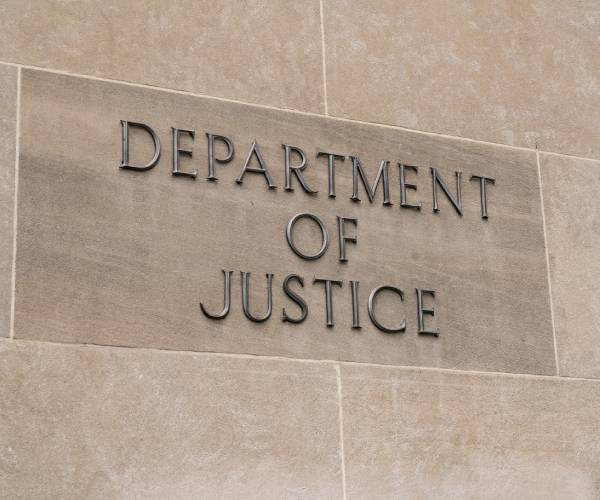
The Department of Justice is once again drawing a clear line in the sand on election integrity. On Thursday, the DOJ filed lawsuits against Georgia, Illinois, Wisconsin, and the District of Columbia for refusing to turn over requested voter information to the Trump administration — information the department says is required under federal law.
These latest filings bring the total number of DOJ lawsuits over voter data to 22, all part of a broader effort to collect detailed voting and election administration information nationwide. In other words, the administration is doing something radical in modern politics: asking states to follow the law and prove their voter rolls are clean.
The newest lawsuits come just one week after the bipartisan Wisconsin Elections Commission voted against complying with the DOJ’s request. Both Republican and Democratic commissioners raised concerns, claiming Wisconsin law prohibits sharing certain voter roll data, including full names, birth dates, addresses, and driver’s license numbers. Conveniently bipartisan resistance, one might say.
Officials from Wisconsin’s Elections Commission and state Department of Justice declined to comment, while Illinois election authorities also chose silence. Georgia, however, took a different approach. The general counsel for the Georgia secretary of state’s office sent a letter to the DOJ stating she had attached the state’s complete list of registered voters — while noting that Georgia law bars disclosure of full birth dates, Social Security numbers, and driver’s license numbers. Translation: some cooperation, but with carefully drawn limits.
According to an Associated Press tally, the DOJ has now requested voter registration rolls from at least 26 states, often alongside information about how states maintain and clean those rolls. States already sued include California, Delaware, Maryland, Michigan, Minnesota, New Hampshire, New Mexico, New York, Pennsylvania, Rhode Island, Vermont, Washington, and just last week, Colorado, Hawaii, Massachusetts, and Nevada.
Meanwhile, the DOJ reports that 10 states are either fully compliant or actively working toward compliance — proof that following federal law is, in fact, possible.
The Trump administration has been crystal clear about its objective: ensuring election security and preventing vote dilution. The DOJ argues that states refusing to provide voter lists and data on ineligible voters are violating federal law, plain and simple.
Predictably, some Democratic officials have raised alarms, questioning how the data might be used and whether privacy protections will be followed. Yet the information requested — names, dates of birth, addresses, driver’s license numbers, and partial Social Security numbers — is standard data already maintained by state election systems. Transparency suddenly becomes controversial only when accountability enters the picture.
Assistant Attorney General Harmeet Dhillon put it bluntly: the law requires states to provide this information so the federal government can protect American citizens from vote dilution. She emphasized that the DOJ’s actions apply regardless of which party controls a state and that the department will stand firmly for election integrity and transparency.
At its core, this fight isn’t about politics — it’s about trust. Free and fair elections depend on accurate voter rolls, and Americans deserve confidence that their votes are not being canceled out by ineligible or outdated registrations. The Trump administration’s message is consistent and optimistic: election integrity strengthens democracy, and enforcing the law is not optional.