
In a profound failure of the justice system, Tennessee officials were unable to carry out the lawful execution of Christa Pike, a death row inmate convicted of a barbaric murder. Pike, who was slated to become the first woman executed in the state since the early 1800s, remained alive Wednesday night despite receiving two doses of the state's lethal injection drug.
The stunning failure prompted Tennessee Governor Bill Lee to immediately halt all remaining scheduled executions for the year and order "a comprehensive, third-party review to determine exactly what occurred." Pike, whose sentence was upheld by the U.S. Supreme Court, was transported to a hospital for treatment.
Governor Lee underscored the gravity of the situation, stating, "Carrying out a lawfully imposed sentence is among the State's most serious responsibilities, and the people of Tennessee expect it to be done in a manner that is not only legal and constitutional, but is effective." The Tennessee Department of Correction maintained that it "followed every step of the State's lawful, established execution protocol approved by the Attorney General's Office." Yet, the outcome speaks for itself.
Witnesses described a scene of distressing incompetence. Pike was strapped to a gurney in the execution chamber, and after the curtains were raised at 7:27 p.m. local time, she uttered what were expected to be her final words, claiming she was "at peace." But peace, and justice, remained elusive.
The execution did not proceed as expected. Pike remained disturbingly awake and, at one point, raised her head, asking prison officials if her arm was "supposed to feel that way." By 8:26 p.m., her lawyers documented in a federal court filing that executioners had "injected both syringes of lethal injection chemicals and Pike is still alive and snoring."
Emergency court filings from Pike's attorneys claimed she "has not lost consciousness and still has a heartbeat," alleging "unnecessary agony." Media witnesses were escorted from the area at 8:53 p.m. as Pike could still be heard snoring behind the closed curtain. The state's protocol accounts for a secondary set of drugs if the inmate is not deceased after the first, but grimly, offers no guidance for when even the second attempt fails.

This debacle unfolded after the U.S. Supreme Court, late Wednesday, vacated a last-minute stay issued by the U.S. Sixth Circuit Court of Appeals, clearing the path for the execution to proceed. While Justices Sonia Sotomayor, Elena Kagan, and Ketanji Brown Jackson dissented, the highest court in the land upheld the state's right to carry out its sentence.

Christa Pike, now 50, was a mere 18 years old in 1995 when she, her boyfriend, and another accomplice committed one of the most depraved murders in Tennessee's history. Their victim, 19-year-old classmate Colleen Slemmer, endured a brutal "satanic" attack that lasted between 30 minutes and an hour. Pike, through a vocational program, had accused Slemmer of "trying to get [her] boyfriend" and "running her mouth." A day before the killing, Pike chillingly told a classmate she wanted to kill Slemmer because she "just felt mean that day," arming herself with a box cutter and a meat cleaver.
Slemmer was lured to a park under false pretenses. Pike initiated the attack, knocking Slemmer to the ground and repeatedly striking her with her knee and foot. Slemmer desperately tried to escape, but Pike's boyfriend, Tadaryl Shipp, held her down as Pike slashed her with the box cutter. The victim's pleas for her life were ignored as the attackers continued, eventually gagging her with a hair tie.

The horror escalated as Shipp carved pentagrams into Slemmer's face and chest. At trial, forensic psychiatrist Dr. William Bernet testified to the "satanic elements" of the crime, describing it as "collective aggression" where a group becomes emotionally aroused, leading to "extremely violent activity." Dr. Eric Engum further testified that Pike suffered from a "very severe borderline personality disorder" but showed no signs of brain damage or insanity.
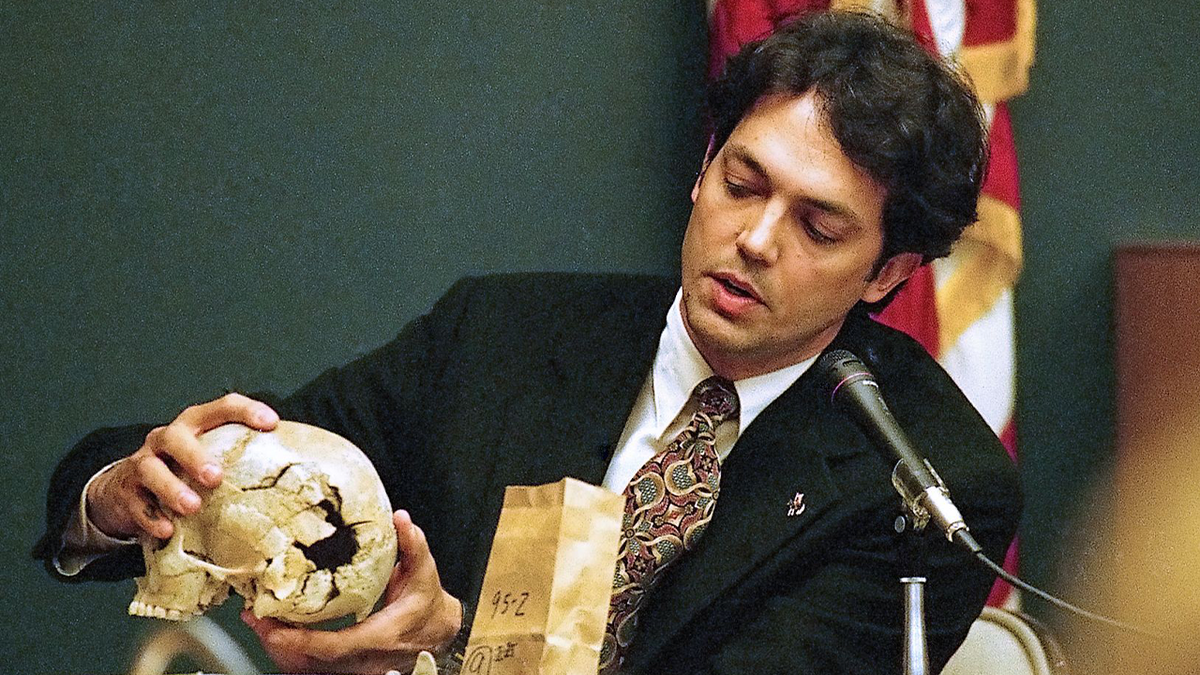
In a macabre display of callousness, Pike took a piece of Slemmer's crushed skull as a trophy, later showing it off at school. She recounted to a friend how she had cut Slemmer's throat a half-dozen times and then brutally smashed her head with a rock. She proudly displayed her bloodstained sneakers and even brought Slemmer's skull fragment to breakfast the following morning.

Neither Shipp, who was under 18 at the time and thus ineligible for capital punishment, nor the third attacker, Shadolla Peterson, who testified for the state, received death sentences. Pike's supporters have argued that her defense failed to adequately present mitigating factors like untreated bipolar disorder and PTSD, leading to a petition for commutation signed by nearly 25,000 people.
This catastrophic failure of an execution raises serious questions about the state's capacity to administer justice. For the victim, Colleen Slemmer, and her family, the promise of final justice remains unfulfilled, a painful reminder that even the most heinous crimes sometimes see justice delayed, if not denied. Ensuring that lawful sentences are carried out effectively is not merely a procedural matter, but a cornerstone of public trust in a system designed to protect the innocent and punish the guilty.