WASHINGTON, DC – Leave it to federal bureaucrats to take decades-old Bigfoot files, dust them off under a Freedom of Information Act request, and treat Sasquatch like a pressing matter of public policy.
The U.S. Forest Service released three Bigfoot-related documents in mid-October after receiving FOIA requests, pulling back the curtain on everything from 1980s track investigations to a 1940s Montana hunting account. According to the agency, it posts records in its National Reading Room whenever a topic is requested three or more times, noting that its regional and Washington offices periodically receive inquiries about legendary creatures.
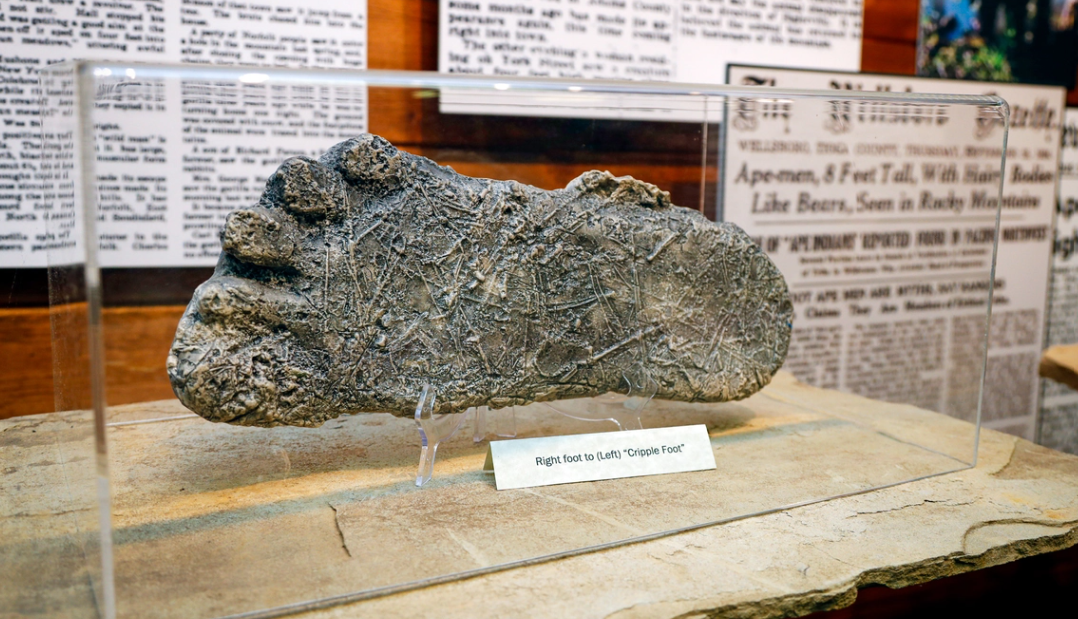
One of the newly released records is a June 18, 1982, letter from wildlife biologist Rodney Johnson to a U.S. Department of Agriculture Forest Service resource staff member in Oregon regarding reported "Bigfoot tracks" in the Low Creek drainage area of the Umatilla National Forest. Johnson photographed the prints—measuring 15 inches long and seven inches wide in one instance—and made plaster casts at two sites, while noting anomalies like a steady four-foot stride across varying inclines, shallower impressions than the investigators' own boots, and isolated tracks rather than a continuous trail.
Johnson concluded the prints came from "something other than a 300-pound plus two-footed being," observing that a foot appeared "rocked" from side to side in several spots. "If the tracks were faked, someone went to a great deal of trouble and detail," he wrote, adding, "I would almost suspect a cast made of an actual foot would have had to be used to make the 'fake' feet," though he noted other foot creases should have appeared.
A July 28, 1982, memorandum from U.S. Border Patrol officer Joel Hardin to the Forest Service district supervisor in Walla Walla, Washington, following a June 17 site visit, reached a similar verdict on human involvement. Hardin wrote, "My opinion is that the tracks were a very clever attempt to perpetrate a hoax involving your office or agency in order to lend authenticity or credibility to the general public," suggesting someone with local access used "some type of soft plaster or rubber coated foot" and noting identical tracks in at least two spots.
Apparently, even back in 1982, government officials had to play referee over whether a giant footprint was a prank or a legend.
The release also includes a Jan. 13, 2003, Clark Fork Valley Press story from Montana about hundreds of large footprints near a local sawmill—where one witness reported a hairy, two-legged creature and another said the tracks looked more human than animal—alongside a six-page account by Leo T. Kinney regarding a 1940s Montana hunting trip in which a whole elk vanished except for its entrails. "Whatever it was had picked up the elk whole and clear of the ground," Kinney wrote, describing an uneasy feeling, chills, and accounts of strong odors and grunting sounds without an actual sighting.
Figures from the Bigfoot Field Researchers Organization show ongoing reports in both states, with 55 sightings logged in Montana from 1978 through October 2024—including an encounter reported by tribal members on the Rocky Boy Indian Reservation—and 262 sightings or encounters recorded in Oregon between 1984 and 2025, including loud knocks reported by a deer hunter near Hyatt Lake in Jackson County in October 2025. A Forest Service spokesperson said Bigfoot and Sasquatch lore belong to the cultural tradition of public lands without endorsing claims of the creatures' existence, adding, "While the Forest Service does not endorse or make any claims regarding the existence of such creatures, we appreciate the public’s enthusiasm for exploring and learning about our public lands."
At the end of the day, Americans exploring the nation's forests and public lands don't need government agencies chasing folklore—they need commonsense stewardship, open access, and real accountability from the institutions entrusted with public land.