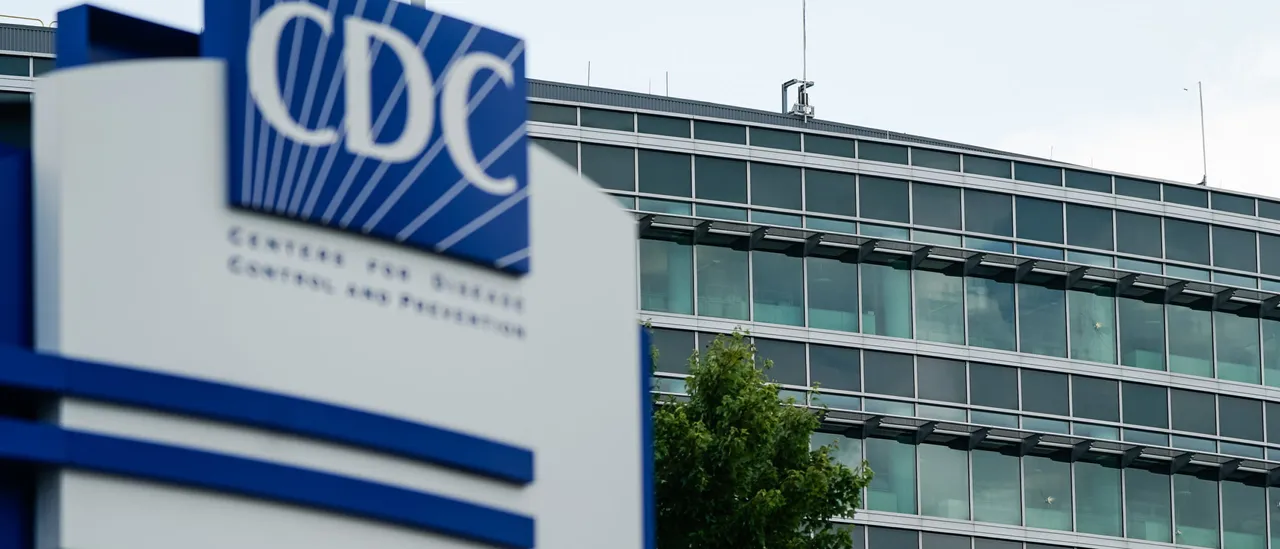
A former CDC-linked researcher accused of stealing more than $1 million in taxpayer-funded research grants is finally back in American custody after reportedly evading U.S. authorities for more than a decade.
Poul Thorsen, a one-time visiting scientist connected to the Centers for Disease Control and Prevention’s Division of Birth Defects and Developmental Disabilities, was extradited from Germany to Atlanta this week after spending roughly 15 years avoiding prosecution.
Federal prosecutors originally indicted Thorsen back in 2011 on 13 counts of wire fraud and nine counts of money laundering. Yet somehow, despite the serious nature of the allegations, the case dragged on internationally for over a decade before authorities finally brought him back to the United States.
Funny how regular Americans can barely miss a parking ticket without consequences, but international fraud cases involving massive sums of taxpayer money can seemingly float around forever.
According to federal authorities, Thorsen allegedly diverted research grant money intended for scientific studies involving autism, fetal alcohol syndrome, genetic disorders, and infant disabilities.
The grants reportedly flowed through Danish government agencies, including the Danish Medical Research Council and the Danish Agency for Science, Technology and Innovation, before investigators say Thorsen manipulated the reimbursement system using fake invoices.
Prosecutors claim the invoices falsely carried the signature of a CDC laboratory section chief and were used to request reimbursement payments for supposed research expenses.
Authorities say Aarhus University, believing it was wiring money to legitimate CDC-associated accounts, instead transferred hundreds of thousands of dollars into accounts allegedly controlled by Thorsen himself through the CDC Federal Credit Union.
According to the U.S. Attorney’s Office, the stolen money was allegedly used to purchase an Atlanta-area home, a Harley-Davidson motorcycle, an Audi, a Honda, and various cashier’s checks.
Federal officials are now seeking forfeiture of the home, vehicles, and motorcycle connected to the alleged scheme.
German authorities arrested Thorsen on June 4, 2025, finally setting the stage for his extradition back to the United States.
Each wire fraud charge carries a potential sentence of up to 20 years in prison, while each money laundering charge carries up to 10 years, along with fines reaching $250,000 per count.
Officials from the Department of Health and Human Services Office of Inspector General emphasized the broader consequences of the alleged fraud.
“His betrayal harms taxpayers, researchers, and the communities who depend on this research,” HHS-OIG spokesperson Yvonne Gamble stated.
And that’s exactly the issue. Americans are constantly told to “trust the experts” and trust massive government-funded institutions with billions of taxpayer dollars. But stories like this remind people why accountability matters — especially when public money intended for medical and scientific research is allegedly abused for personal luxury purchases.
The case is also likely to reignite scrutiny surrounding oversight within large federal health agencies and the systems used to monitor grant funding, particularly after years of growing public skepticism toward bureaucratic institutions.
At the end of the day, whether someone works in government, academia, or scientific research, the same principle should apply across the board: if taxpayer money is stolen, there should be consequences. And after 15 years on the run, federal authorities are finally getting their chance to make that case in court.