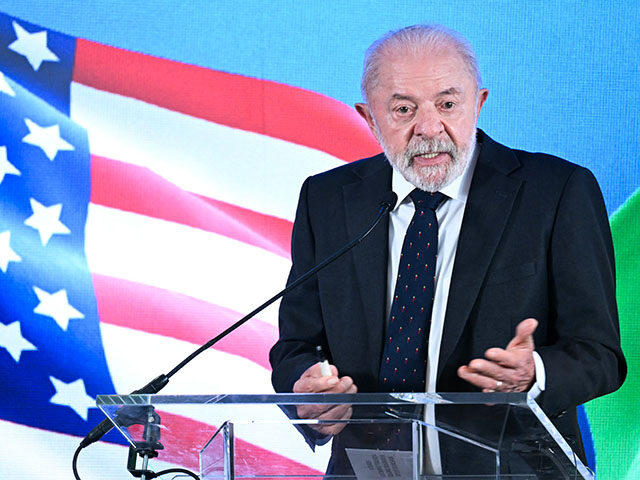
Brazil’s socialist president Luiz Inácio Lula da Silva is claiming that President Donald Trump privately assured him the United States has “no intention of invading Cuba” during a closed-door White House meeting Thursday that reportedly lasted nearly three hours.
According to Lula, Cuba became one of the topics discussed during the private conversation with Trump, though the Brazilian leader admitted he was relying on a translator and wasn’t entirely certain the interpretation was exact.
“I heard — though I’m not sure if the translation was accurate — that he said he has no intention of invading Cuba,” Lula told reporters afterward at the Brazilian embassy in Washington. “I think that’s a very positive sign.”
Well, there you have it. Apparently the international community can rest easy knowing the U.S. Marine Corps is not preparing an amphibious landing in Havana sometime next week.
The meeting itself was unusually private.
Originally, the White House schedule reportedly included a joint press conference before the talks. But Lula personally requested changes to the agenda, leading to the cancellation of the public appearance in favor of a completely closed-door meeting and private lunch with President Trump.
Afterward, Lula held his own press conference at the Brazilian embassy, explaining that neither he nor Trump needed “photography” or media theatrics before discussions.
“Neither I nor President Trump need photography,” Lula reportedly said. “And we don’t need to invent anything for the press.”
Despite their major ideological differences, both leaders apparently described the meeting positively.
President Trump later posted on Truth Social that the meeting went “very well,” with discussions covering tariffs, trade, and other diplomatic matters between the United States and Brazil.
Lula, meanwhile, claimed the meeting represented “an important step” toward strengthening relations between both countries.
The Cuban issue remains especially notable given Lula’s long history of defending the Castro regime and criticizing U.S. sanctions against the communist government.
For years, Lula has blamed America’s embargo policies for Cuba’s economic and humanitarian collapse while downplaying the devastating consequences of more than six decades of communist rule under the Castro dictatorship.
Earlier this year, Lula publicly condemned any potential U.S. military action involving Cuba and claimed the island nation is the victim of what he described as an “ideological blockade.”
He also suggested during Thursday’s remarks that Brazil could potentially help mediate future discussions between the United States and Cuba if necessary.
“If you need help discussing the situation in Cuba, I’m entirely at your disposal,” Lula reportedly said.
The Brazilian leader additionally stated that he’s open to involving himself in broader geopolitical disputes involving U.S. relations with countries like Iran — because apparently every global crisis now comes with an optional Lula mediation package.
Still, beyond the headlines about Cuba, the meeting appeared heavily focused on trade tensions and ongoing disputes between Washington and Brazil.
According to Lula, both governments agreed to have officials continue negotiations surrounding tariffs and U.S. concerns over alleged unfair trade practices involving Brazil’s payment platform Pix.
Throughout the discussions, Lula emphasized that Brazil would continue defending its sovereignty and democratic institutions while remaining open to negotiations with the United States.
At the same time, the meeting underscored something important about President Trump’s foreign policy approach: even while maintaining pressure on adversaries like Cuba, Iran, and Venezuela, Trump continues engaging directly with world leaders across the ideological spectrum when American interests are involved.
That balance between strength and diplomacy has become a defining feature of Trump’s international strategy — applying pressure where necessary while still keeping communication channels open.
And despite endless media narratives portraying Trump as reckless or isolationist, meetings like this continue showing that world leaders still recognize the importance of maintaining direct dialogue with the United States under strong American leadership.