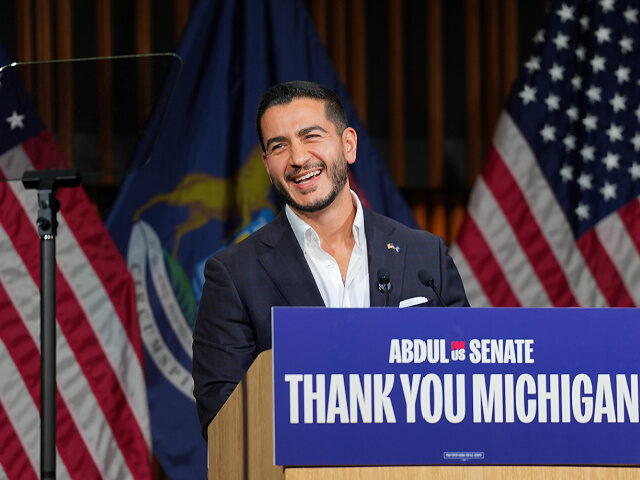
A former spokesman for the Muslim Brotherhood’s political party in Egypt has praised Abdulrahman El-Sayed’s election to the U.S. Senate, describing the Michigan Democrat’s victory as a model for Muslims seeking to advance their cause from within the American political system.
Abdel Mawgoud al-Dardiri, who previously served as a foreign affairs spokesman for Egypt’s Freedom and Justice Party, reportedly characterized El-Sayed’s victory as a success for the “Islamic world.”
Pro-Israel commentator Eitan Fischberger highlighted al-Dardiri’s remarks in a post on X, quoting the former Brotherhood official as saying El-Sayed’s rise demonstrated how Muslims could work “from within the political system” for the “Islamic world.”
The comments have drawn attention because of the Muslim Brotherhood’s history and the political connections surrounding El-Sayed’s campaign.
In August, Ikhwan Online, a publication tied to the Muslim Brotherhood, celebrated El-Sayed’s Democratic primary victory over Rep. Haley Stevens (D-MI). The outlet portrayed the result as a setback for what it called the “Zionist occupation” and praised El-Sayed’s position calling for an end to unconditional U.S. military aid to Israel.
Al-Dardiri, identified in federal campaign records as Abdul Mawgoud Dardery, donated $500 to El-Sayed’s campaign in June, according to campaign records cited by the Washington Free Beacon. He is also identified as a former foreign affairs spokesman for the Brotherhood’s Freedom and Justice Party, which operated before Egypt’s 2013 military coup. He now works as a professor in Minnesota.
Al-Dardiri was among several donors whose past associations with the Brotherhood have attracted scrutiny. The Washington Free Beacon reported that El-Sayed received more than $25,000 from at least six men who co-signed a 2012 letter supporting then-Egyptian President Mohamed Morsi. The outlet also reported that El-Sayed signed the same letter while he was a medical student.
However, allegations that El-Sayed himself has ties to the Muslim Brotherhood remain disputed.
During the Senate campaign, Republican opponent Ken Rogers accused El-Sayed of having “pledged his support to the Muslim Brotherhood.” President Donald Trump also amplified the accusation, describing El-Sayed as a “jihadist Muslim Brotherhood member.”
El-Sayed has repeatedly rejected any connection to the organization. Bridge Michigan found no evidence that he had pledged support to the Brotherhood and reported that he denied signing the 2012 Morsi letter.
“I have never been a member of the Muslim Brotherhood, I never will be a member of the Muslim Brotherhood,” El-Sayed told Fox News.
Al-Dardiri’s praise and the reported campaign donations do not, by themselves, establish that El-Sayed belongs to or supports the Muslim Brotherhood. But the remarks add another dimension to scrutiny of the senator-elect’s political associations, his positions on Israel, and the international figures celebrating his rise.
As El-Sayed prepares to take office, voters will have an opportunity to evaluate his public statements, policy decisions, and political relationships based on the evidence rather than allegations alone.