France decided to lecture the United States on human rights this weekend, and the response from former National Security Adviser Mike Waltz was swift, direct, and unmistakable.
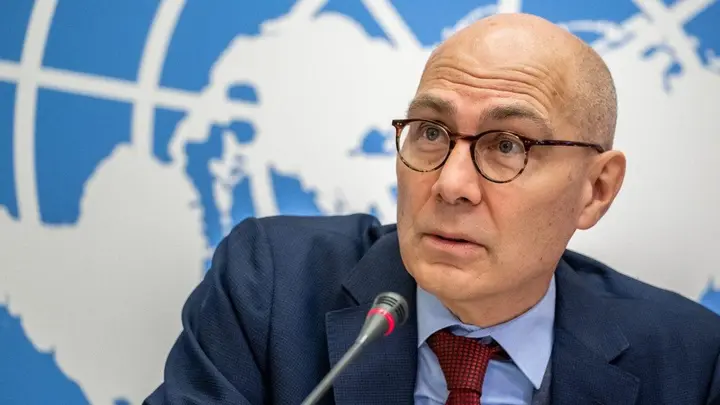
The controversy erupted after a contentious United Nations vote renewed U.N. High Commissioner for Human Rights Volker Türk for another four-year term. Rather than simply celebrating the outcome, France's official mission to the United Nations in Geneva used the moment to launch a public attack on the United States.
"The US used to be a beacon of human rights. Not anymore," the French mission declared in a post on X. "Today, it stands alongside North Korea, Nicaragua, Mali & Russia, isolated. And the world no longer listens to it."
It was an extraordinary message from one of America's oldest allies—one that compared the United States to some of the world's most repressive regimes simply because Washington refused to fall in line during a U.N. vote.
Mike Waltz was having none of it.
The former Trump national security adviser blasted the French government's rhetoric, rejecting the implication that America must earn approval from international bureaucracies to defend freedom or protect its own interests. His response reflected a broader America First principle that has defined President Donald Trump's foreign policy: the United States answers first to the American people—not to unelected officials at the United Nations or foreign governments eager to score political points.
The exchange also highlights a familiar pattern. When Washington refuses to rubber-stamp the preferences of international institutions, critics often frame American independence as isolation. Yet supporters of the America First agenda argue the opposite is true—that strong leadership sometimes means saying no, even when global elites would prefer unquestioning compliance.
For many conservatives, France's social media broadside said more about the priorities of today's international establishment than it did about the United States. Equating America with authoritarian regimes over a disagreement at the U.N. is the kind of political theater that may generate headlines online, but it does little to advance the cause of genuine human rights.
The larger question extends well beyond one diplomatic spat. Should America's foreign policy be guided by applause from international organizations, or by the interests, security, and constitutional principles of the United States? The Trump movement has made its answer clear for years.
As Washington continues to chart its own course on the world stage, exchanges like this serve as another reminder that standing firm often invites criticism from the same international circles that have long expected America to foot the bill while surrendering the final say. For millions of Americans, that's not a warning—it's exactly what putting America first looks like.