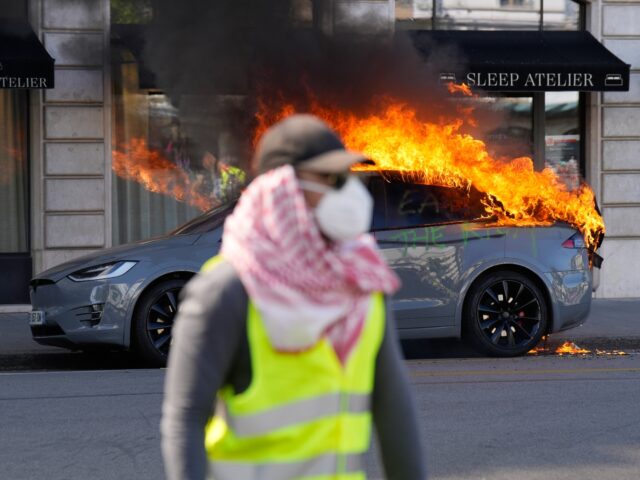
Demonstrations surrounding President Donald Trump’s meeting with G7 leaders spilled into unrest in Geneva on Sunday, with reports of confrontations between protesters and police, property damage, and disruptions across parts of the city ahead of Monday’s summit sessions.
The protests, organized around opposition to Trump’s appearance and broader political grievances, drew activists and demonstrators from multiple groups. According to reports cited by organizers and observers, some gatherings escalated beyond peaceful protest and resulted in fires, vandalism, and clashes with law enforcement.
Images and accounts from the scene reportedly showed damaged storefronts, police deployments, and demonstrators moving through parts of the city as authorities attempted to contain disturbances.
Supporters of stronger public-order measures argue that political protest loses legitimacy when it turns destructive. They contend that damaging businesses and confronting police does little to persuade the public and instead reinforces concerns about political extremism and selective tolerance for disorder.
Critics of that view caution against treating all demonstrators as responsible for acts carried out by smaller groups within larger protests. They argue that major political gatherings often attract a mix of peaceful protesters and more confrontational factions, and that broad labels can oversimplify events on the ground.
Still, the contrast was difficult to ignore.
While world leaders prepared for high-level discussions on economics, security, and international cooperation, public attention shifted toward burning objects, damaged windows, and street confrontations. Apparently, some activists remain convinced that smashing local businesses is an effective way to critique global policy.
The unrest also highlights a recurring challenge facing Western democracies: balancing the right to protest with expectations of public order.
Supporters of Trump are likely to point to the scenes as evidence that anti-establishment activism is too often excused until it becomes disruptive. Opponents may argue the demonstrations reflect broader frustrations that should not be dismissed because of isolated incidents.
But for many watching from afar, the question is simpler.
Political disagreement is expected. Whether public disorder becomes an accepted form of expression is a debate that appears far from settled.