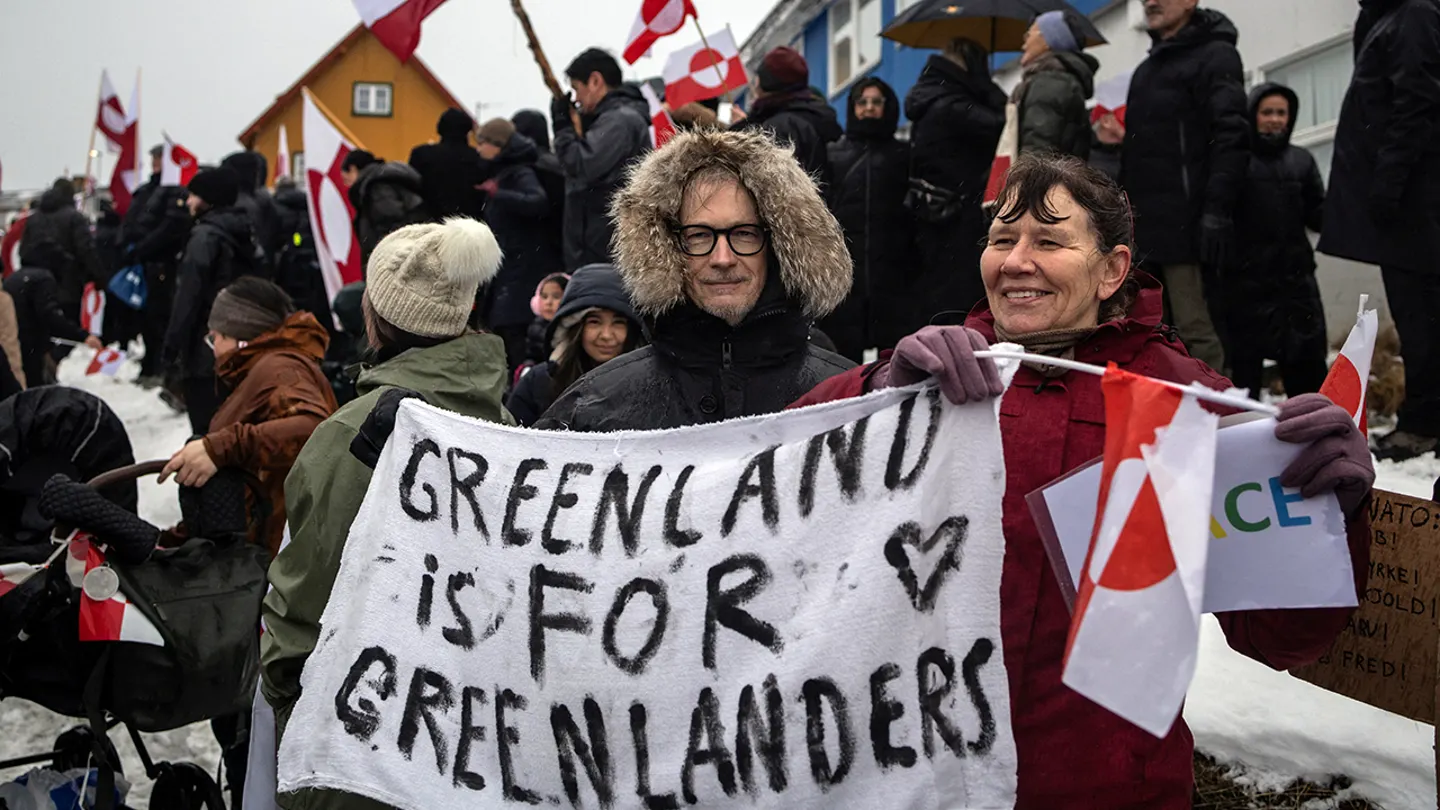
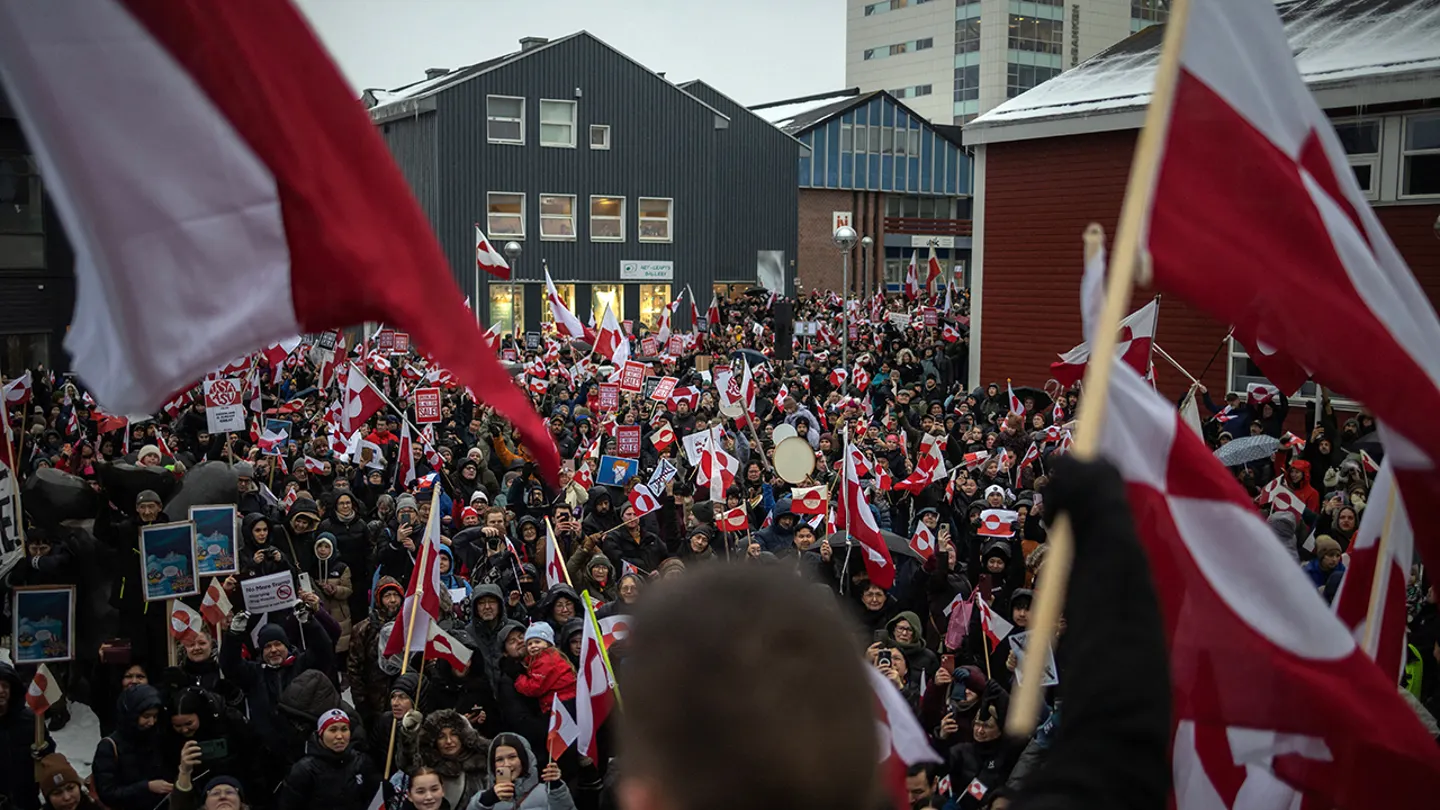
Protests broke out across Greenland on Saturday as demonstrators reacted angrily to President Donald Trump’s renewed push to acquire the Arctic island, with crowds chanting that Greenland is “not for sale” and insisting they want to determine their own future, according to Reuters. Nothing says “calm geopolitical discussion” quite like protest signs and slogan hats.
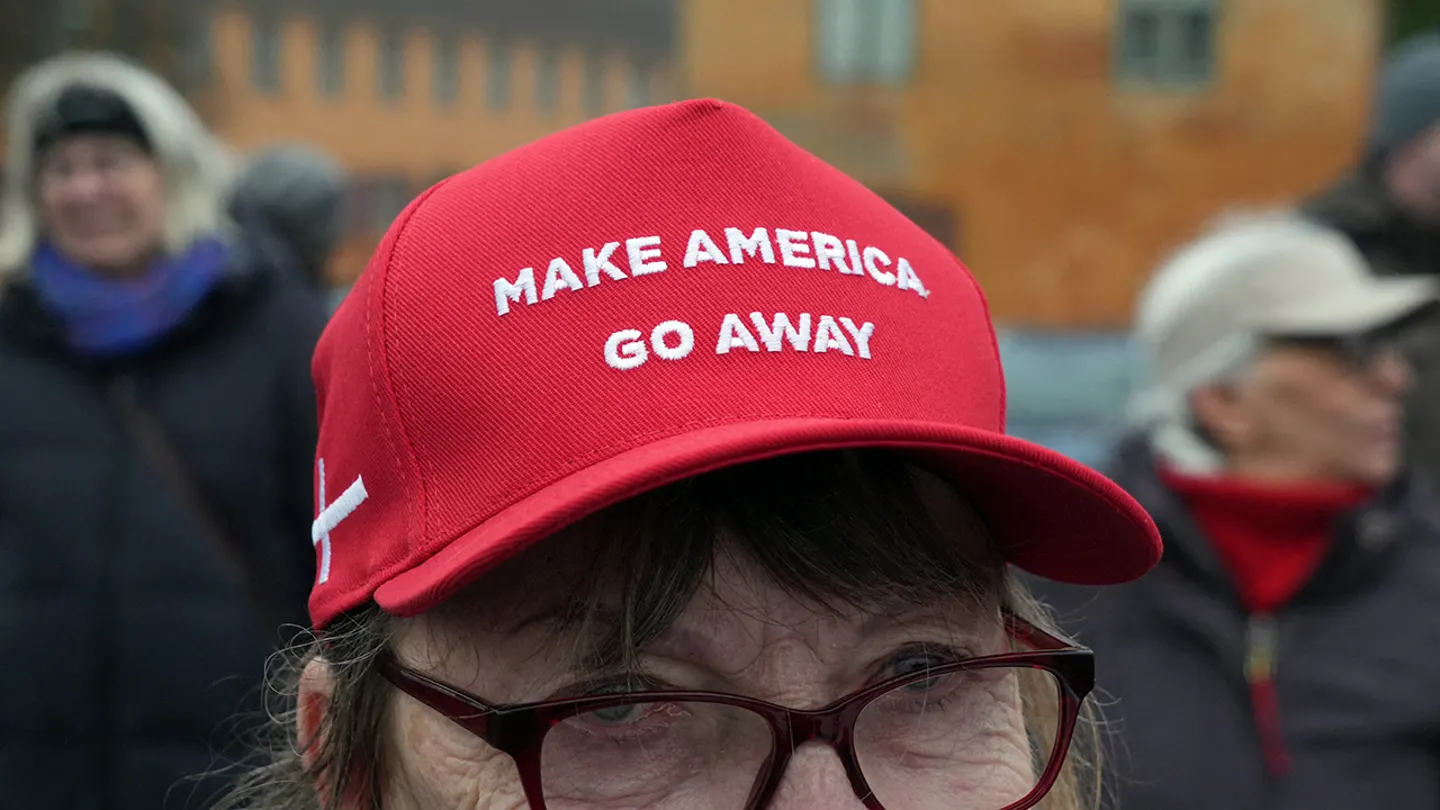
In the capital city of Nuuk, demonstrators marched through the streets, some wearing red baseball caps styled after President Trump’s iconic MAGA hats — though modified to read “Make America Go Away.” Creative, if nothing else. One protester was captured on video declaring, “We are not interested in being Americans,” a statement that drew cheers from the crowd and eye-rolls from anyone paying attention to global security realities.
The protests came after Trump announced a new economic pressure strategy tied directly to Greenland. In a Truth Social post on Saturday, the president said several European countries, including Denmark, would face a 10% tariff starting Feb. 1, rising to 25% on June 1, unless a deal is reached for the “Complete and Total purchase of Greenland.” Trump made clear the tariffs would remain until an agreement is secured — a classic Trump negotiating move that tends to get people’s attention fast.
Thousands of protesters, led by Prime Minister Jens-Frederik Nielsen, marched toward the U.S. consulate in Nuuk carrying flags and banners and chanting “Kalaallit Nunaat,” Greenland’s name in the local language, Reuters reported. Nielsen addressed the crowd outside the consulate, drawing loud applause. One civil servant, Naja Holm, summed up the mood by telling Reuters, “Greenland is not for sale. It is not a toy. This is our home.” A heartfelt message — even if it sidesteps the bigger strategic picture.
Trump, however, has been clear about why Greenland matters. He has repeatedly said the island is vital to U.S. national security due to its strategic Arctic location and valuable mineral resources, warning that China and Russia are actively seeking influence there. According to Trump, U.S. control would strengthen Western security in the Arctic — a claim that tends to make sense to anyone not pretending the Arctic is immune from global power competition.
European leaders reacted sharply, as expected. Sweden’s prime minister said Europe would not be “blackmailed,” while French President Emmanuel Macron warned that tariff threats were unacceptable and promised a united European response in an X post. Dutch Foreign Affairs Minister David van Weel echoed those concerns, noting that military exercises in Greenland are meant to support Arctic security and that the Netherlands is coordinating with EU partners.
U.K. Prime Minister Keir Starmer also weighed in, stating that Greenland is part of the Kingdom of Denmark and that its future belongs to Greenlanders and Danes, while criticizing tariffs on NATO allies. He added that Arctic security matters for the entire alliance and should be addressed collectively.
Despite the outrage, protests, and dramatic statements, one thing remains clear: President Trump is once again forcing the world to confront uncomfortable truths about security, strategy, and influence in a rapidly changing Arctic. Whether critics like it or not, putting these issues front and center is exactly how serious leadership operates — and that kind of clarity is always a step toward a stronger, safer future.