U.S. Secretary of War Pete Hegseth delivered a pointed message to European leaders on Saturday, warning that the continent’s ongoing immigration crisis is fueling the spread of what he described as “dangerous ideologies” and raising concerns about the future direction of Europe.
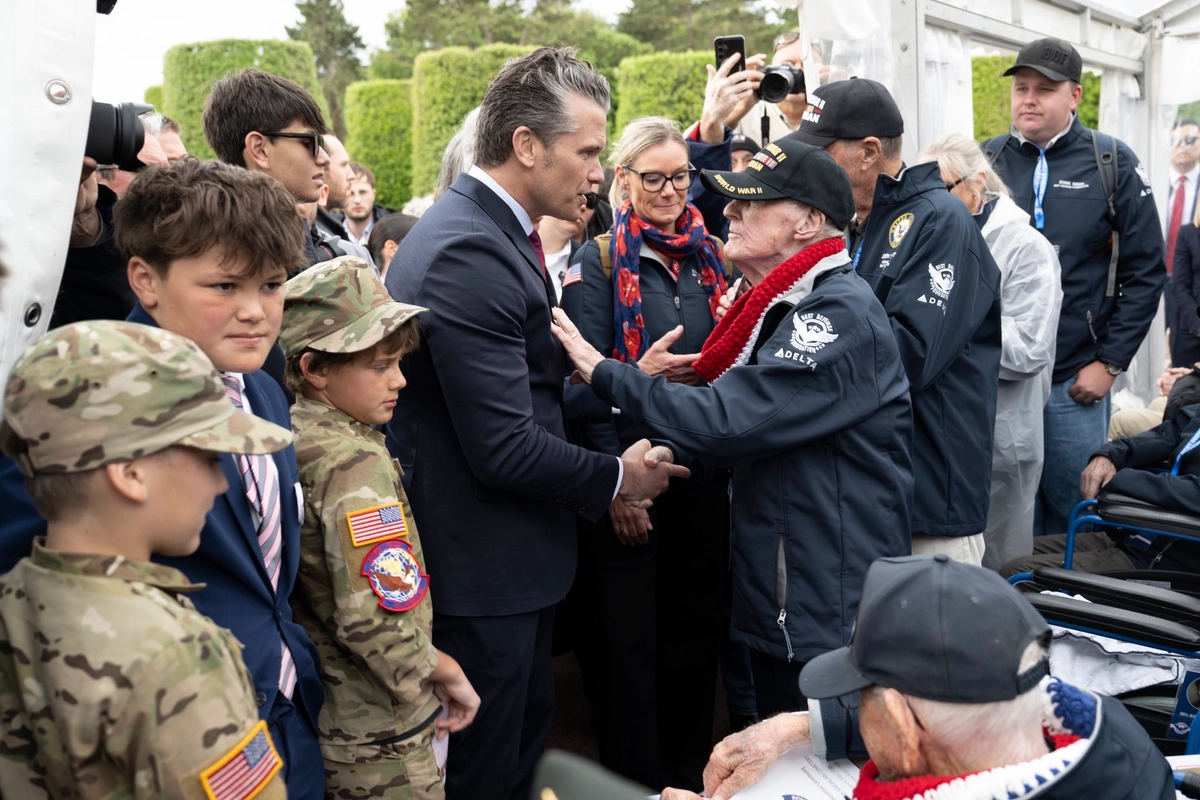
Speaking in France during ceremonies commemorating the Allied invasion of Normandy in World War II, Hegseth drew a comparison between the historic challenges faced by Europe and the modern pressures confronting the continent today.
“Sadly, today, different European beaches are stormed by different dangerous ideologies,” Hegseth said. Referring to migration flows into countries such as Spain, Italy, Greece, and Bulgaria, he added, “Boats and men arrive. When will European capitals do something about that invasion? Or is it too late? I pray not, and I believe not.”
The remarks came during events marking the 82nd anniversary of D-Day, one of the most significant military operations in history. On June 6, 1944, approximately 133,000 troops from the United States, the British Commonwealth, and allied nations landed on the beaches of Normandy in a massive effort to liberate Europe from Nazi occupation.
The operation came at an enormous cost. Allied casualties reached roughly 10,300 on D-Day alone, and by the end of June, more than 850,000 troops had crossed into France as part of the campaign to restore freedom to the continent.
Hegseth’s comments connected the sacrifices of that generation with what he views as the challenges facing Europe today. His warning suggested that while past generations fought to defend Western civilization from external threats, modern leaders must be willing to confront new pressures that could reshape their societies. Because honoring history is important, but pretending current problems don't exist has never been a particularly effective strategy.
While the debate over immigration continues across Europe, Hegseth expressed optimism that meaningful action can still be taken. His message was ultimately one of urgency, but also hope—that European nations can address today's challenges while preserving the values and freedoms that previous generations fought so hard to defend.