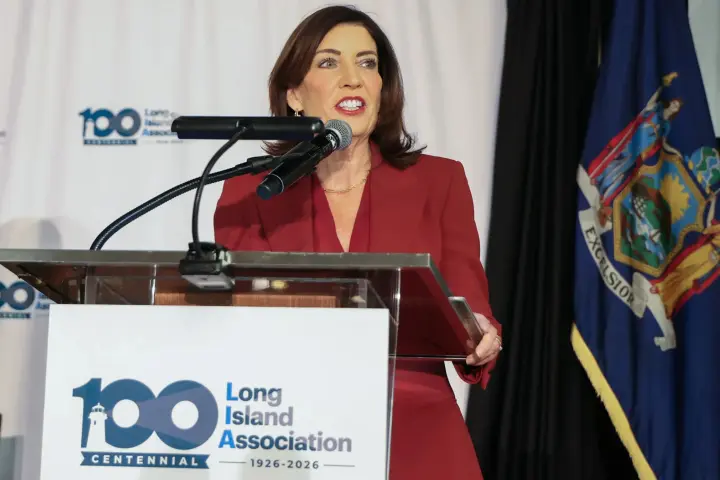
Caving, once again, to the loudest progressive activists in the room, Gov. Kathy Hochul quietly signed a bill last month that will all but guarantee more child abuse goes unreported in New York City—all in the name of “fixing racial disparities” in the child-welfare system.
Under the new law, callers who report suspected child abuse to the city’s Administration for Children’s Services (ACS) will no longer be allowed to do so anonymously. Instead, they’ll be required to provide their names and phone numbers, supposedly to curb “false tips” that activists claim drive “inexcusable racial disparities” and “unnecessary interactions” with child welfare authorities.
Translated into plain English: fewer tips, fewer investigations, and more abused children left to suffer in silence.
Advocates of the law insist that anonymity enables vindictive exes, racist neighbors, or meddling landlords to harass innocent parents by calling ACS. One activist, Shalonda Curtis-Hackett, triumphantly declared, “We won’t stop until every family in this state can sleep more peacefully, knowing that one part of this harmful system is no longer allowed to operate unchecked.”
What she didn’t say is that plenty of concerned grandparents, neighbors, teachers, and family friends will now think twice—or not call at all—out of fear of retaliation. Promises that their identities won’t be “publicly” revealed are cold comfort in tight-knit neighborhoods where word travels fast and consequences can be severe.
The result is obvious to anyone not blinded by ideology: more abuse will go unreported, more kids will remain trapped in dangerous homes, and some will die. And despite the activists’ rhetoric, minority children will suffer the most.
As Naomi Schaefer Riley has pointed out, Black children are more than three times as likely to die from abuse or neglect than white children. That tragic reality means that effective child-protection efforts will, by definition, “disproportionately impact” Black families. The solution is not to weaken reporting—it’s to protect children.
Recent New York City cases underscore the stakes. Four-year-old Jahmeik Modlin was slowly starved to death in an apartment stocked with food. Six-year-old Jalayah Eason Branch was hung by her wrists and beaten to death by her own mother. In both cases, ACS already had some level of awareness. What was needed was more vigilance and faster intervention—not fewer tips and higher barriers to reporting.
If a report turns out to be false, ACS caseworkers are fully capable of determining that with a basic visit. The minor inconvenience to an innocent parent is a microscopic price to pay for the chance to save a child’s life.
But the activists pushing this policy have made their priorities clear. They’re willing to tolerate more abused children—so long as the numbers look less “disproportionate” on paper. Now the Legislature and Gov. Hochul have signed off on that bargain.
It’s hard to imagine how anyone involved in this decision sleeps at night.