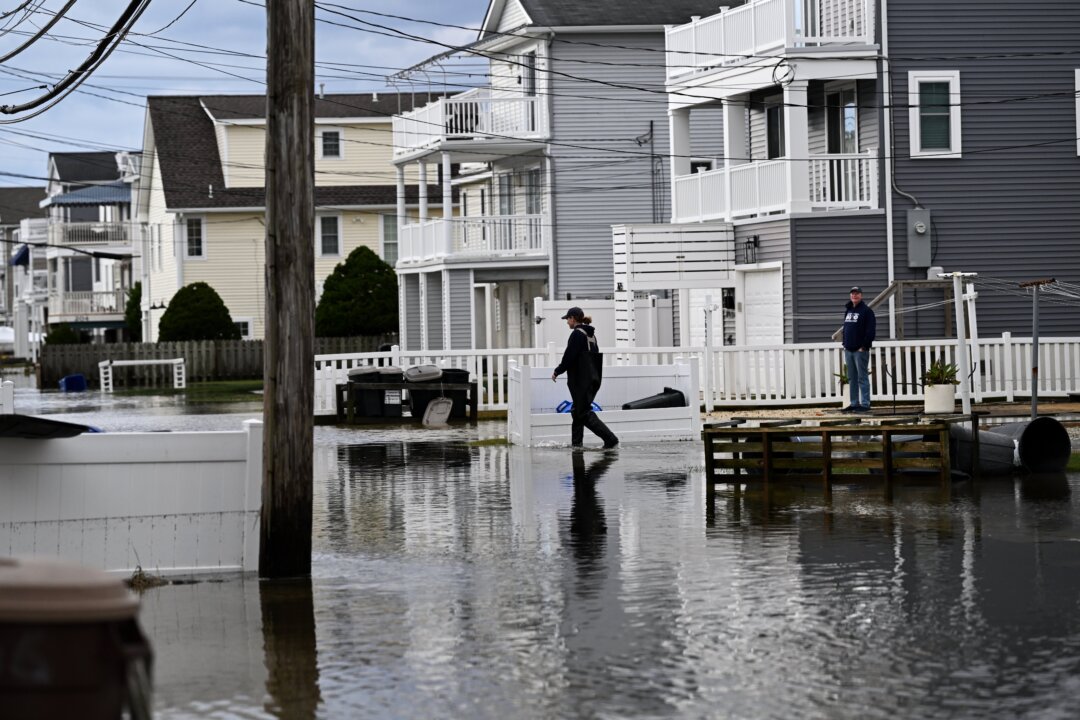
As millions of Americans celebrated Thanksgiving, a powerful storm system swept across the Eastern United States, leaving a quarter-million families and businesses in the dark. Days after the holiday, the struggle to restore basic services continues, casting a harsh light on the vulnerability of vital infrastructure during critical times.
Power outages, which surged past 900,000 customers on Thanksgiving Day, lingered for 260,167 homes and businesses by Friday evening, according to PowerOutage.us. From the Mid-Atlantic to the Northeast, and even stretching into Missouri, the severe weather transformed a holiday of gratitude into a period of frustrating hardship and uncertainty for many.
The storm unleashed heavy rains, destructive winds, and even wet, heavy snow in parts of Missouri, creating a logistical nightmare during one of the nation's busiest travel weekends. Flights were grounded, road trips were slowed to a crawl, and the simple act of gathering with loved ones became an arduous, often impossible, task.
States bore the brunt unevenly, with Pennsylvania reporting 62,182 customers still without electricity, Maryland counting 34,814, and Missouri grappling with 47,125 unresolved outages by Friday night. These aren't just numbers; they represent families unable to cook, keep warm, or even communicate effectively in their own homes.
Utility crews, described as working "nonstop," faced a formidable challenge. "Due to the continuation of the storm and the severity of the damage, estimated restoration times … may be delayed as crews assess conditions and safely complete repairs," Baltimore Gas and Electric, a major regional provider, stated on its website. This honest assessment, while understandable, offers little comfort to those shivering in the dark, highlighting the inherent difficulties in rapidly addressing widespread damage caused by downed trees and severed power lines.
The severity of the weather prompted governors in New Jersey and New York to declare emergencies ahead of the holiday, and even the iconic Macy’s Thanksgiving Day Parade was postponed until November 28 due to high wind concerns. While these proactive measures aimed to mitigate risks, the sheer scale of the power disruptions underscores the need for robust infrastructure and swift, coordinated responses when American communities are hit.
The National Weather Service reported that while conditions were gradually improving across the eastern U.S., blustery winds of 25–35 mph with higher gusts were expected to persist through Friday. A "cold upper low" also promised a few inches of wet snow for higher elevations in the central Appalachians, prolonging the misery for some.
As the system slowly shifts out into the Canadian Maritimes, bringing clearer skies and milder temperatures by Saturday, the aftermath leaves a lingering question: Are our essential services truly prepared for the increasing frequency and intensity of such weather events? For hundreds of thousands of Americans, this Thanksgiving was a stark reminder that reliable power isn't a luxury; it's a fundamental necessity that impacts every aspect of daily life, especially during a cherished national holiday. Ensuring our infrastructure can withstand the test of nature, and that restoration efforts are as efficient as humanly possible, is a matter of public trust and national resilience that demands unwavering attention.