In a revealing vote on Tuesday, the U.S. House of Representatives faced a crucial test: to condemn socialism, an ideology that has consistently brought misery and oppression wherever it has been tried. The results were stark: a vast majority of House Democrats resoundingly rejected the resolution, signaling an alarming embrace of radical left-wing principles.
This critical vote almost didn't happen. A procedural blockade by some House conservatives nearly derailed the entire legislative agenda. Yet, in a stunning twist that blindsided House Minority Leader Hakeem Jeffries (D-N.Y.), two so-called "moderate" Democrats crossed the aisle to side with Republicans, providing the narrow margin needed to bring the anti-socialism measure to the floor.
The fallout was immediate and severe. Jeffries, reportedly furious, quickly issued a dramatic statement threatening "serious consequences" for the two defiant lawmakers, calling their move a "significant breach of trust." The internal Democrat Party drama exposed deep fissures as the party's leadership grapples with its increasingly radicalized base.

The resolution, which not only condemned socialism in all its forms but also unequivocally affirmed support for election integrity and called for the passage of the Safeguarding American Voter Eligibility (SAVE) Act, passed 220 to 192. Every single "no" vote came from Democrats, including the entire Democrat senior leadership: Jeffries, House Minority Whip Katherine Clark (D-Mass.), and House Democratic Caucus Chair Pete Aguilar (D-Calif.). This vote was a public declaration of where the modern Democrat Party truly stands on fundamental American values.
House conservatives had strategically used a "rule vote" to force the hand of the Democrat caucus, understanding that it would expose their true ideological leanings. Five Republicans initially voted against the rule, not due to the anti-socialism measure itself, but in protest of how their leaders handled a short-term funding bill and its Senate modifications, which included an unrelated measure to delay a congressionally approved hemp product ban and a provision curbing the Trump administration's control over federal grants. This tactical maneuver created an opening that the Democrats unwittingly walked into.
It was Reps. Jared Golden (D-Maine) and Marie Gluesenkamp Perez (D-Wash.) who provided the two critical votes, pushing the rule over the finish line in a tight 209 to 208 tally. Their unexpected move paved the way for the anti-socialism debate.
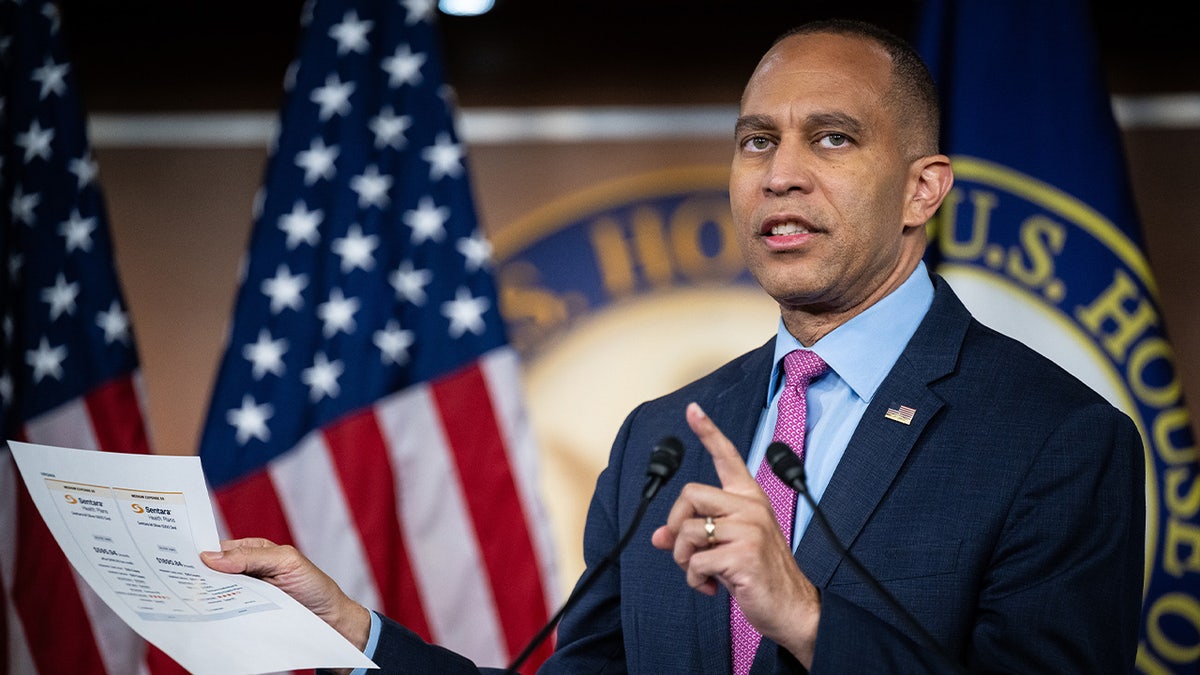
The Democrat leadership's response was swift and retaliatory. "The decision by two of our colleagues to blindside the entire House Democratic Caucus and join with the Republican majority to pass a procedural rule on the brink of failing represents a significant breach of trust," the leaders declared. "It is an action that necessitates a serious response, and we have asked the Committee on Caucus Rules to take this up in short order." Apparently, common sense needed a permission slip from the radical left.
In the final vote on the resolution, all Republicans stood united in condemning socialism and upholding election integrity. They were joined by eight Democrats, including Golden and Gluesenkamp Perez, along with Reps. Don Davis (D-N.C.), Vicente Gonzalez (D-Texas), Henry Cuellar (D-Texas), Kathy Castor (D-Fla.), Gabe Vasquez (D-N.M.), and Darren Soto (D-Fla.). Reps. Maggie Goodlander (D-N.H.) and Chrissy Houlahan (D-Pa.) voted "present," effectively avoiding a stance.
This vote comes at a pivotal moment, as candidates linked to the Democratic Socialists of America (DSA) continue to gain power within the Democrat Party, toppling incumbents and pushing the party further left. The House GOP has consistently warned that this socialist insurgency threatens the very fabric of American society.

Republican Study Committee Chairman August Pfluger (R-Texas) minced no words, telling Fox News Digital, "Socialism has failed everywhere it's been tried without exception. It's a dangerous ideology that creates misery for the very people it claims to help. Today's vote puts the Left on the record and removes any doubt about where my colleagues on the other side of the aisle stand." Rep. Jeff Crank (R-Colo.), who spearheaded the resolution, underscored its simplicity: "The resolution is pretty easy, right? It condemns socialism in all its forms, including the DSA, recommits ourselves to the Constitution of the United States…a third point is that we don't want non-citizens voting in elections."
Democrats, predictably, dismissed the resolution as a "meaningless political exercise" and "silly season" that does nothing to help Americans with their everyday problems. Rep. Jim McGovern (D-Mass.) scoffed, "So you're concerned about rising gas, or are you concerned about grocery prices? You know, don't worry. Republicans in Congress are passing another non-binding resolution condemning socialism." Apparently, safeguarding the nation from a destructive ideology is not a "real problem" for the modern Democrat Party.
The unexpected defiance from Golden and Gluesenkamp Perez, while infuriating to their leadership, was reportedly rooted in procedural disagreements over the handling of a short-term funding bill. The Senate had modified an original House-passed bill, adding provisions to delay a congressionally approved hemp product ban and curb the Trump administration's control over federal grants. This complex scenario highlights the deep, often self-serving, motivations behind even "moderate" Democrats' actions, far from a sudden ideological conversion.

This episode serves as a stark reminder of the widening chasm between the America First movement and the increasingly socialist tendencies of the Democrat Party. While Republicans stand firm on principles of freedom, election integrity, and rejecting destructive ideologies, the Democrat leadership seems intent on punishing any within their ranks who dare to defy their march toward the radical left. The American people now have a clear choice to make about the future of their nation.