New York spent years building a sanctuary system designed to put distance between local authorities and federal immigration enforcement. In August, ICE showed what happens when federal agents decide to work around it.
Immigration and Customs Enforcement arrested 2,197 illegal migrants in New York between July 27 and August 29 as part of “Operation Rotten Apple,” according to the Department of Homeland Security.
And the list of those taken into custody included people with serious criminal histories.
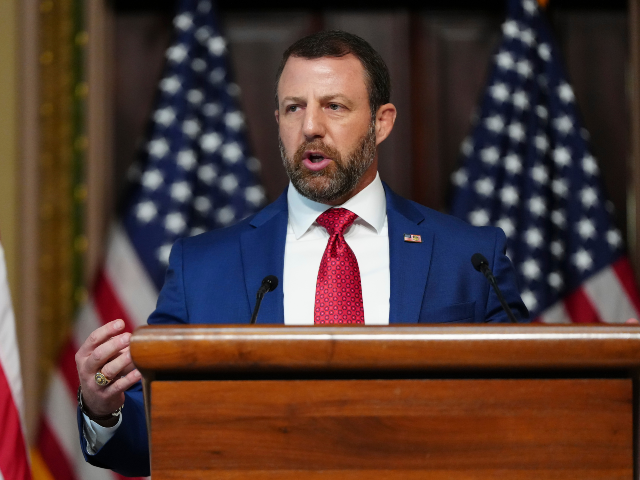
At a Tuesday press conference, Homeland Security Secretary Markwayne Mullin said the operation targeted dangerous individuals while accusing New York's sanctuary politicians of making the job harder.
“Operation Rotten Apple did what sanctuary politicians in New York City and the state of New York refuse to do: made the Empire State safer,” Mullin said.
The numbers tell only part of the story.
DHS said the arrests included Andreas Bernal Chiquito, a Colombian national with previous arrests involving sexual assaults against children; Palvinder Singh, an Indian national who was convicted of rape in Germany; and Carlos Mendez-Acosta, a Venezuelan migrant who was convicted of rape, according to the agency.
These are precisely the kinds of cases that make sanctuary policies such a politically explosive issue.
Federal immigration authorities are responsible for enforcing federal immigration law. Yet in New York, state and city policies have increasingly restricted cooperation between local agencies and ICE.
Mullin said the federal operation was carried out without assistance from local or state police agencies, according to PIX11.
That disconnect is now impossible to ignore.
New York Gov. Kathy Hochul recently backed the Local Crimes, Local Cop Act, which took effect August 25. The law requires county sheriffs to end their ICE agreements under the federal 287(g) program and restricts their cooperation with immigration authorities.
Fifteen county sheriffs have responded by suing the state over the measure.
Then there is New York City.
Mayor Zohran Mamdani signed legislation in January barring ICE from operating out of Rikers Island or other city correctional facilities.
So while federal agents were conducting a major enforcement operation, New York's political leadership was simultaneously tightening the walls around local cooperation.
And somehow, Americans are expected to believe those policies have nothing to do with the federal government's decision to go it alone.
Mullin did not mince words when addressing the state's sanctuary politicians.
“We won’t let sanctuary politicians stand in our way. If you’re a state or local politician, your best bet is to cooperate with us so we can all make America safe again,” he said.
That message fits squarely within the Trump administration's broader America First approach to immigration: federal law cannot mean much if local governments can simply decide they will not help enforce it.
Trump border czar Tom Homan has likewise blasted New York Democrats over policies he says protect criminal illegal migrants from deportation.
The larger issue is not simply whether ICE can make arrests. It is whether federal immigration law will actually be enforced when state and city governments choose cooperation—or obstruction.
For years, sanctuary jurisdictions have argued that limiting cooperation with ICE makes communities safer. But when federal agents identify migrants with convictions or serious criminal histories, the public is left with a basic question: Who exactly benefits when government agencies are prevented from working together?
Operation Rotten Apple has provided a blunt answer from the federal side.
ICE made nearly 2,200 arrests in roughly a month, even while operating in a state where Democratic leaders have erected significant barriers to cooperation.
For the Trump administration, that is the point. Federal immigration enforcement is back in the business of enforcing the law—and sanctuary politics in New York is no longer enough to stop it.