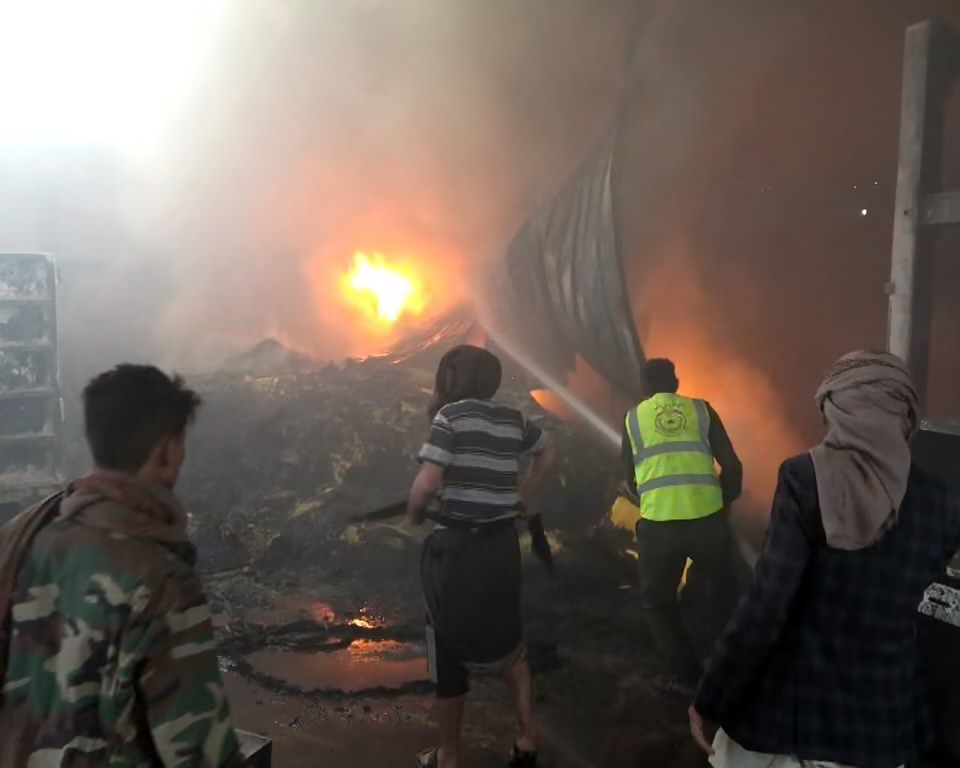
As the Middle East continues its volatile dance, the Iran-backed Houthi militants in Yemen are proving once again that radical proxies, emboldened by their patrons, pose a direct threat to stability and crucial international pathways. Even as the Saudi-backed Yemeni government declared an ambitious new military offensive to reclaim lost ground, the Houthis have dramatically escalated their territorial gains, demonstrating a disturbing surge in their Iran-fueled aggression.
The declaration from Yemen's presidential council head, Rashad al-Alimi, on Sunday, came just hours after reports surfaced that the Houthis had effectively cut a vital supply route to the besieged city of Taiz, encircling a key government-held area. This move underscores the harsh reality on the ground, where the internationally recognized government struggles to stem the tide against persistent Houthi advances.
"I announce today the start of military operations to retake the remaining territories of the republic and extend the authority of the state and its institutions across the entire national territory," al-Alimi stated, outlining a goal that appears increasingly challenging given recent Houthi successes.
These recent gains include swaths of the country's Red Sea coastline and areas around the Bab al-Mandab strait—a critical chokepoint for international shipping that is far too often overlooked by global powers. The Houthis' lightning offensive has not only seized strategic coastal territories but also positioned them to further disrupt global trade routes, a tactic favored by their Iranian benefactors.
Hours before al-Alimi's announcement, the Houthis severed a critical supply link connecting Taiz with the interim capital, Aden. This move, confirmed by multiple security and military sources, followed days of intense fighting in the region.
"We were informed that the Houthis had taken control of the al-Safiya area, where they cut the main road and took control of the police station," a police source in the area confirmed. Yemeni military sources corroborated Houthi control over the route, noting traffic had been halted and Taiz city was now surrounded, with clashes continuing.
The human cost of this escalating proxy war is undeniable. Reports indicate more than 70 casualties in the Taiz province alone over a single day, with both government and Houthi fighters among the dead. The city of Taiz, while still under government control, has been under siege from Houthi forces for an extended period, serving as a brutal focal point in Yemen's long-running civil war.
Adding to the regional instability, Houthi military spokesperson Yahya Saree claimed responsibility for ballistic missile and drone attacks on Saudi energy company Aramco's sites in Riyadh and Khurais, alleging they caused significant fires. These attacks, Saree claimed, were in retaliation for Saudi-led airstrikes in Yemen. While Saudi Arabia offered no immediate confirmation, these actions highlight the Houthis' expanding capabilities and their willingness to directly target one of America's key allies in the region.
The attacks on Saudi oil infrastructure come as Saudi oil exports already face pressure due to Iran's persistent threats and blockades in the Strait of Hormuz in the Gulf. The intertwined conflicts underscore a growing regional crisis, fueled by an aggressive Iranian regime and its proxies, which threatens not only the stability of the Middle East but also global energy security and freedom of navigation.
This escalating conflict in Yemen is more than a regional skirmish; it's a stark reminder of the global instability fostered by rogue regimes and their proxies. It demands steadfast leadership to protect American interests, ensure the free flow of international commerce, and uphold international order against those who seek to destabilize it for their own malign purposes. The world watches as Iran continues to project its power through these proxies, challenging the resolve of nations committed to peace and security.