Iran is once again keeping the United States and the international community waiting after failing to provide a clear response to the latest American-backed peace proposal aimed at stabilizing the Persian Gulf and extending a fragile ceasefire.
President Donald Trump said Friday that Washington expected Iran’s response “supposedly tonight,” following negotiations conducted through Pakistani mediators.
But as of Saturday, there was still no public indication that Tehran had formally accepted the proposal — and Iranian officials instead spent much of the day questioning America’s sincerity while simultaneously accusing U.S. forces of escalating tensions in the region.
In other words: Iran wants negotiations, but apparently also wants to keep firing at ships while negotiating about not firing at ships.
Iranian Foreign Minister Abbas Araghchi openly cast doubt on the seriousness of American diplomacy during a call with Turkey’s foreign minister, claiming recent U.S. military actions in the Gulf had increased Tehran’s “suspicions” about Washington’s true intentions.
The comments came immediately after another dangerous naval confrontation in the Persian Gulf.
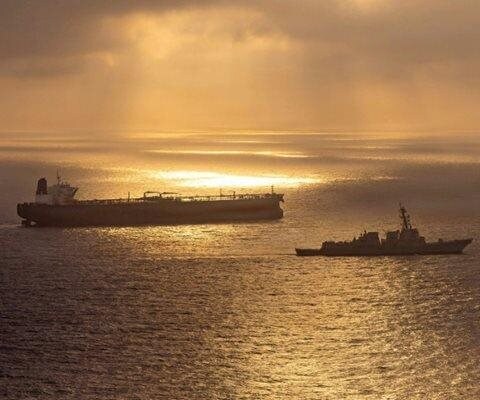
According to reports, a U.S. fighter jet fired on and disabled two Iranian-flagged tankers Friday after Washington accused them of attempting to challenge the American naval blockade targeting Iranian ports.
Iranian officials responded by claiming their navy retaliated against what they called “American terrorism” before stating the clashes had ended.
That latest flare-up followed another confrontation near the Strait of Hormuz just hours earlier — a critical global shipping route that Iran has repeatedly threatened to control in order to pressure Western economies and international energy markets.
Secretary of State Marco Rubio reiterated Friday that allowing Tehran to dominate the Strait of Hormuz remains completely unacceptable for the United States and its allies.
And for good reason.
The Strait of Hormuz is one of the world’s most strategically important waterways, handling massive portions of global oil shipments. Even minor instability there can trigger major economic consequences worldwide.
The current U.S.-backed proposal reportedly seeks to extend the Gulf ceasefire while opening broader negotiations over a permanent settlement to the regional conflict that escalated after U.S.-Israeli military operations against Iran earlier this year.
But critics increasingly question whether Iran’s leadership — particularly hardline factions inside the regime — actually wants a lasting agreement at all.
While diplomats continue talking, military incidents keep happening.
That’s not exactly the behavior of a government eager for stability.
Meanwhile, regional tensions continue spreading beyond the Gulf itself.
Qatar’s prime minister reportedly met with Vice President JD Vance in Washington on Friday to discuss ongoing mediation efforts, highlighting how deeply the crisis has affected America’s Gulf allies.
Iran has already targeted locations inside Qatar during the conflict due to the country hosting major American military assets.
At the same time, reports also emerged Saturday showing a mysterious oil slick spreading near Iran’s Kharg Island — the heart of the regime’s oil export infrastructure.
Satellite imagery reportedly showed oil covering more than 20 square miles near the island before the spill appeared to partially recede.
Experts suggested the leak may stem from damaged or aging oil infrastructure as Iran struggles to maintain exports under military pressure and ongoing sanctions.