Iran is no longer dealing with just another round of street protests. What’s unfolding now cuts straight to the core of the Islamic Republic—and for the first time in years, its survival is genuinely in question.
Across the country, demonstrations triggered by economic collapse and corruption have quickly morphed into outright challenges to clerical rule. The regime’s response has been predictable: live fire, mass arrests, and sweeping communications blackouts. International reporting points to hundreds killed and thousands detained, while internet shutdowns signal a government desperate not only to crush dissent, but to hide the evidence. Transparency, as usual, is not exactly Tehran’s strong suit.
Iran has acted this way before. What’s different now is the strategic environment—and a growing realization among ordinary Iranians that the system itself is failing. Economic collapse and weakened deterrence have stripped away the illusion of stability the regime once relied on.
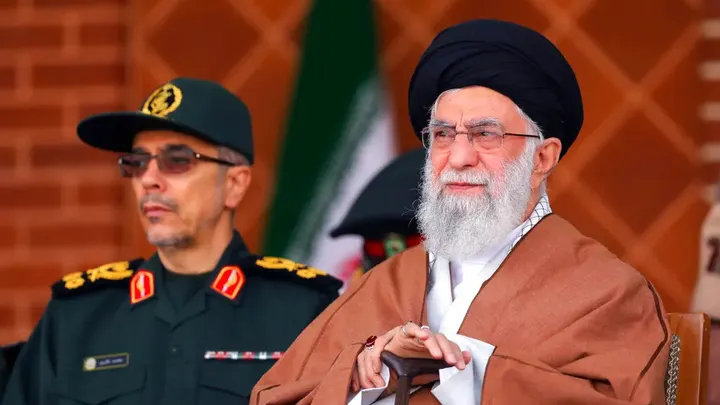
That said, no one should underestimate Tehran’s leadership. These are not politicians nervously clinging to office. In their own worldview, they believe they are carrying out Allah’s will. Since 1979, the Islamic Republic has justified its authority through velayat-e faqih—the rule of the Islamic jurist. Under this doctrine, Supreme Leader Ayatollah Ali Khamenei is not merely a political leader; he is seen as the guardian of a divinely sanctioned revolution.
That belief system defines how the regime treats dissent. When security forces fire into crowds, the leadership does not view it as suppressing political opposition. In their eyes, they are crushing heresy and rebellion against God’s order. Protesters are routinely branded “corrupt on earth,” a Quranic term historically used to justify the harshest punishments. Moral outrage from the outside world, therefore, means very little to rulers who see violence as virtue when it serves the revolution.
Still, history shows that even regimes fueled by religious certainty can fall once their power structures fracture.
Iran has weathered mass protests before. The 2009 Green Movement shook the system after a disputed election. In 2022, nationwide unrest erupted following the death of Mahsa Amini, a 22-year-old woman who died in morality-police custody. Each time, the regime survived—but not without exposing cracks.
Today, no institutions matter more than the Islamic Revolutionary Guard Corps (IRGC) and its paramilitary arm, the Basij. Often described as the regime’s “eyes and ears,” the Basij are not a conventional military force. They function as a nationwide internal surveillance and population-control network, embedded in neighborhoods, universities, factories, and mosques. Their job is to monitor dissent, identify organizers, and intimidate or detain them—often before protests can gain momentum.
Whether the Islamic Republic collapses or survives now hinges on one central question: the loyalty of these forces. If the IRGC and Basij remain unified, the regime can endure even unprecedented pressure. If that loyalty fractures, everything changes.
For the Iranian people risking their lives in the streets, the stakes could not be higher. And while the outcome remains uncertain, the sheer scale of resistance shows one undeniable truth: the desire for freedom is stronger than fear—and once that spark is lit, it has a way of burning longer than tyrants expect.