For years, Iran treated the Strait of Hormuz as one of its most powerful cards—a pressure point capable of rattling energy markets and forcing Washington to think twice.
Now that leverage is beginning to look a lot less formidable.
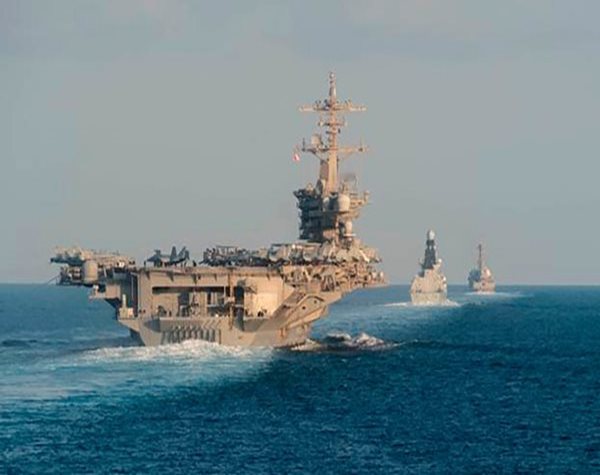
Six months after a conflict pushed the Persian Gulf toward a much wider confrontation, Washington’s economic campaign is putting Tehran under extraordinary pressure. Tougher sanctions and a U.S. naval blockade are squeezing oil exports, restricting access to foreign currency and making it increasingly difficult for Iran to rely on the international financial system that has helped keep its regime alive for decades.
The strategy is built around a straightforward proposition: make the cost of confrontation higher for Tehran than it is for Washington.
And so far, Iran has not delivered the economic shock it appeared to be counting on.
The Strait of Hormuz carries roughly one-fifth of global oil and LNG supplies, making it one of the most important energy chokepoints on Earth. Tehran has sought to use that strategic geography as leverage, hoping disruption would send energy markets into turmoil and ultimately force Washington back to the negotiating table.
Instead, markets have adapted.
Alternative supplies have continued moving, while efforts to restrict exports have damaged Iran's own revenues. The weapon Tehran hoped would punish the world has also exposed how dependent Iran itself remains on the global economy.
Iranian analyst Arash Azizi put it bluntly: “The balance of power has tilted against Iran a bit.”
Azizi said Tehran is losing some of the leverage it once possessed because it has been unable to fully close the Strait of Hormuz, while the U.S. naval blockade is “really hitting Iran.”
That is a painful reality for the regime.
Tehran apparently expected disruption in Hormuz to create such a severe worldwide economic shock that Washington would have little choice but to compromise. “It hasn't happened, really,” Azizi said.
Other countries adjusted. Energy continued to flow. And the pressure campaign kept tightening.
CAN TEHRAN OUTLAST THE SQUEEZE?
The question now is whether Iran can absorb the punishment longer than Washington is willing to maintain it.
Three senior Iranian sources acknowledged that the U.S. campaign is becoming increasingly difficult for Tehran to withstand. The latest measures have restricted Iran’s access to foreign currency, imports and international financing—the very channels that have allowed the Islamic Republic to survive years of sanctions.
Inside Iran, the consequences are becoming harder to ignore.
Prices are rising. Trade is weakening. Household incomes are under pressure. Shortages of critical imports, including fuel and wheat, are becoming a growing concern.
And Iranian leaders have another problem they cannot sanction away: their own population.
The regime has repeatedly faced nationwide unrest, and officials fear that a worsening economy could once again push frustrated Iranians into the streets.
U.S. Treasury Secretary Scott Bessent described Washington’s strategy as a “one-two punch” combining the blockade with “the toughest sanctions in history.”
“It is going to work in Iran and we are going to collapse this regime,” Bessent told CNBC.
That is an extraordinarily blunt declaration. But the economic pressure is clearly designed to do more than squeeze government accounts. U.S., Israeli and regional officials increasingly see the possibility that sustained economic pain could produce political consequences inside Iran—fueling unrest, deepening divisions within the leadership and weakening the regime’s grip.
Still, Tehran has not raised the white flag.
Iran continues to demand sanctions relief, access to frozen assets and recognition of what it considers its security role in Hormuz. Regional sources say mediators and Tehran are now discussing a possible new formula to resolve the standoff.
Whether that produces an actual breakthrough remains uncertain.
THE RESILIENCE TEST
There is a reason Washington should not assume victory is automatic.
Dennis Ross, a former U.S. negotiator, cautioned that economic deterioration does not necessarily translate into political collapse. Iran has survived decades of sanctions and pressure, and its leadership has repeatedly demonstrated a willingness to suppress dissent rather than surrender.
The Revolutionary Guards may believe the regime can simply absorb the pain and wait out Washington.
That calculation could prove dangerous for Tehran—or for Washington if it underestimates the regime’s staying power.
But one thing has already changed: Iran’s threat to dominate Hormuz no longer carries the same economic intimidation it once did.
The Islamic Republic tried to turn one of the world’s most important waterways into a lever against its adversaries. Instead, the pressure campaign is increasingly forcing Tehran to confront the cost of its own strategy.
And that is the larger lesson.
Economic power, military power and control of strategic geography all matter—but leverage only works when the other side believes you can impose greater pain than you are willing to endure yourself.
Washington is testing that proposition now.
For Iran, the question is no longer simply whether it can threaten the Strait of Hormuz. It is whether the regime can survive the price of using it as a weapon.