Israel is drawing a line in the sand—and this time, the warning is aimed squarely at a NATO member.
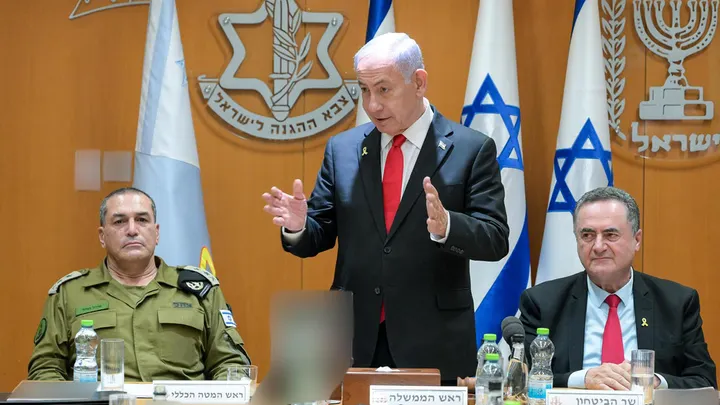
Israeli Defense Minister Israel Katz issued a blunt message Thursday to Turkish President Recep Tayyip Erdoğan, accusing Ankara of pursuing what he called “dangerous adventures in Syria” and making clear that Jerusalem will not tolerate military moves it believes threaten Israel’s security.
“Israel will not allow any actor to threaten its security,” Katz wrote on X. He warned Erdoğan that it would be wiser to keep his rhetoric inside Turkey’s parliament than to test Israel’s determination to defend itself.
That is not diplomatic language. It is a warning.
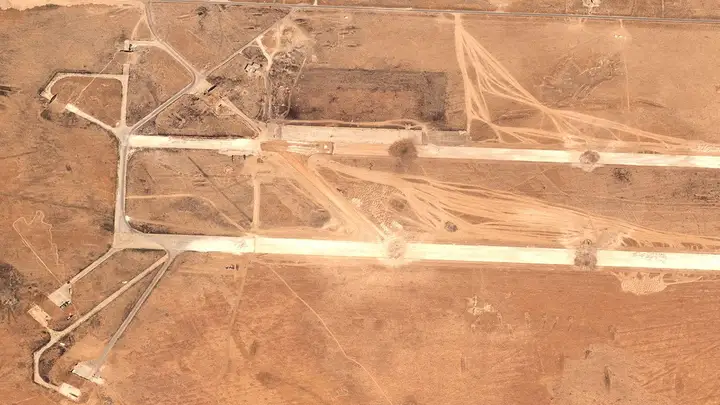
The confrontation comes just two days after Israel struck Syria’s Abu al-Duhur Airbase, amid Israeli concerns that Turkey could expand its military presence inside Syria. Jerusalem says Syria was approaching a breach of a security understanding by permitting Turkish troops to deploy at the facility. Ankara rejects that characterization.
Syria, for its part, says there are no plans for a permanent Turkish base or troop deployment at the airfield. Syrian Foreign Minister Asaad al-Shaibani acknowledged that Turkish military officers had visited the facility for training and exchanges of expertise. Turkey’s Defense Ministry said no Turkish military delegation was present at the base before or during the Israeli strike.
But the facts surrounding the military presence are precisely why the situation is becoming so dangerous.
Turkey is a NATO member. Israel is one of Washington’s closest security partners in the Middle East. A confrontation between the two would create a nightmare scenario for American diplomacy at a moment when the region already has more than enough tinder waiting for a spark.
Washington is trying to make sure that spark never comes.
U.S. Ambassador to Israel Mike Huckabee said Thursday that the United States was already working through a “de-escalation process,” though he acknowledged that the mechanism still needed refinement. Asked whether the dispute could produce a direct Israeli-Turkish confrontation, Huckabee said, “I don't think we're even close to that.”
But he also acknowledged Israel’s concern that Turkey is “moving further south” inside Syria and that Jerusalem views the movement as potentially threatening.
U.S. Ambassador to Turkey and special envoy for Syria Tom Barrack offered a sharper warning after the Israeli strike. Turkey, he said, received no advance notice and could have prepared a military response after detecting Israeli aircraft moving north toward Turkish territory.
That is exactly the kind of miscalculation that can turn a regional dispute into something far bigger.
Barrack said Washington is working to establish a stronger deconfliction mechanism involving Turkey, Israel and Syria—an effort designed to keep military forces from stumbling into an accidental confrontation.
But mechanisms only work when the parties actually respect the lines they were created to protect.
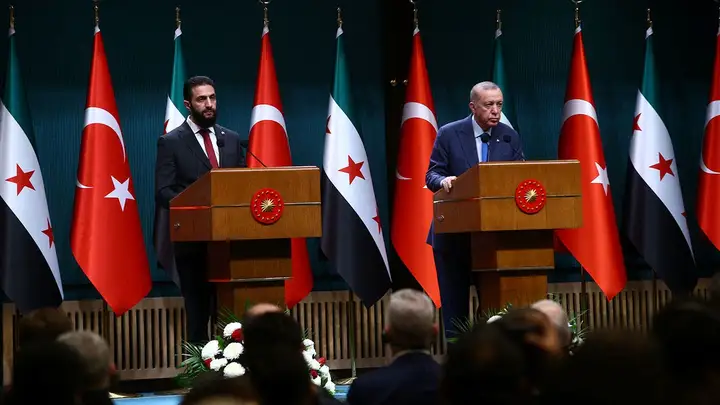
Sinan Ciddi, director of the Turkey Program at the Foundation for Defense of Democracies, said Ankara is viewing the confrontation through a fundamentally different lens.
“Turkey is chalking up the increasingly escalatory climate between Turkey and Israel to election antics/propaganda by Netanyahu and driving a narrative that Israel does not want stable neighbors and regional powers in the Middle East,” Ciddi said.
At the same time, Ciddi pointed to a series of Turkish actions that Jerusalem could interpret as a military escalation, including proposed arms sales, military training, continued Turkish influence over former militia members incorporated into Syria’s new army and, most significantly, plans involving Turkish troops, military bases and sensitive equipment.
“Israel established clear red lines about what it was willing to tolerate in Syria,” Ciddi said. “Deconfliction only works if parties implement the agreed upon rules.”
That last point may be the most important one in the entire dispute.
Israel does not have the luxury of treating every military movement near its borders as an academic exercise. The region has repeatedly demonstrated how quickly supposedly limited deployments, proxy forces and military infrastructure can become permanent threats.
And the warning signs were already visible before the airstrike.
Mossad chief Roman Gofman spoke with Syrian Foreign Minister al-Shaibani on Aug. 14, according to three sources cited by Reuters. Their discussion focused on Israeli concerns about Turkey’s growing military role in Syria, including possible troop deployments, weapons sales and drones supplied to Syrian forces.
In other words, the strike did not emerge from nowhere.
Israel and Turkey have also spent more than a year trying to prevent exactly this kind of incident. Their technical talks in Azerbaijan began in 2025 with the goal of reducing misunderstandings and preventing military incidents in Syria. Those contacts continued as Turkey trained and advised Syria’s military.
Yet the region is once again approaching the same dangerous question: What happens when one country's definition of security becomes another country's definition of provocation?
For the United States, the answer cannot be to ignore the problem until somebody gets hurt.
Washington's effort to establish clearer military communication channels is therefore more than routine diplomacy. It is an attempt to prevent a Middle Eastern confrontation from pulling a NATO ally and a key U.S. partner into direct conflict.
The lesson is familiar: peace through strength requires clarity. Red lines mean little if nobody believes they will be enforced, and deconfliction means little if military powers continue moving toward those lines.
Israel has now made its position unmistakably clear.
Erdoğan has been warned. Washington is trying to keep the temperature down. Syria is insisting there is no permanent Turkish military buildup at the airbase. And behind the diplomatic language sits a much more serious reality: military forces belonging to competing regional powers are operating in an increasingly crowded and volatile theater.
The Trump administration’s broader “peace through strength” approach faces exactly the kind of test that demands discipline rather than wishful thinking. America does not need another Middle Eastern war—but neither does it benefit from pretending that dangerous military expansion will simply resolve itself.
Sometimes the clearest path to avoiding war is making sure every potential adversary understands exactly where the line is.