Israel is responding cautiously to the emerging memorandum of understanding announced between President Donald Trump and Iran, with reactions ranging from guarded optimism to open skepticism as questions remain over what the agreement actually guarantees.
The framework, announced Sunday following months of negotiations, has been presented by both Washington and Tehran as an agreement intended to end the conflict and create a path toward a broader settlement.
Iran’s Supreme National Security Council stated that Tehran and Washington had finalized a memorandum of understanding that would bring military operations across multiple fronts to an end, including activity connected to Lebanon. According to the statement, military actions would cease “immediately and permanently.”
But in Israel, the initial response appears less celebratory and more cautious.
Officials, analysts, and political observers have reportedly adopted a wait-for-the-details approach while broader debate unfolds over enforcement, verification, and the long-term implications for regional security.
Under the reported framework, negotiations toward a comprehensive final agreement would begin only after both sides implement their initial obligations, with talks expected to continue for as long as 60 days.
Supporters of Trump’s approach argue that achieving a ceasefire while preserving leverage represents a practical version of peace through strength. They contend that avoiding prolonged conflict while keeping pressure mechanisms available reflects strategic discipline rather than concession.
Critics, however, question whether declarations of peace can substitute for enforceable guarantees — particularly in a region where previous agreements have often been tested after the headlines faded. Opponents also point to unresolved questions surrounding uranium enrichment, regional influence networks, and compliance mechanisms.
For Israel, those questions carry unusual weight.
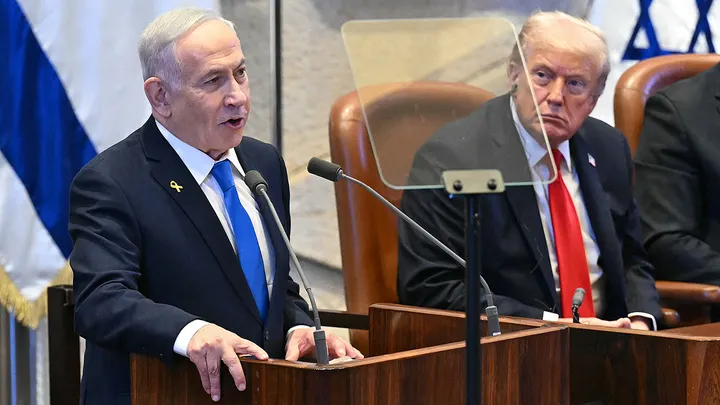
Supporters of Prime Minister Benjamin Netanyahu are likely to argue that Israel cannot afford to judge agreements based on intentions alone and that security decisions require demonstrated outcomes rather than diplomatic optimism.
At the same time, advocates of diplomacy argue that preventing escalation and creating structured negotiations may reduce the likelihood of broader regional conflict.
The debate highlights a familiar divide in Middle East policy.
One side sees negotiated de-escalation as a strategic success. The other asks what happens if implementation breaks down.
And that may explain Israel’s current posture: not celebration, not rejection — but scrutiny.
Because in the Middle East, agreements are rarely judged on announcement day. They are judged months later, when the cameras are gone and everyone finds out which promises actually held... and the Bibi factor, with all his legal issues, carries weight too.