
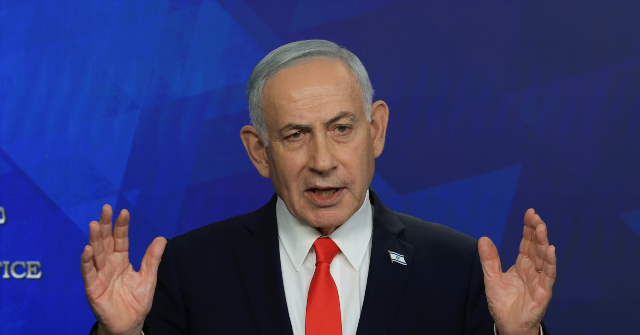
On a stunning Wednesday, Israeli Prime Minister Benjamin Netanyahu declared his politically charged corruption trial had effectively collapsed, a dramatic vindication coming after judges urged prosecutors to drop the most serious case against him and questioned the very criminal basis of another. This judicial intervention is not merely a legal detail; it's an earthquake that reverberated across the globe, especially for those who understand the weaponization of justice against conservative leaders.
For nearly a decade, this prosecution has plunged Israel into unprecedented political paralysis, fueling divisions and undermining public trust. The investigations, stretching back to 2016 and culminating in a 2019 indictment, have been consistently framed by Netanyahu and his allies as a fabricated attempt to remove a democratically elected leader. And now, it appears the courts themselves are exposing the weakness of that political maneuver.
The three-judge Jerusalem District Court panel, after hearing the Prime Minister's testimony, called for a “fundamental reassessment” of the prosecution’s entire case. Presiding Judge Rivka Friedman-Feldman bluntly stated, "In our view, the public interest requires a rethink." This isn’t just legal jargon; it’s a searing indictment of a prosecution that should never have been brought.
The judges picked apart Case 4000, the most severe charge of bribery, which alleged Netanyahu granted regulatory favors to telecommunications giant Bezeq in exchange for positive coverage on the Walla news website. The court not only questioned the reliability of testimony but also doubted whether Netanyahu was even aware of the alleged preferential treatment. Their conclusion was damning: "Regarding this count, we assess that the prospects of conviction are low, to a degree that justifies reconsidering the matter." This is an unprecedented judicial rebuke.
Not stopping there, the judges cast serious doubt on Case 2000, questioning whether Netanyahu’s discussions with a newspaper publisher about favorable coverage even constituted a criminal offense. For Case 1000, involving gifts, the panel simply proposed a procedural path to conclude the matter, indicating the evidence was already largely in. The picture is clear: what was presented as a web of corruption appears to be, at best, a house of cards.
Addressing the nation, a defiant Netanyahu declared his long-held position vindicated. "Today, something dramatic happened. Today, the trial fell apart," he stated, recalling his consistent plea: "Ten years ago, I said, 'There will be nothing because there was nothing.' But it took ten years for this truth to be revealed to everyone."
The Prime Minister spoke of the immense personal toll – a decade of "character assassination, false leaks, biased testimony, and coercive interrogations" – all aimed at securing false testimony against him. His poignant question, "Who will give us back those 10 years?" resonates deeply with anyone who has witnessed political elites weaponizing the justice system for their own ends.
Netanyahu rightly pointed out that the damage extended far beyond his family, accusing his political opponents of using these proceedings to delegitimize him and divide the nation. Indeed, Israel endured five parliamentary elections between 2019 and 2022, a direct consequence of a political class more focused on prosecuting a leader than governing the country.
The sheer absurdity of the situation was laid bare when, even as judges questioned the most serious charges against Netanyahu, the Knesset inexplicably advanced legislation that would prevent an indicted lawmaker from becoming Prime Minister. Netanyahu rightly slammed this as a "tool for political elimination," drawing chilling parallels to totalitarian regimes in Iran and North Korea. "Citizens of Israel, this trial must end immediately." Because, of course, the political establishment simply cannot accept that their preferred narrative is crumbling.
Netanyahu’s allies were quick to demand accountability for those who pursued what Finance Minister Bezalel Smotrich called "an earthquake measuring 4,000 on the Richter scale." Calls for an independent inquiry into the conduct of investigators and prosecutors are growing, recognizing that when justice is politicized, the public deserves answers.
The parallels to President Donald Trump’s own battles against politically motivated prosecutions are unmistakable. Trump has consistently championed Netanyahu, repeatedly urging Israeli President Isaac Herzog to pardon him and calling the proceedings a "witch hunt." The former President has eloquently articulated that "Bibi is a wartime prime minister. He can’t have this hanging over his head," arguing that such distractions weaken a nation facing grave threats. Netanyahu himself underscored this shared experience, sharing a graphic Trump originally posted in 2019, clearly conveying the message that the target was not just him, but his supporters, and he was standing in their way.
This isn't merely about one politician in a foreign land; it's about a global pattern of targeting strong, conservative leaders who dare to put their nation first. The collapse of this trial serves as a stark reminder of the dangers of allowing the justice system to be corrupted by political agendas. As Netanyahu extends a hand for unity, emphasizing that national unity is essential to confront immediate security threats, his message echoes a universal truth: a nation divided by politically motivated vendettas cannot stand strong against its real enemies. For America, and for our allies like Israel, a return to law, order, and true justice – free from political manipulation – is not just desirable, it's absolutely essential for our future.