Jurors have reached a verdict in the closely watched murder trial of Karmelo Anthony, the Texas teenager charged in the fatal stabbing of 17-year-old athlete Austin Metcalf during a high school track meet in April 2025.
The case has drawn national attention as prosecutors and defense attorneys presented sharply different accounts of the confrontation that ended with Metcalf's death.
Anthony does not deny that he stabbed Metcalf during the altercation. However, his defense team has maintained throughout the trial that he acted in self-defense.
Before closing arguments on Tuesday, Anthony's attorneys attempted to persuade Judge John Roach to include criminally negligent homicide as a possible verdict option for jurors. The judge rejected that request but agreed to allow jurors to consider manslaughter in addition to the original murder charge.
Under Texas law, murder requires prosecutors to prove that a defendant intentionally or knowingly caused another person's death. Manslaughter, by contrast, requires proof that the defendant recklessly caused the death.
The distinction became a major focus of the closing arguments.
Prosecutors argued that Anthony's actions amounted to murder and challenged the legitimacy of his self-defense claim. They emphasized that Anthony brought a knife to the track meet and allegedly escalated the confrontation.
Collin County District Attorney Bill Wirskye told jurors that Anthony's conduct demonstrated intent and preparation rather than fear.
"He took a knife to a track meet, and kept it hidden," Wirskye argued. "There is a no weapon policy. He was the only one with a knife. He was always going to come out on top."
Wirskye further contended that Anthony provoked the confrontation and therefore could not successfully claim self-defense.
"You don't get to meet a shove with a stab, especially if you provoke the shove," he told jurors. "That equals murder plain and simple. Unjustified murder."
The defense painted a very different picture.
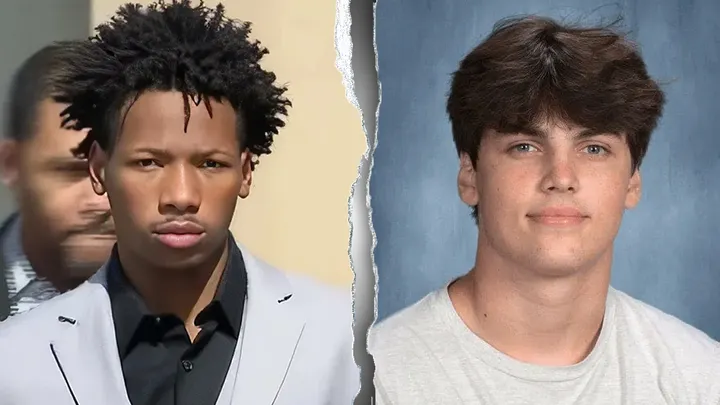
Attorney Mark Howard argued that Anthony was lawfully defending himself during an encounter with a much larger teenager. Howard emphasized the significant size difference between the two students, noting that Metcalf stood 6-foot-1 and weighed 213 pounds, while Anthony was 5-foot-7 and weighed approximately 130 pounds.
Howard argued that although Metcalf and others had the right to ask Anthony to leave a team tent area, they did not have the right to use force against him.
"Austin and Hunter had the right to tell Melo to leave, but they did not have the right to use deadly force to make him leave," Howard said. "Melo had an absolute right to defend himself against that."
The defense also rejected efforts to frame the case through a racial lens, arguing that the central issue was whether Anthony reasonably believed he needed to protect himself.
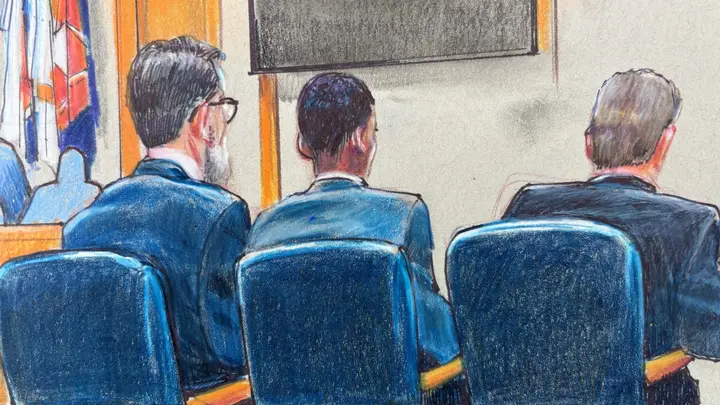
As the proceedings unfolded, emotions remained high inside the courtroom. Members of Metcalf's family were visibly emotional as the judge read legal definitions related to manslaughter and self-defense. Anthony, meanwhile, was seen smiling and speaking with his parents before court began.
Now that jurors have reached a verdict, one of the most closely followed criminal trials in Texas comes to a conclusion. The case has generated intense debate about self-defense, proportional use of force, and accountability, while leaving two families forever changed by a tragic encounter that began at what should have been a routine high school sporting event.
Regardless of the outcome, the case serves as a sobering reminder of how quickly a confrontation can escalate and alter countless lives in a matter of seconds.