Sometimes a political campaign does not need an attack ad from the other side.
It just needs its own candidate to keep talking.
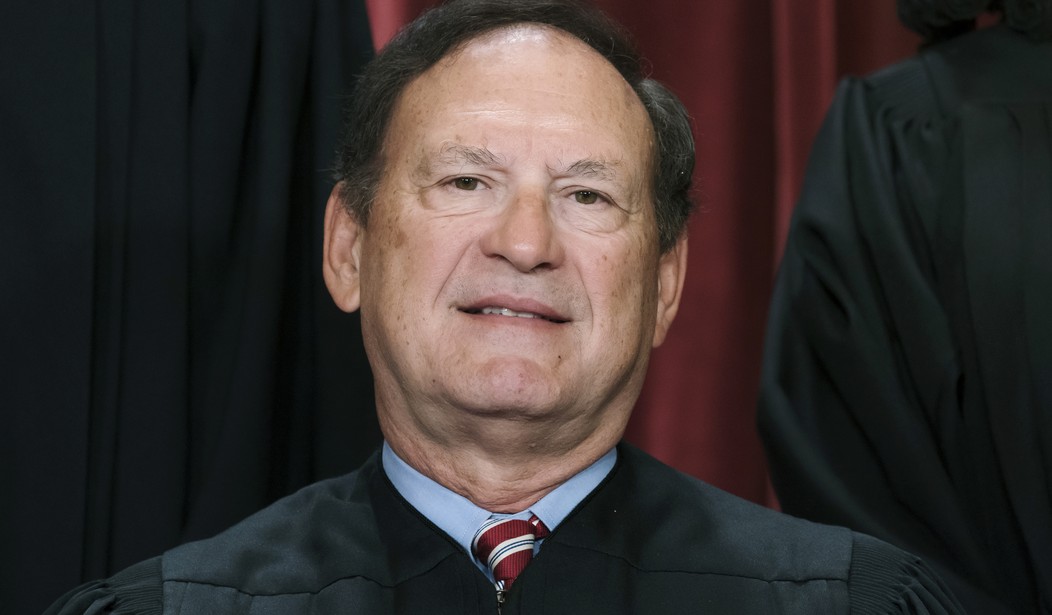
That may be the lesson emerging in Maine, where Democratic Senate nominee Troy Jackson has spent the week generating headlines for all the wrong reasons—while Supreme Court Justice Samuel Alito is preparing to make the television rounds and offering a rare glimpse into the personal stakes behind some of the Court’s biggest decisions.
Alito, 76, sat down with CBS News chief legal correspondent Jan Crawford for an interview that will air in full Monday. In a preview, Crawford asked whether any Supreme Court vote had required “courage.” Alito's answer was revealing.
“It’s something I think that somebody at my age has to think about, but I thought that I could still make a valuable contribution, which is why I became a justice and a judge in the first place,” Alito said. When Crawford pressed him about whether he would reconsider that decision each year, Alito smiled and answered, “Yeah, I think I have to.”
That is not the language of a justice casually checking out.
It is the language of someone who understands that serving on the Supreme Court carries enormous responsibility—and that eventually every justice has to confront the question of when it is time to step aside.
Alito has also spoken publicly about the personal consequences surrounding the Court’s 2022 decision in Dobbs v. Jackson Women’s Health Organization, which overturned Roe v. Wade. The decision returned the question of abortion policy to the political process in the states, a result that has infuriated much of the Democratic Party.
And that brings us back to Maine.
Jackson, the Democratic nominee challenging Republican Sen. Susan Collins, has already had a rough stretch. His recent remarks concerning Jewish Mainers and the Gaza conflict prompted an apology after he said it was “unfortunate” that some Jewish residents objected to calling the conflict a genocide because of the word’s connection to the Holocaust.
Then came an unusual campaign advertisement featuring Dr. Evil.
It was supposed to be an attack on Collins.
Instead, it inadvertently highlighted one of the very records that Democrats have spent years attacking: Collins’ votes on Supreme Court nominees.
Because here is the inconvenient part for Jackson and the broader Democratic campaign against Collins: Collins voted to confirm several of the justices who helped produce the conservative Supreme Court that Democrats now want to undo.
The Senate’s official records show Collins supported Neil Gorsuch, Brett Kavanaugh and other Supreme Court nominees during her career. Her own Senate office has documented her votes for Gorsuch and Kavanaugh, among others.
That record is hardly a secret.
In fact, Collins has repeatedly emphasized that she evaluates judicial nominees based on qualifications, judicial philosophy and constitutional considerations rather than simply treating Supreme Court confirmations as partisan loyalty tests. In 2018, while announcing her support for Kavanaugh, she specifically said she had voted for both Republican- and Democratic-nominated justices.
And there is the irony.
Jackson's effort to use the Supreme Court as a political weapon against Collins ended up reminding voters that Collins helped confirm members of the Court whose decisions have been deeply unpopular with the Democratic establishment.
Including Alito.
The Supreme Court's 2022 ruling in Dobbs did not create a nationwide abortion prohibition. It rejected Roe and returned the constitutional question to the states. That distinction has been central to the conservative argument for years: Washington should not manufacture constitutional authority where the Constitution does not grant it.
Democrats may strongly disagree.
But Jackson's campaign has now helped put that record back on the table.
And Alito, meanwhile, is reminding Americans that these decisions were not made in some consequence-free political game. Justices face enormous pressure, public hostility and, at times, serious personal consequences for decisions that can reshape the country for generations.
There is something almost poetic about the timing.
As one side of the political world attacks the legacy of the justices who overturned Roe, one of those justices is going on television to discuss what it actually meant to make those decisions—and whether he should continue serving on the Court.
Meanwhile, a Democratic Senate candidate in Maine appears to have handed Republicans another opportunity to point voters toward Collins' judicial record.
Thanks for the receipts, Troy.
Because sometimes an attack ad does not hurt the person it targets.
Sometimes it reminds voters exactly why the target made the decisions she did.