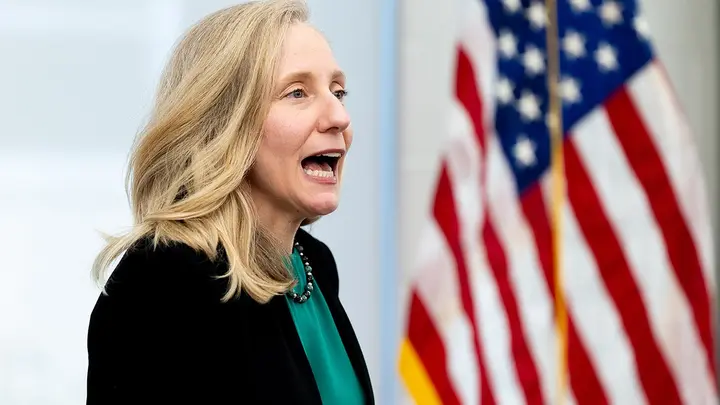
Virginia Gov. Abigail Spanberger is facing sharp criticism after issuing a new executive order targeting federal immigration enforcement efforts — a move critics say is more about political messaging than actual law.
The executive order, signed Tuesday, directs Virginia state employees to demand proof of legal authority from federal immigration agents operating on state-owned property. It also instructs employees not to allow federal agents to use those areas as staging or processing locations.
That includes polling places.
Spanberger defended the move by claiming she fears the Trump administration could potentially use ICE, the military, or the National Guard to intimidate voters during elections — a scenario critics say appears far more rooted in partisan fearmongering than legal reality.
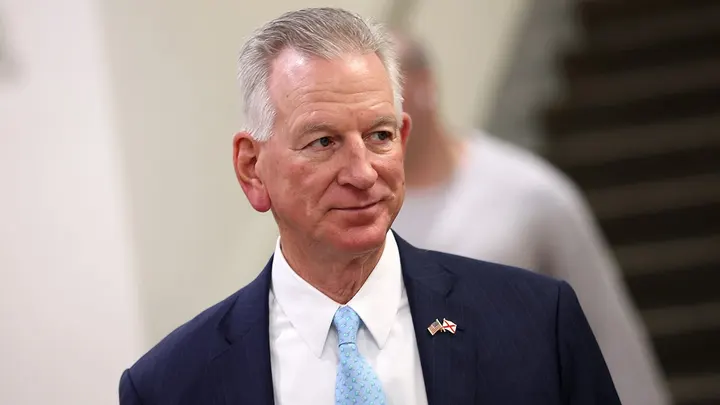
Constitutional scholar Hans von Spakovsky wasted little time dismantling the order, calling it exactly what many conservatives immediately suspected: “political theater.”
“This is political theater,” Spakovsky said, arguing that federal immigration law does not require warrants for many immigration detentions in the first place.
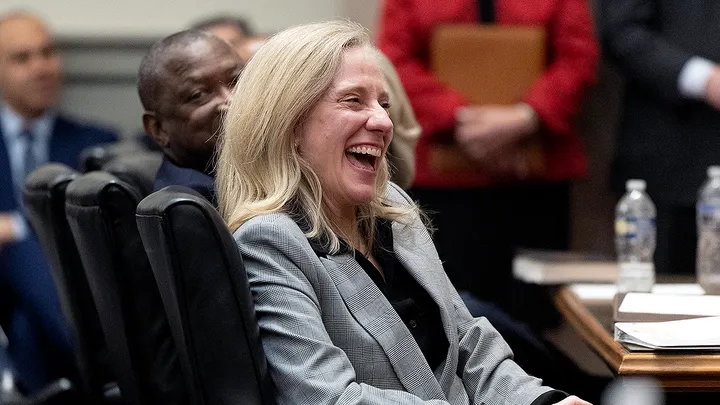
In other words, Spanberger may be trying to impose restrictions on federal agencies she legally has no authority to control.
Spakovsky also pointed out that federal law already includes restrictions on government personnel being present at polling sites for intimidation purposes, referencing existing statutes that prohibit federal officers from interfering in elections unless they are simply there to vote themselves.
Which raises an obvious question: if federal law already covers voter intimidation concerns, why the dramatic executive order?
The answer, critics argue, is politics.
Spanberger first previewed the order during a public event after being asked about fears that President Trump might deploy federal agents near polling places. She claimed historical concerns about voter intimidation justified new guidance for state employees interacting with federal authorities.
“The reality is, throughout history, we have seen efforts at intimidating voters,” Spanberger said.
But conservatives see the move as part of a broader Democrat strategy aimed at slowing or obstructing Trump-era immigration enforcement efforts through state-level resistance campaigns.
And Virginia is hardly alone.
Democrat-led states including New York, California, and Massachusetts have all recently explored measures limiting where ICE agents can operate or requiring judicial warrants before certain enforcement actions can occur in schools, hospitals, courthouses, churches, and polling places.
New York Gov. Kathy Hochul is currently pushing legislation that would further restrict ICE access to public spaces, while Massachusetts Gov. Maura Healey has supported similar proposals.
Interestingly, even Spanberger herself appeared to recognize the legal weakness of some of these efforts.
She previously vetoed a separate bill that would have outright banned ICE detentions at schools, hospitals, polling locations, and courthouses without judicial warrants, acknowledging that the measure would likely trigger major legal challenges.
That alone makes the new executive order look even more symbolic than substantive.
Critics argue the bigger issue here is that Democrat officials continue attempting to blur the lines between state and federal authority whenever immigration enforcement becomes politically inconvenient.
And while activists frame these measures as “protecting communities,” opponents say they increasingly resemble attempts to obstruct federal law enforcement while creating confusion about what federal agencies are legally allowed to do.
At the end of the day, Americans watching this debate are likely noticing a pattern: every time President Trump’s immigration policies gain traction, blue-state politicians scramble to build new bureaucratic roadblocks — even when legal experts openly question whether those roadblocks can survive constitutional scrutiny.
And judging by the immediate backlash to Spanberger’s order, this latest effort may end up generating more headlines than actual legal impact.