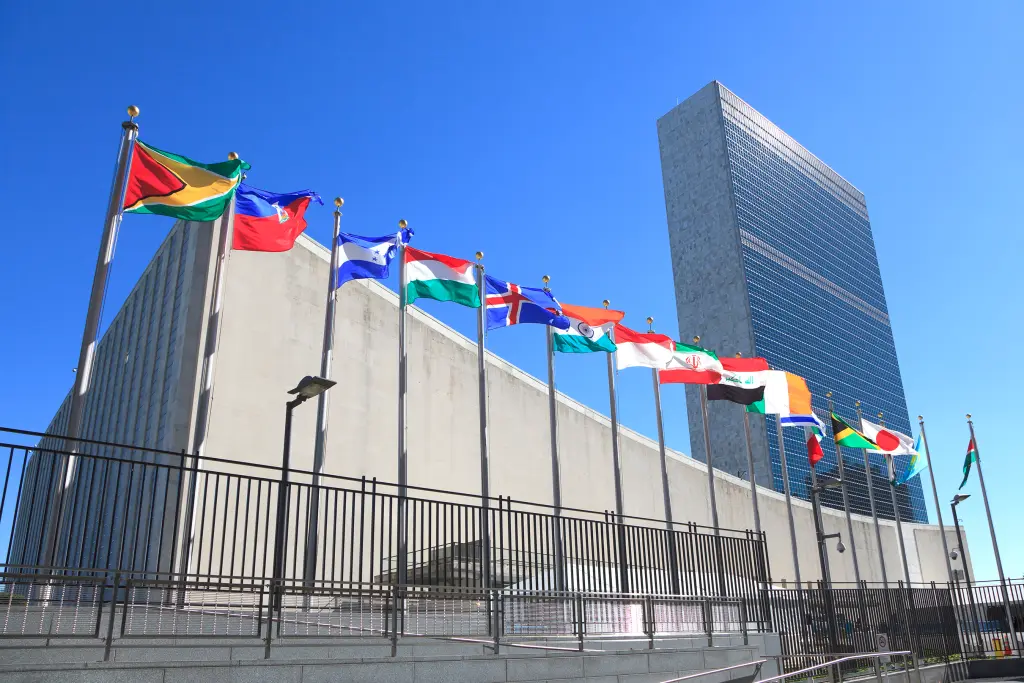
United Nations Secretary-General António Guterres warned in a Jan. 29 letter to all member states that the organization faces “imminent financial collapse.” He claimed the UN could run out of money by July, close its Manhattan headquarters in August, and cancel its annual General Assembly meeting in September.
Most UN functions, including the Office for the Coordination of Humanitarian Affairs, could also shut down due to lack of funds.
Rather than sounding alarming, this news reads more like a promise.
The UN approved a $3.45 billion budget in December that it clearly cannot afford. Less than a month later, Guterres acknowledged the urgency of the crisis. Layoffs and cuts are already underway, and morale is reportedly collapsing alongside the finances.
Stripped of diplomatic language, UN leadership resembles spoiled teenagers who maxed out a credit card rather than responsible stewards of a global institution.
The UN’s proposed solution is simple: demand more money — primarily from American taxpayers.
According to senior UN officials, 95% of the organization’s projected $2.2 billion shortfall comes from unpaid U.S. dues for 2025 and 2026. In addition, the UN claims the U.S. owes another $1.9 billion for peacekeeping operations, $528 million for “closed missions,” and $43.6 million for the International Court of Justice and the International Criminal Court — bodies whose jurisdiction the United States does not recognize and, in the ICC’s case, does not even belong to.
The Trump administration has responded by scaling back U.S. involvement in international organizations it views as wasteful and hostile to American interests.
On his first day back in office, President Trump withdrew from the World Health Organization, citing unfair financial demands placed disproportionately on the United States. Days later, he exited the UN Human Rights Council, whose membership includes notorious rights violators such as China and Cuba.
Trump also cut funding to the UN Relief and Works Agency after accusations that some of its local employees participated in the Oct. 7 Hamas attack on Israel. In July, he withdrew from UNESCO, citing its antisemitic bias and ideological activism. In January, he pulled the U.S. out of 66 additional international agreements deemed contrary to national interests.
“I’ve always felt the UN has tremendous potential,” Trump said during an earlier withdrawal decision. “It’s not living up to that potential right now.”
That statement is even more applicable today.
If the UN cannot survive without billions more from U.S. taxpayers, then its collapse may be the natural consequence of decades of mismanagement. After squandering whatever promise it once held, the organization may soon face the end of an 80-year experiment in global governance.
And if that happens, the UN’s headquarters — a 2.6-million-square-foot complex on 18 acres of prime Manhattan real estate — might find a far better use in a city desperate for housing.