New York City Mayor Zohran Mamdani announced Friday that his first executive order as mayor was designed to wipe the slate clean at City Hall following the turmoil surrounding former Mayor Eric Adams, while simultaneously launching a new Office of Mass Engagement aimed at reshaping how New Yorkers interact with their government. A fresh start, at least on paper.
Mamdani explained that a new mayor must either continue, revoke, or amend all prior executive orders upon taking office. His administration chose to continue only those executive orders that were issued before Adams’ 2024 federal corruption indictment, charges that were later dropped and dismissed by a judge in April.
According to Mamdani, Adams’ indictment marked a breaking point for public trust. He described it as a moment when many New Yorkers lost even more faith in city politics and in a government that, in his words, appeared to prioritize personal interests over the public good.
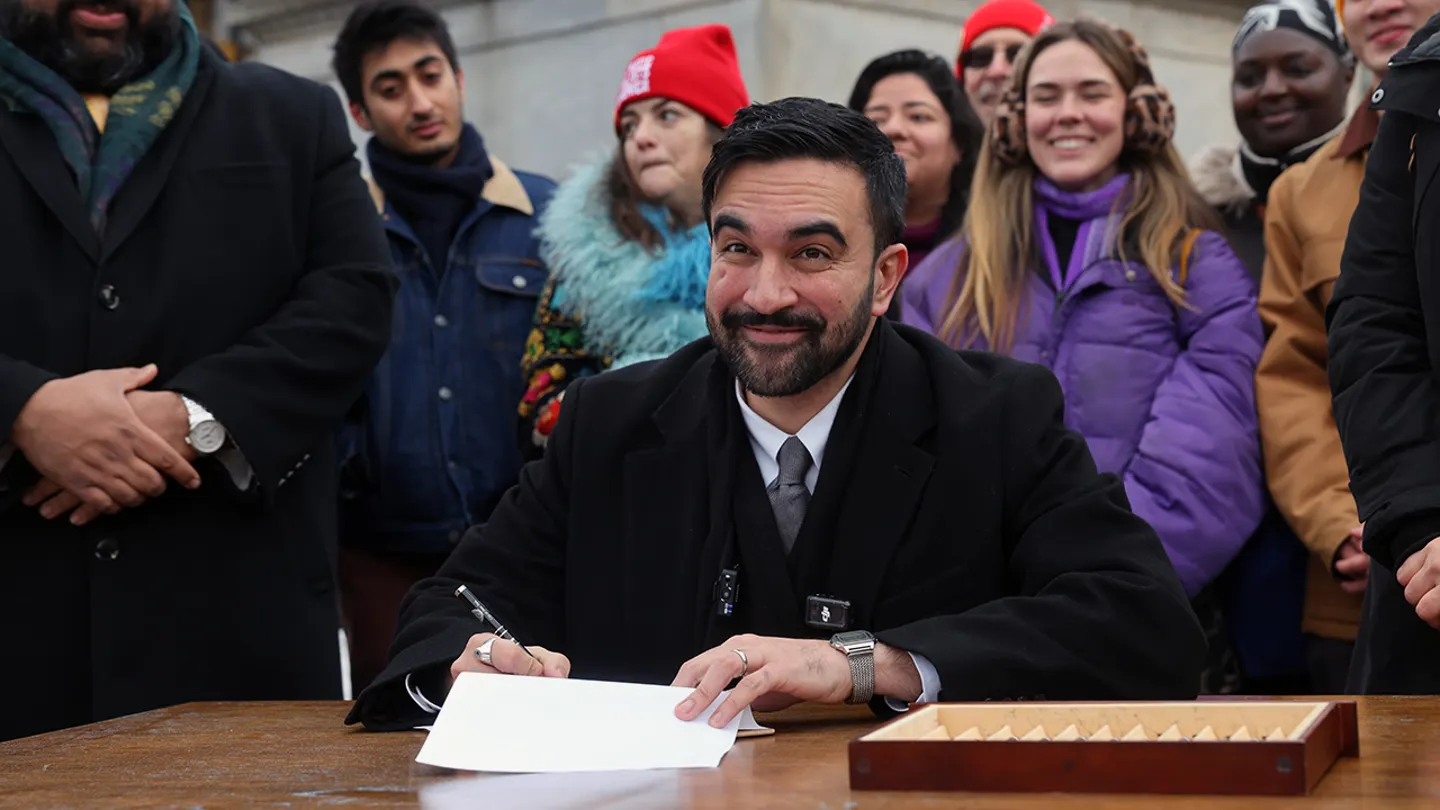
To emphasize a new direction, Mamdani signed an executive order revoking or requiring the reissuance of all mayoral directives issued after Sept. 26, 2024, giving his administration full control over which policies would move forward. He framed the move as the foundation of a new era that would “protect each and every New Yorker” and deliver results in ways previous administrations allegedly failed to do.
The announcement came alongside details about the newly revived Office of Mass Engagement, which Mamdani said will consolidate civic outreach efforts already scattered across city government. The goal, he claimed, is to centralize engagement work so it is not duplicative and actually fulfills its stated purpose. Bureaucratic efficiency—always easier said than done.
Mamdani said the new office will be led by Tascha Van Auken, an organizer with experience in national Democratic campaigns and leadership roles within New York City’s Democratic Socialists of America. He praised her background, citing her involvement dating back to President Obama’s 2008 campaign.
According to Mamdani, Van Auken was instrumental in building the volunteer operation behind his mayoral run, mobilizing more than 100,000 volunteers who knocked on over 3 million doors across the city. Clearly, the campaign playbook is now being brought straight into City Hall.
Mamdani said civic engagement has long existed within city government but has been fragmented across various offices and initiatives. The intent of the new executive order, he said, is to bring all of that work under one roof and ensure it meaningfully influences policy decisions.
He also said the new office is meant to change when public engagement happens. Instead of outreach being used to justify decisions already made, Mamdani claimed the goal is to allow public input to shape decisions before they are finalized. A novel concept in politics, to be sure.
On staffing and budget, Mamdani said the office will initially rely on existing city employees pulled from previously established offices, with details about any expansion to be announced later. No new bureaucracy—at least not yet.
Mamdani pushed back against criticism that the office is tied to re-election politics, saying it is about delivering for New Yorkers now, not campaigning. He argued that public belief in city government will not sustain itself without visible action, a point few would dispute.
He also highlighted another appointment, noting that the engagement office aligns with his decision to name Ali Najimy to lead recruitment and outreach for the Mayor’s Advisory Committee on the Judiciary. Mamdani said the goal is to ensure judicial appointments are based on merit rather than personal connections.
Najimy said the role would expand recruitment citywide and help shape criminal and family court appointments, emphasizing experience, qualifications, and commitment to public service.
Mamdani closed by saying the new office should not be judged by the number of meetings held or surveys completed, but by how effectively public feedback is incorporated into actual decision-making.
Whether this marks a true reset or simply a rebranding of city politics remains to be seen—but at least the administration is promising action, accountability, and a more engaged public. In a city hungry for competence, that’s a promise many New Yorkers hope will finally be kept.