Concerns over Medicaid fraud and abuse are intensifying across America after North Carolina officials revealed an astonishing explosion in autism therapy billings that some watchdogs believe could involve massive waste, systemic loopholes, and potentially criminal activity.
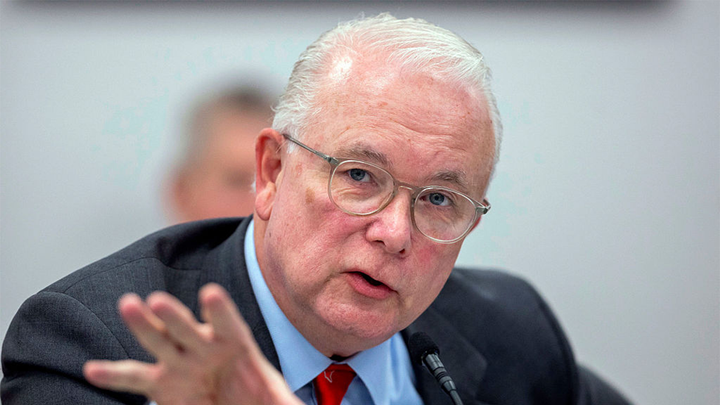
North Carolina State Auditor Dave Boliek is now sounding the alarm after discovering what he described as a staggering 47,000% increase in autism therapy billings over a relatively short period.
Yes — forty-seven thousand percent.
According to Boliek, autism therapy billings in North Carolina reportedly skyrocketed from roughly $1.4 million annually to more than $660 million per year within just five years.
And officials say the numbers continue climbing.
During a recent Medicaid oversight hearing, North Carolina’s Department of Health and Human Services confirmed that spending on Applied Behavior Analysis (ABA) therapy increased another 347% between 2022 and 2025 alone.
Current projections reportedly estimate autism therapy spending could exceed $842 million in fiscal year 2026 and potentially top $1.14 billion by 2027.
At some point, basic math forces people to ask serious questions.
Boliek emphasized that autism therapy services are critically important for families and children who genuinely need them. But he argued the scale and speed of the billing explosion demand aggressive oversight and investigation.
“When you have a system that goes from $1.4 million to more than $660 million in billings,” Boliek explained, “that begs an audit.”
And according to the state auditor, investigators are already uncovering deeply troubling patterns.
Boliek described cases where multiple providers allegedly billed Medicaid simultaneously for services involving the same patient during overlapping periods of time — raising questions about whether some claims were fraudulent, abusive, or the result of dangerously weak oversight rules.
“Some of it is possibly illegal and probably illegal,” Boliek said, warning that authorities are prepared to pursue criminal accountability where necessary.
“We’re going to try to put people in cuffs because of it,” he added.
That’s a level of directness Americans rarely hear from government officials anymore.
Boliek also blamed what he described as lax oversight and weak rulemaking within North Carolina’s Democrat-led Department of Health and Human Services, arguing that poorly designed systems often make abuse easier — even when technically legal under current regulations.
And that may be the bigger issue.
Critics increasingly argue America’s Medicaid system has become vulnerable not only to outright fraud, but also to massive exploitation hidden inside complicated billing rules, weak transparency standards, and bloated bureaucratic loopholes.
According to Boliek, many of the problems stem from the “minutiae of rulemaking” buried deep inside government systems that determine who can bill Medicaid, how services are categorized, and how reimbursements are approved.
In other words, taxpayers may be losing enormous sums of money through systems so complicated that abuse becomes difficult to detect until spending spirals completely out of control.
North Carolina is far from the only state facing scrutiny.
Medicaid fraud concerns exploded nationally after investigators uncovered major abuse scandals in Minnesota, where one suspect allegedly defrauded the state’s autism treatment program of roughly $14 million.
Authorities there claimed fake therapy sessions were billed to Medicaid while untrained staff handled services and parents allegedly received monthly payments to keep children enrolled in programs.
Minnesota’s autism program budget reportedly exploded from $3 million in 2018 to nearly $400 million by 2023.
Other states, including California and Ohio, have also come under increasing scrutiny.
A recent investigation in Ohio reportedly found seven medical buildings housing nearly 300 Medicaid-related companies collectively billing the government approximately $250 million.
Vice President JD Vance has increasingly focused on eliminating government waste, fraud, and abuse, and Boliek stated his office is working “hand-in-hand” with that effort to ensure Medicaid resources actually reach the people who genuinely need care.
Because at the end of the day, every fraudulent dollar stolen from Medicaid isn’t just taxpayer money wasted — it’s money diverted away from vulnerable families, children with legitimate needs, and Americans who depend on these services honestly.
And as these investigations continue spreading across multiple states, many Americans are beginning to ask an uncomfortable question:
How many billions of taxpayer dollars have quietly disappeared into broken systems that politicians and bureaucrats either failed to monitor — or simply chose not to?