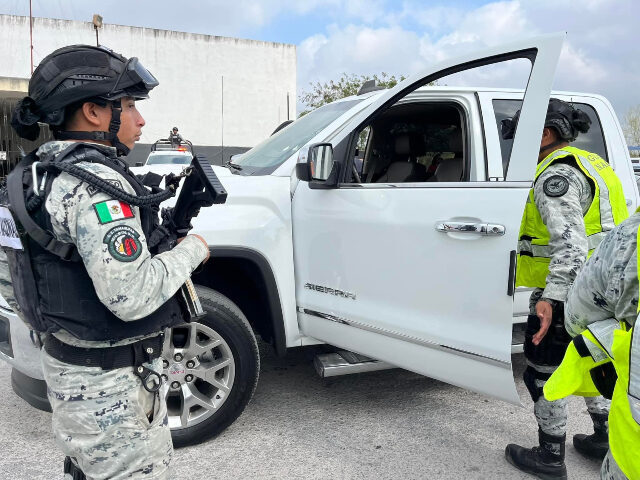
Mexican authorities have arrested two mayors in the central state of Morelos on federal extortion charges as part of a sweeping anti-cartel operation targeting corrupt local officials accused of helping criminal organizations shake down businesses across the country.
And once again, the arrests are shining a spotlight on something many people already suspected for years: in parts of Mexico, the line between government officials and cartel operations has become dangerously thin.
Mexico’s Security Cabinet confirmed this week that authorities arrested Agustin Toledano, the current mayor of Atlatlahucan, along with Irving Sanchez, the former mayor of Yecapixtla. Officials are also actively searching for Cuautla Mayor Jesus Damian Corona, who remains at large.
The arrests are tied to “Operation Beehive,” a major federal effort aimed at dismantling cartel-linked extortion networks allegedly operating with assistance from city officials throughout Mexico.
According to authorities, criminal organizations in many regions rely heavily on cooperation from local political figures to extort businesses, collect protection money, and maintain control over communities. In some cases, city governments reportedly function less like public institutions and more like customer service departments for organized crime.
Operation Beehive has so far focused primarily on central and western Mexico, leading to multiple political arrests connected to cartel activity.
One of the most notable previous cases involved the mayor of Tequila, Jalisco, whose campaign was reportedly supported by the Cartel Jalisco New Generation. Authorities alleged the cartel later used that influence to expand a large-scale extortion operation in the area — even targeting liquor producers in the region famous for tequila production.
Because apparently nothing says “economic development” quite like cartel-backed politicians shaking down tequila makers.
Still, critics point out that some of Mexico’s most cartel-dominated regions continue operating with near-total impunity.
Operation Beehive has largely avoided the border state of Tamaulipas, where the Gulf Cartel and the Cartel Del Noreste faction of Los Zetas reportedly continue maintaining enormous influence, often with alleged protection or cooperation from local officials.
Reports have previously surfaced accusing city officials in Matamoros of participating in extortion schemes targeting local business owners. The issue gained national attention after Julio Almanza, a local chamber of commerce leader, publicly spoke out about cartel extortion before later being murdered by cartel gunmen in a case that still remains unsolved.
That reality continues to fuel growing concerns about corruption, security, and governance throughout parts of Mexico where organized crime organizations have become deeply embedded in local political structures.
For Americans watching from across the border, these developments also reinforce why border security and cartel enforcement remain major issues in U.S. politics. The violence, corruption, and instability tied to cartel influence do not simply stop at the border fence.
And while Mexican authorities deserve credit for finally targeting corrupt politicians connected to these criminal networks, the scale of the problem shows just how deeply organized crime has infiltrated parts of the country’s political system.
Still, with Operation Beehive continuing to expand and more officials now under investigation, Mexico’s government appears to be signaling that at least some powerful figures are no longer untouchable.
And for citizens and business owners who have spent years living under cartel intimidation, that may be the first real sign of hope they’ve seen in a long time.