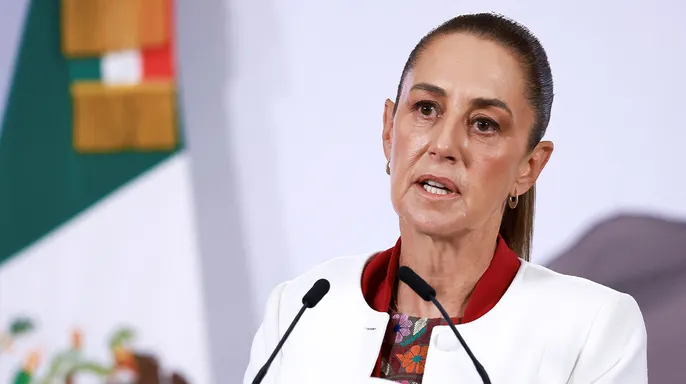
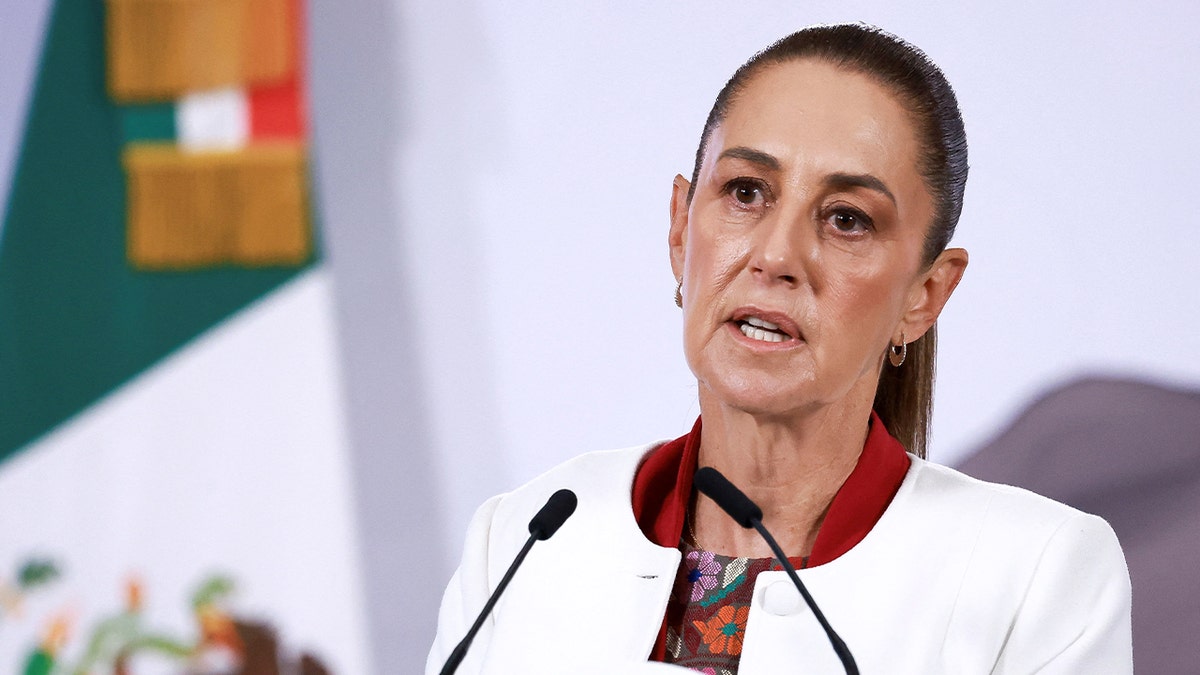
Mexico's President Claudia Sheinbaum has wasted no time in revealing her priorities, and they appear to be at odds with America’s national security and the desperate fight against the fentanyl crisis. Just days into her new role, Sheinbaum has lodged a formal complaint against the U.S. Drug Enforcement Administration (DEA) over a crucial new tip line designed to expose corrupt Mexican officials and cartel operatives.
This isn’t merely diplomatic nicety; it’s a direct challenge to America’s efforts to dismantle the criminal networks flooding our borders with deadly drugs. The DEA's initiative provides an anonymous channel for brave individuals to report those who profit from the narco-terror that devastates American families and communities.
President Sheinbaum, whose rhetoric often mirrors an anti-American sentiment, declared her country would not be "subordinated" to the United States. "We have made it very clear in our relationship with the United States that the relationship is one of coordination, not subordination," she stated Friday, seemingly signaling a new era of obstruction rather than cooperation. This stance stands in stark contrast to the America First principle that prioritized securing our borders and holding foreign nations accountable for their role in the drug trade.
In a brazen attempt to deflect responsibility, Sheinbaum pivoted to accuse the DEA of neglecting its own backyard. "The DEA has plenty of work to do in its own country. A lot," she claimed, adding, "The first thing it should do is investigate corruption in the United States linked to organized crime, or what they call terrorist groups." Such rhetoric, often heard from those unwilling to confront the deep-seated corruption within their own ranks, offers little comfort to the American parents burying their children because of fentanyl.
This pushback comes as the Trump administration has consistently argued that Mexico has failed to adequately combat cartels or stem the catastrophic flow of fentanyl into the United States. Under President Trump, there was an unwavering commitment to cracking down on alleged Mexican corruption networks, understanding that American lives depend on strong action, not diplomatic platitudes.
DEA Administrator Terry Cole confirmed the launch of the tip line, specifically targeting members and associates of designated terrorist organizations, corrupt officials benefiting from them, and criminal networks financing narco-terrorism in Sinaloa – the heartland of the notorious Sinaloa Cartel. Plans are already in motion to expand this vital intelligence gathering to the state of Jalisco.

Yet, Sheinbaum insists the onus is solely on the U.S. "The United States has a responsibility to its people to address drug use, as well as to arrest members of the drug cartels operating in the United States," she asserted, rejecting the shared responsibility necessary to tackle this transnational crisis. "We cannot have this view that the responsibility lies with Mexico."
This denial of accountability conveniently overlooks the fact that cartels operate primarily from Mexican soil, often with the complicity of local officials. It also ignores the vital, successful joint operations that *do* occur, such as the recent capture of "El Chapo Isidro," a key Sinaloa Cartel faction ally, in a combined U.S.-Mexican effort. Such wins are undermined when one side actively protests mechanisms designed to strengthen these efforts.

The America First agenda demands that foreign leaders demonstrate genuine commitment to stopping the drug trade, not just through rhetoric but through transparent action. When a nation's leader protests the very tools designed to fight corruption and save American lives, it sends a troubling message. The integrity of our borders and the safety of our citizens must remain non-negotiable, and true coordination means unwavering commitment from both sides to eradicating the cartel menace that profits from the destruction of America.