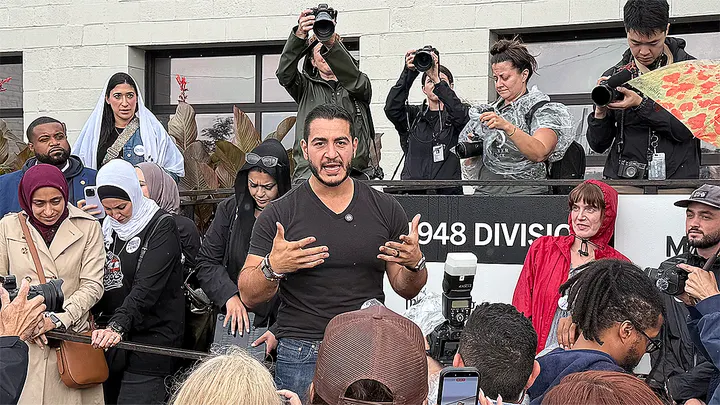
The Democratic Party’s internal war is no longer confined to safely blue districts on the coasts. On Tuesday, it is moving straight into the heart of the Midwest.
Michigan’s primary has become a critical test of just how far the party’s left-wing insurgency can push the Democratic establishment—and whether that ideological shift could put vulnerable Senate seats in serious jeopardy heading into the midterm elections.
Progressive candidates have gained momentum after a string of victories this spring, particularly in heavily Democratic congressional districts. Those results have energized the socialist wing of the party, which increasingly sees the old center-left establishment as an obstacle rather than a partner.
Now Michigan is the next battlefield.
The stakes are especially high because Democrats cannot afford to lose key seats in the Great Lakes region if they hope to compete nationally. A party that moves too far left risks handing Republicans an opening in places where voters have historically been more skeptical of sweeping progressive politics.
Michigan offers a particularly revealing test. The state is politically competitive, and the Democratic Party’s struggle between its establishment and its increasingly aggressive progressive faction could have consequences far beyond Tuesday’s ballot.
The question is no longer whether the Democratic Party has a serious ideological divide. It plainly does.
The question is whether Democrats can keep that civil war from damaging their chances in November.
And while Democrats wrestle with their identity, Republicans are watching another contest unfold—one centered on President Donald Trump’s extraordinary influence over his party.
Trump’s endorsements remain a major force in Republican primaries, giving him an ability to shape the candidates who will ultimately carry the GOP banner into the midterms. As Michigan joins Kansas, Missouri, Virginia and Washington State in holding mid-summer primaries, Republican voters are once again testing the strength of the America First movement at the ballot box.
That contrast matters.
Democrats are fighting over how far left their party should go. Republicans, increasingly shaped by Trump, are being asked whether the America First coalition can continue converting presidential influence into electoral strength.
For Democrats, Michigan is a warning sign: an ideological revolution may energize the base, but it can also create serious problems in the swing states where elections are actually won.
And for Republicans, the opportunity is obvious. If Democrats choose ideological purity over political reality, the GOP does not have to do much more than stand its ground—and let voters decide which direction America should take.