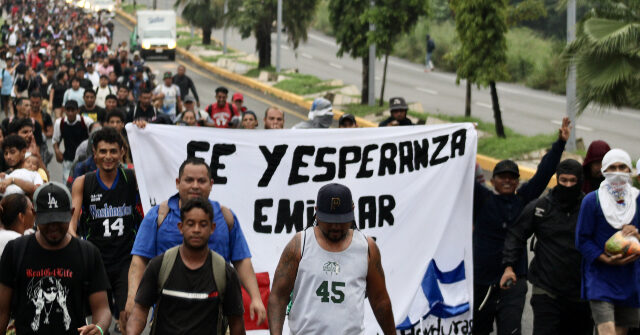
A new migrant caravan, optimistically dubbed "Caravan Without Borders," has begun its journey from Mexico's southern border with Guatemala, a calculated move many believe is timed to exploit perceived weaknesses in U.S. border policy. Numbering between 400 and 700 individuals, this significant group of mostly Central American migrants — predominantly from Honduras, El Salvador, Guatemala, and Nicaragua, with smaller contingents from Haiti, Venezuela, and Cuba — openly hopes for a Democratic victory in the upcoming U.S. midterm elections. The cynical expectation: that such a political shift would signal a return to the open border policies that invite chaos and undermine national sovereignty.
Reports from Mexican media, including Milenio Diario and Diario del Sur, detail the caravan's initial challenges, from financial strain to harsh weather and grueling walks. Yet, the determination to reach the U.S. border remains, fueled by the narrative that the current administration's border policies, while still porous, might become even more lax under a Democrat-controlled Congress. Independent journalist Julio Rosas, reporting for MostlyPeaceful.media, confirmed that members of the caravan voiced their hopes for Democratic midterm wins, clearly signaling their strategic timing.
This latest surge echoes previous caravans, driven by a mix of economic hardship and a brazen desire for illegal re-entry by some who have already been deported. These individuals are brazenly attempting to rejoin family members who have managed to remain within the U.S. — a clear challenge to immigration law and border security. The caravan system, often leveraged for collective safety and to pressure Mexican authorities for quicker refugee processing or travel documents, often transforms southern Mexican cities like Tapachula into transit hubs for those ultimately aiming for American soil.
Mexican authorities have, in the past, responded with varying degrees of firmness. A previous 600-migrant caravan, "Fe y Esperanza," was reportedly dissolved after three weeks of trekking, with many granted travel documents to continue north. This stands in stark contrast to other instances, like one reported by Breitbart Texas, where Mexican intervention led to migrants being returned to southern Mexico. The inconsistency only further emboldens those who see the U.S. border as a target, not a sovereign line.
This escalating caravan crisis is a stark reminder of the consequences when a nation projects weakness on its borders. The explicit timing of this movement to U.S. elections underscores a critical vulnerability: foreign actors are watching American politics closely, ready to exploit any perceived opening. Securing our nation's perimeter is not merely a policy choice; it is a fundamental pillar of national security and the America First agenda, demanding unwavering resolve against those who seek to circumvent our laws and overwhelm our communities.