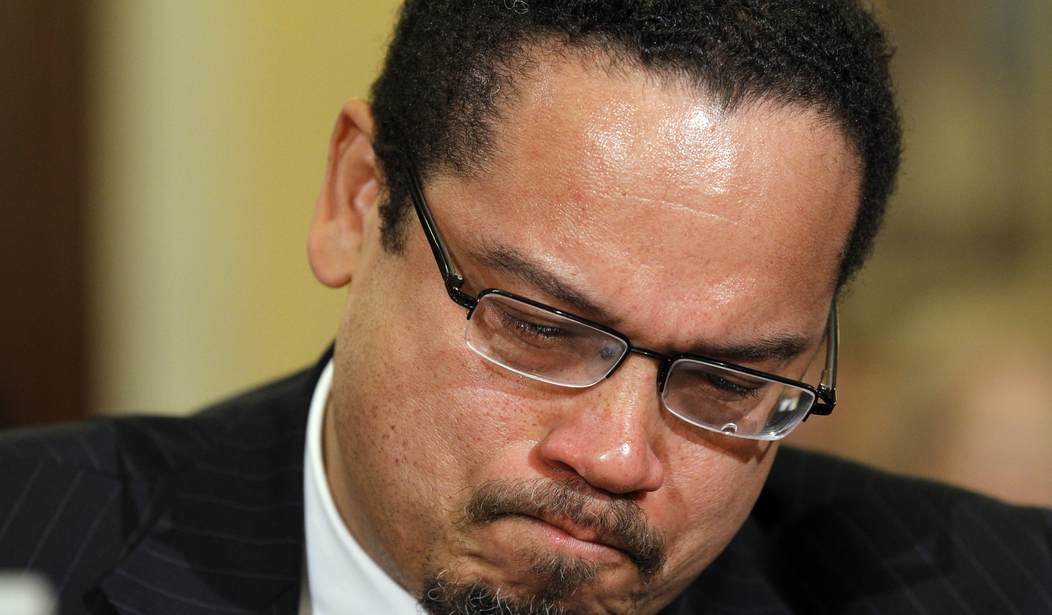
Somewhere out there, Saul Alinsky is smiling. Democrats in Minnesota continue to provide top cover for radical agitators trampling the rule of law, and the latest official to step up for the cause is Minnesota Attorney General Keith Ellison himself.
Ellison, the state’s top law enforcement officer, appeared Monday on Don Lemon’s livestream to discuss the Sunday disruption of worship services at Cities Church in St. Paul, where anti-ICE protesters stormed the church and interrupted congregants during prayer. Instead of condemning the ambush, Ellison appeared to wave it off as a normal inconvenience of modern life.
Lemon, for his part, may have legal issues of his own. Assistant Attorney General for Civil Rights Harmeet Dhillon revealed Monday that Lemon could face federal charges, noting that entering the church and then claiming to be “committing journalism” is not a legal shield if someone is embedded in a criminal conspiracy. Journalism, it turns out, is not a magic cloak of immunity.
During the conversation, Ellison offered his view of what Christians should expect going forward. “None of us are immune from the voice of the public,” he told Lemon, before delivering a remarkable statement.
“The protest is fundamental to American society. This country started in a protest. It’s freedom of expression. People have a right to lift up their voices and make their peace,” Ellison said. “And none of us are immune from the voice of the public. So I, quite honestly, I think that you’ve got the First Amendment freedom of religion and First Amendment freedom of expression — and I think it’s just something you’ve just gotta live with in a society.”
In other words, if your church service gets overrun by activists, tough luck. Apparently, that’s the price of freedom—at least according to the state’s chief law enforcement officer.
Harmeet Dhillon sees the situation very differently. She pointed out that both the FACE Act and the Ku Klux Klan Act could apply to those who “threaten[ed], hurt, or intimidate[d] people to prevent them from exercising their God-given rights.” That interpretation aligns closely with the actual text of federal law, which protects religious worship from intimidation and interference.
Ellison knows the protesters had no right to enter private church property or stop people from worshipping. Yet he appears content to look the other way as long as the agitators he sympathizes with keep creating chaos. And chaos, conveniently, is often the excuse used to justify grabbing more power.
Ellison’s comments raise an obvious question about consistency under the law—one that critics have already noticed. If disrupting worship is simply “something you’ve gotta live with,” then equal protection under the First Amendment should apply across the board. The Constitution, after all, doesn’t carve out exemptions based on politics.
The good news is that moments like this continue to open eyes. Americans across the country are seeing, in real time, who defends religious freedom and who excuses its violation. And as history keeps showing, clarity and common sense have a way of winning out in the end.