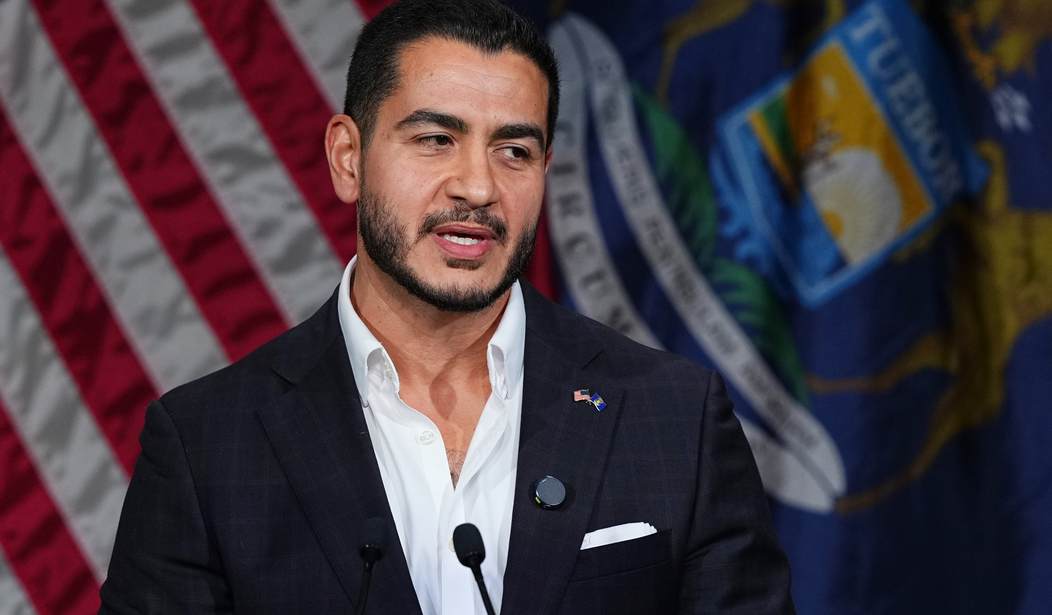
Michigan’s newly elected Democratic senator, Abdul El-Sayed, is facing criticism after a tense Election Day confrontation with Sky News correspondent James Matthews went viral, showing the politician placing both hands on the journalist’s shoulders while dismissing his questions.
The exchange took place Tuesday outside a polling location in Detroit, where Matthews attempted to question El-Sayed about the Michigan Senate race and the broader significance of the midterm elections.
El-Sayed first challenged the reporter over whether he was registered to vote in Michigan. When Matthews said he was not, the Democrat responded: “So why would I care to have a conversation with you?”
The confrontation escalated as El-Sayed questioned why he should answer a journalist working for a British news organization.
“You’re a journalist in the U.K. You know how many votes I want to get in the U.K.? Zero,” El-Sayed said, before adding that he was not running for office in Britain.
He then placed his hands on Matthews’s shoulders and declared: “I absolutely do not care what you think or the questions you ask.”
Matthews attempted to explain that the election had international significance, arguing that the outcome would affect people beyond the United States. El-Sayed dismissed the argument and questioned Sky News’s American audience, claiming that “like five people” watched the network in the United States.
The reporter pushed back when El-Sayed accused him of following him around.
“Abdul, I’m not chasing you. I’m asking you questions,” Matthews responded.
The footage quickly circulated online, drawing attention to the interaction and raising questions about how the newly elected senator will handle scrutiny from journalists covering his work in Washington.
Sky News publicly defended its correspondent. In a statement to Variety, the network said it was “proud” of Matthews, emphasizing that he was doing his job by covering the election and asking questions on behalf of its international audience.
Matthews also offered his account of the encounter, saying he had not been given an opportunity to ask El-Sayed questions directly before the politician began questioning him. He described the exchange as an unpleasant public confrontation.
The incident adds to the scrutiny El-Sayed faced throughout his campaign, which included contentious exchanges with journalists over his political positions and questions about his past statements. His campaign also generated divisions within Michigan Democrats, including criticism from former primary opponent Rep. Haley Stevens, who ultimately endorsed Republican Mike Rogers.
Despite the controversies, El-Sayed defeated Rogers and won Michigan’s open Senate seat, becoming the first Muslim elected to the U.S. Senate, according to election projections.
The confrontation is likely to remain part of the public discussion surrounding the incoming senator. Reporters covering federal lawmakers do not need to be registered voters in a particular state to ask questions about elections, public policy or the actions of elected officials. International coverage also reaches audiences whose interests extend beyond the borders of the country where an election takes place.
As El-Sayed prepares to take office, his response to challenging questions will be closely watched. A Senate seat brings national responsibilities and sustained scrutiny—not just from Michigan voters, but from journalists and citizens around the world.