A disturbing pattern of digital failures has swept across America, crippling critical systems from air travel to banking and even the National Security Agency’s internal communications. Yet, officials from the Director of National Intelligence to the Secretary of State have been quick to dismiss these incidents as mere coincidences, not coordinated cyberattacks. But for a growing chorus of cybersecurity experts, common sense suggests a far more perilous reality: a fragile nation under potential digital assault.
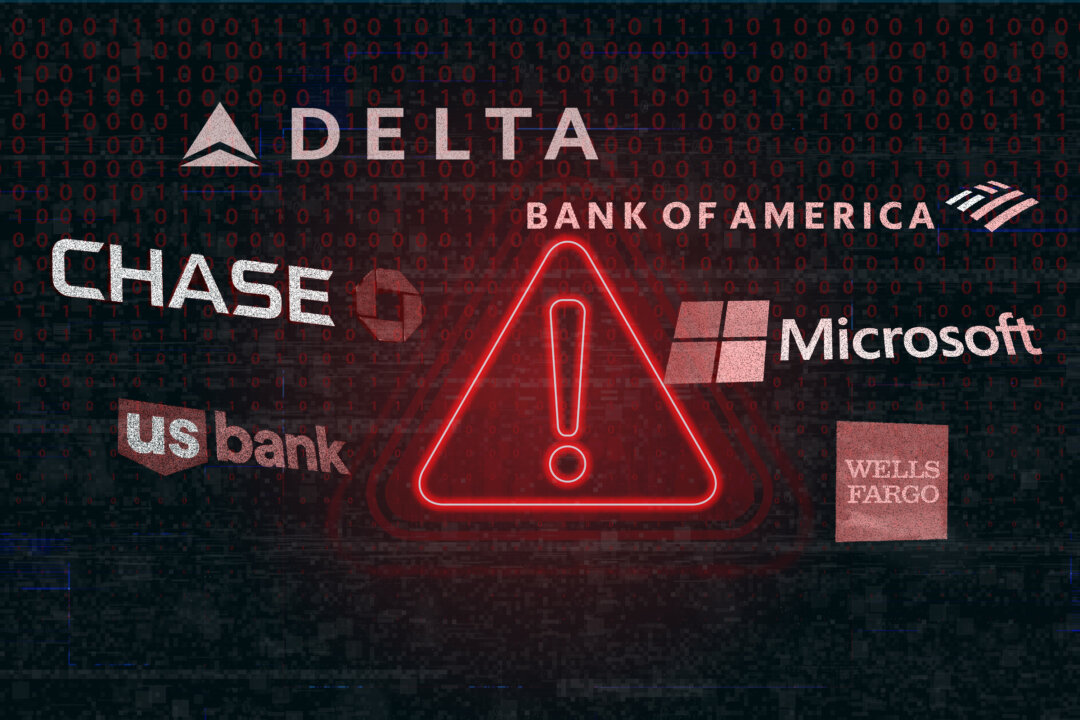
In a mere ten days, the nation witnessed a cascading series of outages. Microsoft’s email went dark for millions, the Federal Aviation Administration (FAA) grounded every departing flight, and major banks—U.S. Bank, Wells Fargo, Chase, and Bank of America—saw customer transactions grind to a halt. The NSA’s internal network suffered a mysterious shutdown, Delta Air Lines faced nationwide delays due to automation issues, and the FBI's criminal records database, vital for police across the country, is reportedly under investigation for an apparent hack. To many Americans, this sequence screams of a coordinated effort; to Washington, it’s a baffling string of bad luck.
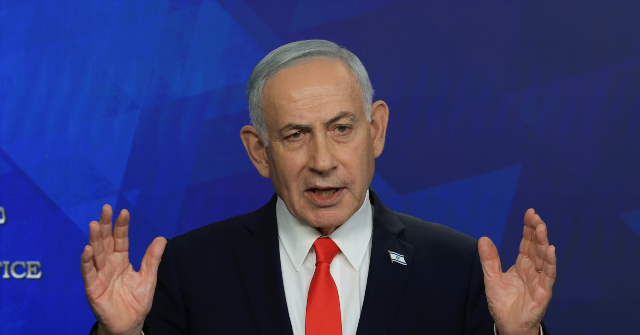
Director of National Intelligence Jay Clayton told the House Homeland Security Committee that these incidents “are not a coordinated or state-sponsored attack.” Secretary of State Marco Rubio echoed this, claiming “zero” evidence of linked or hacker-induced outages. This rapid, almost insistent dismissal of foul play raises immediate questions for those on the front lines of digital defense.
Rodney Gullatte Jr., a certified ethical hacker, Air Force veteran, and CEO of Firma IT Solutions, has no such reservations. “I’m no longer being quiet about the fact that this is definitely a cyber attack happening right now,” Gullatte unequivocally stated. He, along with other professional hackers he consults, reached this stark conclusion when the FAA system failed. For them, it was simple: “This is a cyber attack. All day.”
Stuart Madnick, a distinguished professor of information technology at MIT’s Sloan School of Management, while more cautious in his language, shares the profound unease. “It is possible that this was all just a lot of coincidences,” Madnick conceded, “But these are particularly peculiar coincidences.” Such a cluster of failures in critical infrastructure is, by any objective measure, unprecedented in modern times.
The official explanations offered by the affected entities only deepen the skepticism. Microsoft blamed a previously unnoticed “software defect” combined with network traffic shifts. The NSA cited “temporary degradation during scheduled routine maintenance.” These bland technical explanations, while possibly true in isolation, hardly account for the alarming synchronicity.
The public, rightly, feels rattled. Vice President JD Vance revealed that friends have asked him about preparing bunkers and stocking up on emergency supplies. Vance, a voice of measured caution, advised against panic, stating, “We don’t see a crisis coming down. But you have to be prepared for everything.” President Donald Trump, ever the confident leader, downplayed the immediate concerns, telling reporters, “When you’re big and powerful and you have all the money, things like that happen. It’s fine.” Yet, the underlying fragility exposed by these events demands a deeper look beyond mere assurances.
Professor Madnick finds the speed with which officials ruled out foul play highly suspect. “When events like these happen,” he noted, “the first announcement usually says it definitely was not a cyberattack. The second says no one yet knows what happened. Which makes me wonder how they could say announcement number one.” This is precisely the kind of rapid deflection that erodes public trust.
Gullatte pointed to previous, less-publicized incidents, like the theft of a key connecting a third-party email backup service to Microsoft 365, used to infiltrate thousands of business accounts. The story went quiet, he observed, “Then the next thing we hear is the global outage of Microsoft.” His profession demands vigilance. “My profession is threat intel, and there are companies and people that depend on me to see threats before they’re upon us. I can’t afford not to look at this as anything other than a coordinated attack.”
He further believes that officials would deliberately withhold the truth to prevent public panic. “They don’t want to cause a panic with the public,” Gullatte asserted. “If you don’t have the clearance, you’re not going to find out.” This perspective highlights a worrying lack of transparency at the highest levels, potentially sacrificing public awareness for a veneer of calm.
Madnick outlined the three critical components for a major cyberattack: capability, opportunity, and motive. He noted that while adversaries have long possessed the first two, rising global tensions may now provide the motive. He drew a chilling parallel to the 2024 Lebanon attack, where pre-rigged pagers and walkie-talkies were triggered by Israel at the opportune moment. The FBI has warned of foreign groups probing U.S. systems, leading Madnick to muse, “But maybe it wasn’t just probing. Maybe it was planting time bombs or land mines and just waiting for the time that’s right to pull the plug.” While he qualifies this as supposition, the potential for such a scenario is sobering.
The advent of artificial intelligence only exacerbates this threat. Gullatte warned that ransomware kits, lists of vulnerable companies, and even criminal “help desks” are readily available on the dark web for a pittance. AI, he explained, removes the last barrier: “You can bring up AI and be like, I want you to go hack into that website. Press enter. No technical nothing. And this thing will create a swarm of AI agents and just attack it.” The ease of launching devastating attacks has never been greater.
Not all experts, however, lean towards a coordinated attack. Jake Williams, a former NSA hacker and current vice president of research and development at Hunter Strategy, presents an alternative, albeit equally concerning, view. He posits that AI is simply uncovering more security flaws, leading companies to install more complex fixes. Each update, he argues, carries a small chance of breaking something, and with more updates, more outages are inevitable. “If there’s a base rate, and we do more of it, we’re going to have more outages,” Williams explained.
Williams fully credits Microsoft’s explanation, noting that software handling thousands of tasks can pass every test but still buckle under real-world traffic. His core philosophy? “Never ascribe to malice what can be ascribed to incompetence.” He argues that if a cyberattack were truly evident, authorities “would be screaming it from the rooftops.”
Regardless of whether these outages stem from malicious intent or systemic incompetence, one undeniable truth emerges: America’s critical infrastructure is dangerously fragile. All three experts—Gullatte, Madnick, and Williams—unanimously agree on this. Williams asserted that the Microsoft outage alone is unequivocally a national security issue and expressed surprise that Congress has not called Microsoft executives to testify. Madnick echoed this alarm, stating, “If a simple accident could cause so much disruption, something isn’t quite right. Imagine [if] someone wanted to do it deliberately.”
The 2024 cyberattack on Change Healthcare, a little-known company that brought pharmacy services to a standstill nationwide, serves as a stark reminder of our hidden interdependencies. “We are heavily interconnected and interdependent, often in ways we’re not aware of,” Madnick warned. The lesson is clear: relying solely on official assurances while our digital backbone falters is a recipe for disaster.
The path forward, as Madnick suggests, is not panic but preparation. Companies require robust, tested backups and swift rollback capabilities. More importantly, American families must recognize the growing vulnerability and prepare for disruptions. In an era where digital systems underpin every aspect of modern life, ensuring our nation’s resilience and demanding full transparency and accountability from those in charge is not merely a technical challenge—it is a fundamental imperative for America’s future and national security.