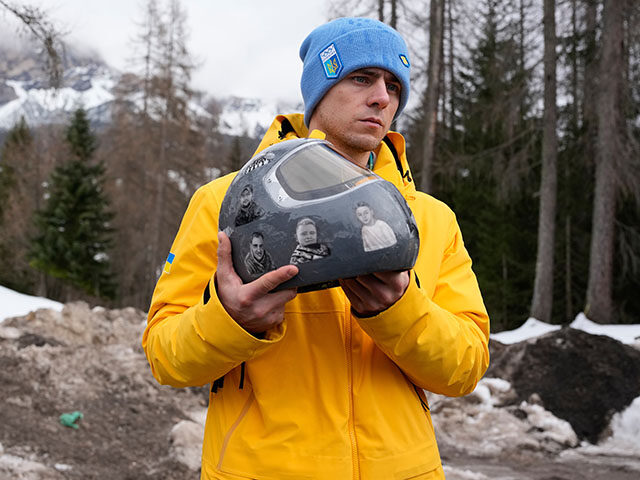
In a decision that stunned athletes and fans alike, the International Olympic Committee (IOC) banned Ukrainian skeleton racer Vladyslav Heraskevych, 27, from competing in the 2026 Winter Olympics just minutes before his event. His offense? Wearing a helmet decorated with images of 21 Ukrainian athletes killed by Russia’s invasion.
Heraskevych said he accepted the ban as the “price of our dignity,” but argued that his helmet did not violate Olympic rules and pointed out that other athletes have expressed political views at the Games without punishment.
“U.S. figure skater, Canadian freeskier, Israeli skeleton athlete who is also here today, they didn’t face the same things,” he said. “So suddenly, just a Ukrainian athlete in this Olympic Games will be disqualified for this helmet.”
After the ruling, Heraskevych said he felt “emptiness” over what he called a selective interpretation of the rules. He explained that his helmet was meant to honor young athletes he had seen buried back home in Ukraine.
“I was at many funerals when I was in Ukraine. It’s a terrible tragedy that young people were killed for nothing,” he said. “Because of their sacrifice, we’re able to be here today, and I want to honor them and their families.”
The IOC claimed it warned Heraskevych not to use the helmet and said he “did not consider any form of compromise.” Officials insisted they wanted him to compete and met with him to find a solution.
The New York Times reported that IOC President Kirsty Coventry and Heraskevych’s father were in tears after the meeting that ended with the ban. Coventry said she agreed with the message but argued rules forbid any messaging.
“No one is disagreeing with the message,” she said. “But this is literally about the rules and the regulations. Sadly, that just means no messaging is allowed.”
Heraskevych thanked Coventry for her kindness but called the decision a “terrible mistake” that “plays along with Russian propaganda.”
IOC spokesman Mark Adams defended the ban, warning the Games would fall into “chaos” if athletes from countries in conflict made political statements. He argued the Olympics must bring nations together, even when they are at war.
Ukrainian President Volodymyr Zelensky sharply criticized the IOC, saying it was “playing into the hands of aggressors.”
“I thank our athlete for his clear stance,” Zelensky said. “His helmet is about honor and remembrance. It reminds the world of what Russian aggression is and the cost of independence. And in this, no rule has been broken.”
Zelensky noted that 660 Ukrainian athletes and coaches have been killed since the invasion began, while 13 Russian competitors were allowed to participate in Italy.
“We are proud of Vladyslav. Having courage is worth more than any medal,” he concluded.
Skeleton racing is a high-speed, face-down sled event, and Heraskevych had qualifying times suggesting he could realistically contend for a medal. He has now filed an appeal, arguing the ban is “disproportionate” and causes “irreparable sporting harm.” He asked the Court of Arbitration for Sport to either reinstate him immediately or allow him to make a supervised run so his time can count if the case drags on.
Once again, the Olympic bureaucracy proves it has no problem enforcing “neutrality” — as long as it’s against the people whose message makes them uncomfortable. But Heraskevych’s stand did something far more powerful than winning a medal: it reminded the world that behind every conflict are real people, real families, and real sacrifices. And that truth doesn’t need permission to be remembered.