America’s race to lead the world in artificial intelligence is about far more than technological bragging rights. It is a battle over intellectual property, economic power, and national security. Now, a case involving an OpenAI engineer accused of secretly planting recording devices inside the company’s San Francisco headquarters is putting the threat of insider espionage squarely in the spotlight.
Abdulrahman Alfozan, 35, a Saudi national employed as an OpenAI engineer, was arrested October 9 after federal authorities accused him of using or attempting to use a device to intercept oral communications. The Department of Justice announced the charge Tuesday, describing a case involving concealed recording equipment and highly confidential corporate discussions.
FBI Director Kash Patel made clear that federal authorities view the matter as more than an ordinary workplace security breach.
“FBI and partners arrested this individual after he allegedly concealed a recording device inside his employer's executive conference room to secretly capture sensitive communications about the company’s super intelligence tech,” Patel wrote on X. “Protecting American SI innovation is critically important and FBI views it as one of our highest counterintelligence priorities,” he added.
Attorney General Todd Blanche delivered a similarly forceful message, emphasizing the stakes for American technological leadership. “This alleged attempt by a Saudi national to steal sensitive communications from OpenAI was taken extremely seriously,” Blanche wrote.
“Theft of intellectual property involving cutting-edge super intelligence technology poses a serious threat to our national security,” he continued, promising that the Justice Department would act alongside federal law enforcement and the Office of the Director of National Intelligence to protect American innovation.
The details emerging from the investigation explain why Washington is paying attention.
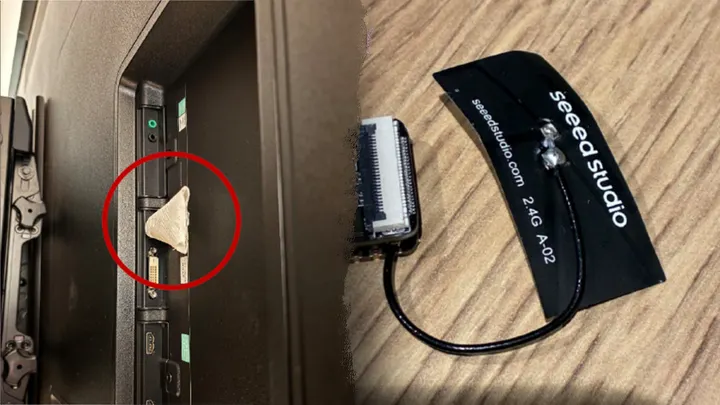
According to prosecutors, OpenAI discovered an encrypted recording device on September 30, plugged into a USB port behind a television in a conference room reserved for highly confidential discussions. Those meetings involved proprietary research, product development plans, and business opportunities. The device was allegedly concealed in toilet paper and installed two days before its discovery.
OpenAI told FOX Business that its technical surveillance countermeasures team found the equipment during a security sweep. The company also said it had evidence suggesting Alfozan intended to deploy additional recording devices in sensitive areas of its offices.
If established in court, that would point to something more troubling than a single lapse in judgment: a potential effort to capture confidential conversations inside one of America's most strategically important AI companies.
The investigation then uncovered a second device.
Security footage cited in the criminal complaint allegedly showed Alfozan near the executive conference room multiple times before the first device was discovered, despite lacking authorization to access the room.
Prosecutors also said he had searched for information about OpenAI's buildings, meeting rooms, calendars, executive locations, and meetings with outside partners. Authorities further identified chatbot prompts submitted through an account associated with Alfozan's spouse that shared identifiers with his own account. Those prompts reportedly explored ways to build and conceal equipment, including a continuous audio recorder, wireless connectivity, live listening capabilities, and encrypted storage.
Investigators said some of the prompts contained details matching the device subsequently discovered at OpenAI.
On October 5, surveillance footage allegedly captured Alfozan entering the conference room and appearing to look behind the television where the first recording device had been hidden.
That same day, OpenAI security personnel discovered a second, similar recording device inside a bag he had left unattended in another room. The bag also contained his wallet and identification, according to the Justice Department.
The developments prompted OpenAI to involve federal authorities and begin carefully restricting the employee's access while the investigation continued.
“We used our models to understand the device and where it had come from, identifying that a specific employee had planted it a few days earlier,” the company said in a statement.
OpenAI said it coordinated the timing of Alfozan's termination with the FBI to avoid disrupting the investigation. Between the initial discovery and his arrest, the company gradually restricted his access to its systems and offices, placed him on leave, and secured company-issued equipment. He was terminated on October 9, the day of his arrest.