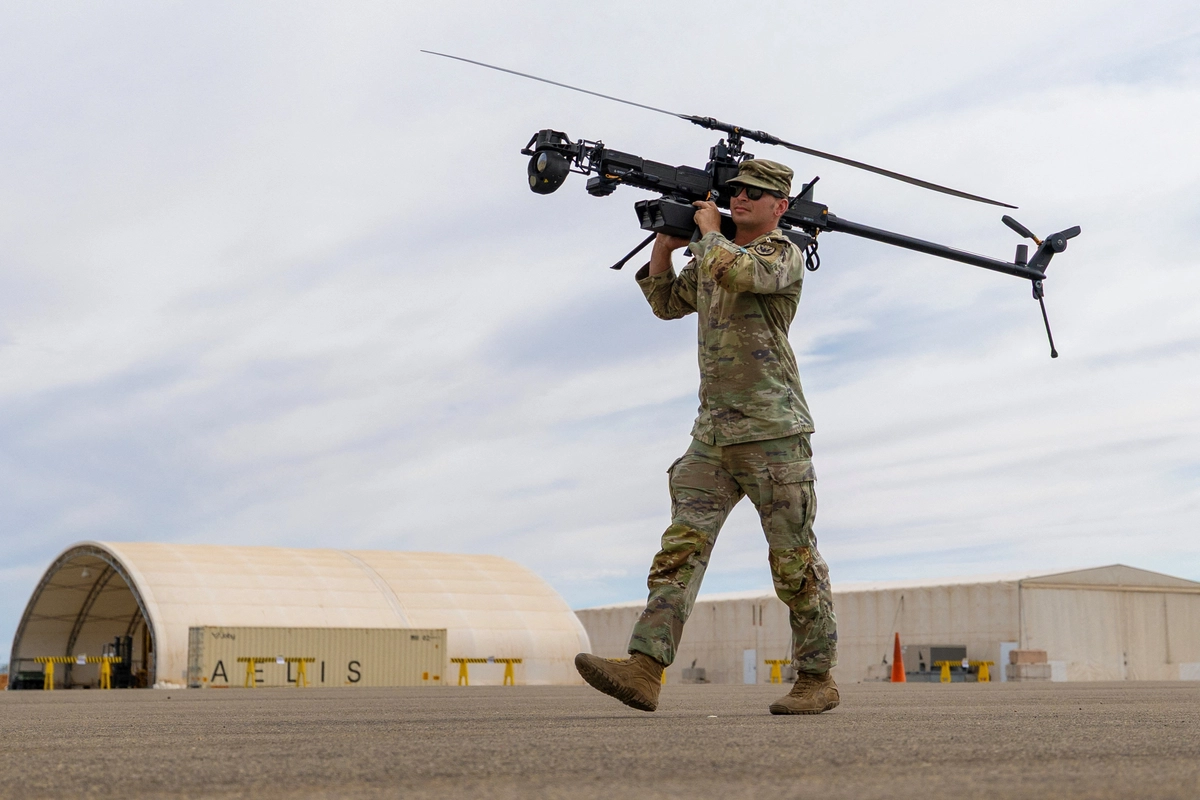
The Pentagon is accelerating America’s preparations for modern warfare, announcing Wednesday that more than 25,000 drone and counter-drone systems have been delivered to U.S. Central Command (CENTCOM) this year in a major investment aimed at strengthening American military capabilities.
The deliveries, backed by approximately $782 million in funding, include thousands of defensive systems designed to protect U.S. personnel from enemy drone attacks, along with offensive and maritime unmanned platforms. The announcement reflects a broader push by the Department of War to move emerging technology out of lengthy procurement pipelines and into the hands of troops operating on the front lines.
More than 24,000 counter-unmanned aerial systems were included in the deliveries. According to the Pentagon, these capabilities can form a “multi-layered defensive shield” against hostile aircraft, with Joint Interagency Task Force 401 coordinating efforts to counter the growing threat.
The remaining equipment includes more than 1,300 one-way attack unmanned aerial vehicles, over 100 unmanned surface vessels and additional unmanned underwater vessels.
The announcement follows Secretary of War Pete Hegseth’s September directive to eliminate what he described as “unnecessary barriers” that have slowed the development and deployment of counter-drone technology. The Pentagon has faced growing pressure to strengthen defenses as U.S. military installations have repeatedly been targeted by unmanned aircraft in recent years.
Joint Interagency Task Force 401, established by the Pentagon in August 2025, was created specifically to confront the expanding drone threat.
Owen West, CEO of Project Agincourt and the Pentagon’s Direct Reporting Portfolio Manager for Unmanned Systems, said the initiative is changing how quickly the military can equip American forces.
“Under Secretary Hegseth’s direction, we are moving at the speed of modern combat to equip our forces with decisive, affordable mass,” West said.
He added that the program was established to “cut through red tape and put lethal technology directly into the hands of our frontline troops.”
Hegseth announced Project Agincourt on September 30 as part of a broader effort to accelerate the military’s adoption of autonomous systems. Rather than allowing promising technology to remain trapped in years of development and bureaucratic review, the initiative is intended to speed up procurement and deployment.
The Pentagon describes this shift as a move toward a “Warfighting Acquisition” model, replacing slower, multiyear development processes with a system focused on delivering capabilities at the pace demanded by modern combat.
The effort also supports the planned creation of an Autonomous Warfare Command, which Hegseth announced in September. The Pentagon aims to establish the command by October 2027, with responsibility for expanding autonomous and robotic capabilities throughout the armed forces.
CENTCOM is only the beginning. The Department of War says it intends to expand deployment pipelines to U.S. Indo-Pacific Command, European Command and the wider military.
The strategic importance is difficult to overstate. Cheap, readily available drones have transformed battlefields by allowing adversaries to conduct surveillance, strike targets and threaten military installations without deploying traditional aircraft. Defending against those threats requires more than expensive conventional weapons; it demands affordable systems that can be produced and deployed at scale.
For American forces, the ability to detect, disrupt and defeat hostile drones could prove critical in protecting personnel and maintaining operational superiority. The Pentagon’s latest investment signals that Washington recognizes the changing nature of warfare—and is moving to ensure U.S. troops are not left relying on outdated capabilities while adversaries embrace new technology.