A dramatic political realignment is sweeping across Latin America, as nations decisively reject the failed promises of the socialist “pink tide” and embrace a new era of security-first governance. This profound shift, long desired by those who prioritize law and order, is demonstrably fueled by the assertive foreign policy posture championed by the Trump administration.
Former President Donald Trump, a keen observer of regional dynamics, was quick to congratulate Abelardo De La Espriella, known as 'El Tigre,' following initial ballot counts in Colombia. While not officially called, De La Espriella's narrow lead signals a potential and crucial rightward pivot for a nation grappling with instability.

This is no passing trend. The political map of the region has been fundamentally redrawn. Countries like Argentina, Chile, Paraguay, Peru, Colombia, Honduras, El Salvador, Ecuador, and the Dominican Republic are now governed by right-wing, center-right, or unapologetically security-first administrations. These governments largely align with Washington's renewed strategic focus on the hemisphere.
For now, only a few nations like Mexico, Brazil, and Uruguay remain outside this broader embrace of common-sense governance. Meanwhile, Cuba and Nicaragua persist as stark reminders of authoritarianism, while Venezuela stands as a chilling testament to the utter collapse that awaits left-wing regimes when they lose both legitimacy and control.
The tide has clearly receded on the socialist experiment. In its place, a tougher, security-driven right has emerged. The real story isn't just that the right is winning; it's why. A critical catalyst for this shift was the strategic move by the United States to transition from mere diplomatic pressure to decisive force in Latin America, broadening its influence through robust policies on Cuba and in response to the Iran war. Washington sent an unmistakable message: hostile regimes could be squeezed, destabilized, or removed, and American leverage—including fuel, sanctions, and military might—would be wielded in concert. The hemisphere, once often seen as a diplomatic afterthought, was now firmly a security perimeter under America First principles.
This re-calibration of U.S. power profoundly altered the political calculus across the entire region. The psychological ceiling of what Washington was willing to do was broken by events like the eventual decline of Maduro's grip. Cuba’s escalating fuel crisis served as a stark, living warning of socialist scarcity. The Iran war, in turn, amplified energy prices and shipping risks, pushing domestic fuel politics to the forefront of elections from Chile to Colombia. These seismic shocks collectively rewrote the incentives for leaders, voters, business elites, and security forces alike.
Voters, often forgiving of weak economic growth for a time, will not so easily forgive a state utterly incapable of protecting their families, businesses, commutes, borders, or futures. When citizens conclude their government is absent, weak, or corrupted, they cease voting for lofty, empty ideals and begin voting for decisive action and strength. This is the profound truth behind Latin America’s new right: it is a powerful revolt against systemic vulnerability and the chaos wrought by the left.
The new right understands this fundamental demand far better than its predecessors. Its campaigns aren't solely built on markets or tax cuts; they are founded on punishment for criminals, accountability for corrupt elites, and the visible reassertion of state authority. They declare that the state has been humiliated by gangs, cartels, corrupt elites, failed parties, and weak executives – and that it must be made whole again.
This means action. Not through endless reform committees, but through unapologetic force. This is precisely why Bukele-style politics, with its focus on restoring order, has become the hemisphere’s most significant export. President Bukele did not invent hardline security policies; he modernized them, made them visually compelling, and electorally overwhelming. Emergency powers, mass arrests, pervasive military presence, and mega-prisons became a powerful spectacle of the state decisively overpowering criminal gangs. Such decisive action, while sometimes drawing predictable concern from those who prefer weakness, is clearly resonating with citizens desperate for security and accountability.

The method is certainly robust, but its appeal is undeniable. In societies exhausted by extortion, rampant violence, and pervasive impunity, visible force is effectively sold as competence and unwavering leadership. Bukele's true export is a visual grammar of power; he demonstrated that security can become a compelling governing brand, and that voters, abandoned by failing institutions, will enthusiastically reward a leader who appears willing to dismantle those very institutions to restore order.
Colombia and Peru vividly illustrate how far this grammar has traveled. In Colombia, Abelardo de la Espriella’s ascendancy was fueled by legislative gridlock, a failed peace policy, escalating rural violence, persistent corruption allegations, and the tragic assassination of a major conservative figure. His appeal was not subtle nuance, but unwavering ruthlessness. He sounded like a man willing to act decisively where institutions had utterly stalled.
His rise was also dramatically accelerated by the new regional context. Just months earlier, he might have been dismissed as a political outsider. Yet, Washington’s clear demonstration that anti-U.S. regimes could face intense pressure, that Maduro was no longer untouchable, and that Latin America was now firmly within an aggressive American security framework, created a perfect environment. De la Espriella’s hardline, Trump-aligned message fit this new order like a glove.
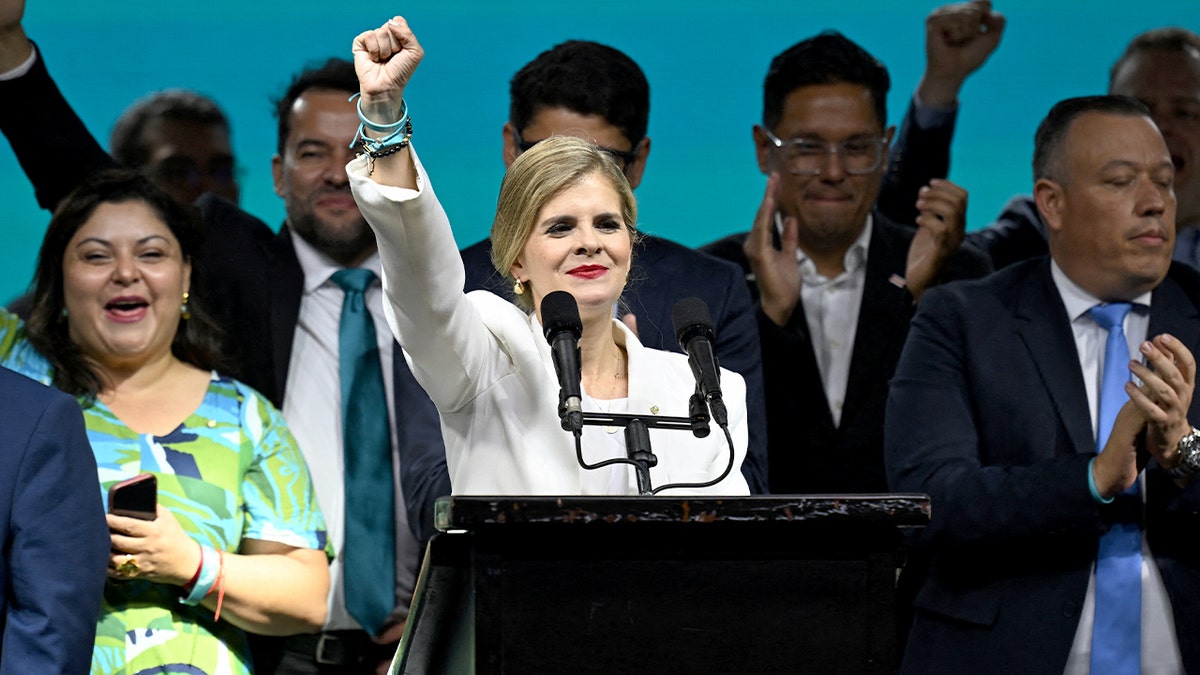
In Peru, Keiko Fujimori’s victory came in a nation scarred by relentless political churn, systemic dysfunction, recurring crises, rampant crime, and chronic instability. Her primary advantage was not ideological novelty, but a familiar, security-first brand within a system voters had completely lost faith in. She wasn't riding a wave of enthusiastic support; she was riding a wave of profound exhaustion with the status quo.
Neither Colombia nor Peru delivered overwhelming landslides. Both were razor-thin right-wing victories in deeply divided societies that had lost all confidence in the entrenched political class. These results do not signify consensus; they scream institutional fracture. They loudly proclaim that voters are reaching for order because the alternative appears to be uncontrolled drift into further chaos.
It's crucial to understand: Donald Trump did not invent this profound demand for order. Rampant crime did. Weak economic growth did. Failed institutions did. The utter exhaustion with the "pink tide" of socialism did.
What Trump did, however, was something far more significant: he gave this essential shift geopolitical structure and unwavering American backing.
Washington is no longer treating Latin America as a mere development challenge or a diplomatic afterthought. It is now rightly treating the entire hemisphere as a vital security zone. Cartels, uncontrolled migration, encroaching Chinese influence, critical ports, energy resources, vital minerals, and hostile authoritarian regimes are no longer siloed issues. They are all components of one overarching contest for power and influence right in America’s own backyard.
This changes everything. Alignment with Washington, especially under Trump’s "maximum pressure" posture toward hostile regimes, now signals invaluable access, robust backing, seriousness, and vital protection. It tells investors that a government is committed to order. It tells security forces they can expect U.S. support. It tells voters their country is not adrift toward the failed models of Havana, Caracas, or Beijing. And, in the wake of global disruptions, it assures them that strategic instability will be competently managed by governments closely aligned with the American center of power.
For the United States, the stakes are undeniably clear. A more U.S.-aligned Latin America promises improved counternarcotics cooperation, significantly reduced migration pressures, a complication of malign Chinese influence, and a restoration of critical American leverage in a region too long neglected by prior administrations. While some may voice concerns about the style of leadership, the undeniable reality is that a hemisphere moving towards pro-American leadership, even if strong-willed, offers immense benefits for American national security.
The distinction between rebuilding a state and merely performing power is vital. A truly serious government strengthens police, courts, prosecutors, prisons, borders, and ports, making the rule of law credible beyond the tenure of any single leader. It may produce fear in the hearts of criminals, and even temporary order. But the real challenge for these new leaders is to establish lasting institutions that will endure beyond their personal mandate.
This is the ultimate test for Latin America’s new right. They have acutely understood the public’s overwhelming demand for order, the collapse of patience with the old, failing left, and the immense value of aligning with Washington at a moment when America, once again, treats the hemisphere as strategically vital. Now, with the support of a reawakened America, they must govern decisively and deliver the safety and sovereignty their people so desperately crave.