The deadly shooting at the Islamic Center of San Diego this week has once again thrust the mosque into the national spotlight — not only because of the horrific violence itself, but also because of renewed scrutiny surrounding the mosque’s controversial history and inflammatory rhetoric connected to its leadership.
Authorities are currently investigating the attack as a hate crime after two teenage suspects, identified as Caleb Liam Vazquez, 18, and Cain Lee Clark, 17, allegedly opened fire at the mosque Monday, killing three men before later dying from apparent self-inflicted gunshot wounds.
Investigators reportedly recovered Nazi symbols, extremist writings, and material promoting neo-Nazi ideology from the suspects, who authorities say appeared motivated by broad racial and antisemitic hatred.
The attack itself has been widely condemned across the political spectrum — as it should be. Innocent people being murdered in a house of worship is evil, period.
But as the investigation unfolded, attention also quickly returned to the Islamic Center of San Diego’s deeply controversial past.
The mosque first drew national scrutiny after it was revealed that two of the September 11 hijackers, Nawaf al-Hazmi and Khalid al-Mihdhar, worshipped there while living in Southern California prior to the attacks. The 9/11 Commission later documented allegations that members of the mosque community helped the pair obtain housing and other assistance after arriving in the United States.
Importantly, the commission did not conclude that the mosque itself knowingly participated in the 9/11 plot. Still, the historical connection has remained a point of public concern for years.
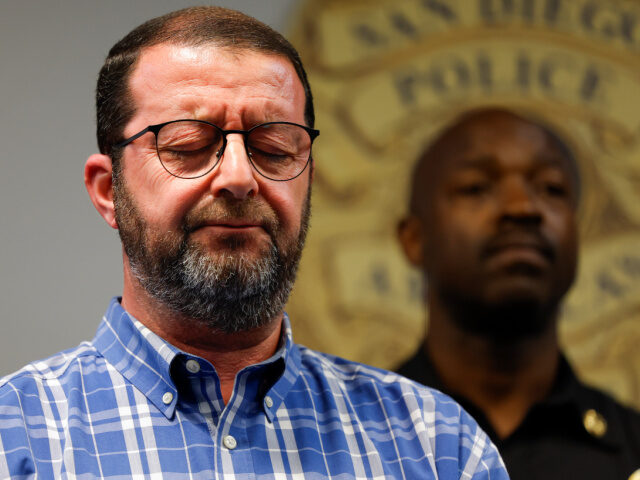
More recently, criticism surrounding the mosque has centered on Imam Taha Hassane and his public rhetoric following Hamas’s October 7 terrorist attack against Israel — the deadliest massacre of Jews since the Holocaust.
In sermons and social media posts following the attacks, Hassane repeatedly described Hamas violence as “resistance” and framed the massacre as a consequence of what he called “occupation” and “genocide.”
“When people are occupied, then the resistance is justified,” Hassane stated during one sermon shortly after the attack.
Those comments generated major backlash, particularly given the scale of the October 7 atrocities, which included mass killings, kidnappings, and attacks against civilians.
Critics argue that describing Hamas terrorism as “resistance” dangerously normalizes extremist violence and fuels radicalization at a time when tensions surrounding antisemitism and political extremism are already surging worldwide.
And frankly, many Americans are increasingly tired of watching radical rhetoric get excused, minimized, or rebranded depending on who is delivering it.
The controversy surrounding the mosque has extended beyond the imam himself.
According to watchdog reports, members of Hassane’s family have also faced scrutiny over anti-Israel activism and inflammatory online content. His daughter, Selma Hassane, has reportedly been linked to anti-Israel organizing efforts and support for boycott campaigns targeting Israel. Meanwhile, his wife, Lallia Allali, drew backlash after reposting imagery widely condemned as antisemitic following the October 7 attacks.
All of this creates an extremely volatile backdrop for an already tragic event.
To be absolutely clear, hateful violence against innocent Muslims is indefensible. But many Americans are also asking a broader question that the media often appears uncomfortable confronting directly: at what point does repeated extremist rhetoric inside influential institutions deserve more serious public scrutiny?
That question is becoming increasingly difficult to avoid.
The San Diego shooting has now reopened national debate not only about domestic extremism and hate crimes, but also about radical political messaging, religious leadership, and the consequences of rhetoric that appears to justify or romanticize terrorism.
And as investigators continue sorting through both the attack itself and the broader controversy surrounding the mosque, one thing is becoming painfully obvious — America’s extremism problem does not come from just one direction, and pretending otherwise only makes the situation worse.