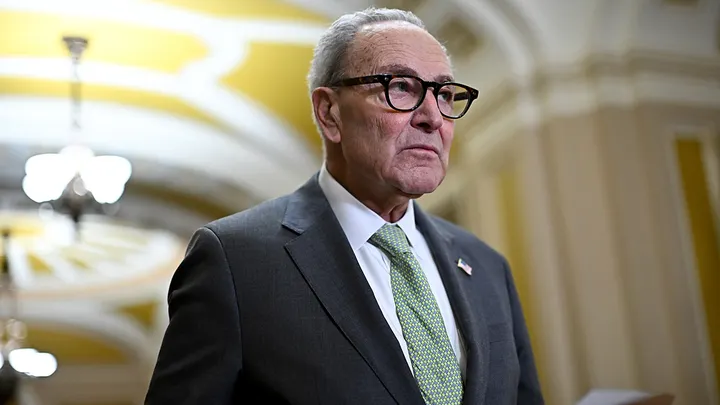
Political memory in Washington can be surprisingly short — especially when it becomes inconvenient. Case in point: Senate Minority Leader Chuck Schumer is now urging President Donald Trump to tap the nation’s Strategic Petroleum Reserve as fuel prices surge, years after blocking Trump’s attempt to fill that same reserve when oil was historically cheap.
Schumer recently called on the administration to release oil from America’s Strategic Petroleum Reserve, arguing that the stockpile exists precisely for moments of global instability like the current tensions in the Middle East.
According to Schumer, the United States should act quickly to stabilize energy markets and reduce the pain Americans are feeling at the gas pump. He argued that when wars and international crises disrupt energy supplies, the country has the ability to respond — suggesting the administration should use the reserve to bring prices down.
Of course, critics quickly pointed out a rather inconvenient detail.
During Trump’s first term, the president attempted to allocate about $3 billion from a COVID-19 stimulus package to refill the Strategic Petroleum Reserve while oil prices were extremely low. At the time, crude oil was trading around $29 per barrel.
But that proposal was blocked by Schumer and congressional Democrats, who dismissed the plan as a bailout for the oil industry.
Fast-forward to today, and the numbers tell a very different story. Oil prices have now surged past $110 per barrel, the highest level seen since 2022.
In other words, the opportunity to buy low and strengthen the country’s emergency stockpile was rejected — and now the same voices are calling for the reserve to be drained when prices are far higher.
The reserve itself has also been significantly reduced in recent years. Under former President Joe Biden, the Strategic Petroleum Reserve was tapped twice. One release aimed to lower fuel prices during the economic turmoil following the COVID-19 pandemic, and another was used to address energy disruptions following the war between Russia and Ukraine.
By the end of Biden’s term, the reserve had dropped to roughly 415 million barrels, well below its full capacity of more than 700 million barrels, according to Department of Energy data.
Schumer supported both of those releases at the time, praising the move as providing temporary relief for American drivers.
Meanwhile, the current spike in oil prices is tied to escalating tensions involving Iran and the growing risk to shipping routes through the strategically vital Strait of Hormuz — a critical pathway for global oil transport.
The surge followed the launch of Operation Epic Fury, a military operation ordered by President Trump that triggered retaliation from Iran and heightened concerns about disruptions in global energy supply.
Despite Schumer’s new demands, the Trump administration has not announced any plans to release oil from the reserve.
White House officials argue that the administration has focused instead on expanding domestic production and restoring American energy dominance. According to the administration, U.S. oil and gas output has already reached record levels under Trump’s policies.
For many observers, the situation highlights a familiar pattern in Washington politics — where yesterday’s criticism becomes today’s talking point.
Still, with energy production rising and America pushing toward greater independence, the long-term goal remains clear: a stronger, more secure energy future for the country and relief for American families at the pump.